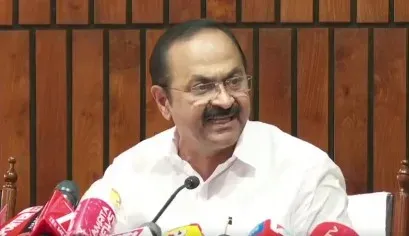
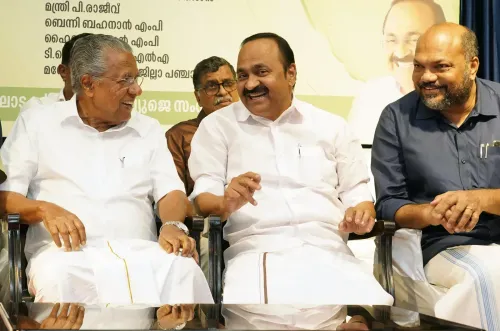
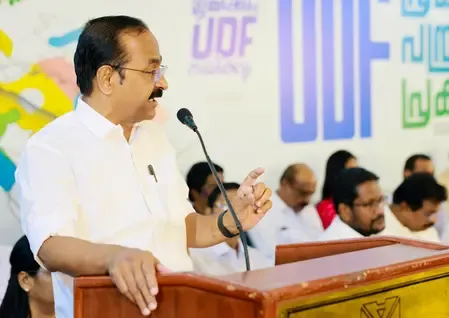
Kerala power crisis: Satheesan govt faces heat as Left ramps up cuts attack
Synopsis
Kerala's new V.D. Satheesan government is facing its first serious political crisis — not from legislation or a scandal, but from power cuts. With the Left Opposition drawing unflattering comparisons to a decade of stable supply under Pinarayi Vijayan, and Electricity Minister Sunny Joseph unable to say when the lights will stay on, the government is caught between a high-cost NTPC lifeline and a deepening credibility problem.
Key Takeaways
The Kerala power crisis has become the first major political and administrative test for Chief Minister V.D.
Satheesan's government.
Electricity Minister Sunny Joseph confirmed on Tuesday that no final decision has been taken on buying power from NTPC at approximately ₹30 per unit .
Purchasing 300 MW at that rate would cost roughly ₹2.16 crore per day , or nearly ₹65 crore over 30 days , according to expert K.S.
The CPI(M)-led Left Opposition is using the shortage to contrast the Satheesan administration with the 10-year Pinarayi Vijayan era, during which routine cuts had largely disappeared.
Experts say the crisis reflects structural gaps — overdependence on external power, volatile procurement costs, and the lack of an integrated 15–20 year energy plan for Kerala.
KSEB has been urged to appoint a full-time professional Chairman and Managing Director with proven power-sector expertise.
The Kerala power crisis is rapidly emerging as the first significant political and administrative test for the V.D. Satheesan government, with the Left Opposition intensifying its offensive over continuing power cuts across the state. The Opposition is drawing a pointed contrast with the preceding decade under the Pinarayi Vijayan government, during which Kerala had largely remained free of scheduled power restrictions.
Minister's Admission Deepens Uncertainty
Electricity Minister Sunny Joseph acknowledged on Tuesday that no final decision has been taken on purchasing power from NTPC at approximately ₹30 per unit — a figure that has drawn sharp scrutiny. The minister conceded that procurement at such a premium rate would impose a substantial financial burden on the state and would require Cabinet approval.
When pressed, Minister Joseph declined to provide a timeline for the restoration of stable supply, stating only that the government was exploring all available options to resolve the shortage at the earliest possible opportunity. The absence of a concrete timeline has given the Opposition additional ammunition.
Left's Political Offensive
The CPI(M)-led Left is leveraging the shortage to portray the new administration as ill-equipped to manage the power sector. Central to the Opposition's argument is the record of the previous government: routine cuts had virtually disappeared during the 10-year tenure of the Pinarayi Vijayan administration. For ordinary consumers who are now directly experiencing disruption, that argument carries immediate, lived weight — making it harder for the Satheesan government to deflect with data or systemic explanations.
Expert View: A Deeper Structural Vulnerability
Power sector experts, however, caution against reducing the crisis to a simple question of procurement failure. Engineering physicist and power sector expert K.S. Manoj says the shortage has exposed a far deeper structural vulnerability in Kerala's electricity system — its heavy dependence on external power, volatile procurement costs, and the absence of robust long-term planning.
'The immediate question is the cost of keeping the system running. If 300 MW were to be purchased continuously at ₹30 per unit, the power bill alone would work out to about ₹2.16 crore a day, or nearly ₹65 crore for 30 days. The actual financial impact, however, would depend on the quantity procured, duration and contractual terms,' Manoj said.
He also argued that the Kerala State Electricity Board (KSEB) urgently needs a full-time professional Chairman and Managing Director with demonstrated expertise in power-system management. Manoj stressed that this should not become an IAS-versus-technocrat debate, but that the utility's leadership must possess the technical competence, managerial ability, accountability and continuity required to handle decisions spanning power procurement, generation, transmission and electricity markets.
The Long-Term Planning Gap
The crisis has reignited questions about Kerala's strategic approach to energy. Experts say the state requires an integrated 15–20 year plan covering demand growth, hydropower availability, renewable energy, electric vehicles, energy storage, and the risk of national-level power shortfalls. The emphasis, they argue, must shift from simply adding installed capacity to ensuring firm and flexible power during periods of peak demand.
A diversified strategy encompassing hydro and pumped-storage potential, battery storage, renewable generation, demand response and a varied procurement portfolio is seen as essential. Existing long-term power purchase agreements are also expected to come under renewed scrutiny — with experts calling for an independent technical and financial review rather than politically charged blame-assignment.
What the Satheesan Government Must Do Next
The immediate political reality is unambiguous: until supply stabilises, the Opposition will continue presenting every power cut as evidence of administrative failure. The government, for its part, must explain why a state that navigated a full decade with virtually no routine outages is now considering power purchases at an exceptionally high per-unit cost.
The real test for the Satheesan government, analysts say, is not merely how it navigates the current shortage, but whether it can break the cycle of shortage, emergency procurement, high costs and renewed shortage from becoming a recurring feature of Kerala's power sector.
Point of View
But the structural diagnosis matters more: Kerala has been borrowing stability from favourable hydrology and long-term agreements rather than building a resilient, diversified energy system. The Left's attack is tactically effective but conveniently ignores that the vulnerabilities now surfacing were accumulating during its own decade in power. The real accountability question is not which party is governing during the shortage, but why neither administration produced the integrated 15–20 year energy plan that experts have long recommended. Without that, emergency procurement at ₹30 a unit will not be the last such crisis — only the most recent one.
NationPress
15 Sept 2026
Frequently Asked Questions
What is the Kerala power crisis of 2026?
Kerala is currently experiencing a significant electricity shortage, with scheduled power cuts affecting consumers across the state. The V.D. Satheesan government is under political pressure as it weighs costly emergency power procurement options to stabilise supply.
Why is the government considering buying power from NTPC at ₹30 per unit?
With existing sources unable to meet demand, purchasing power from NTPC at approximately ₹30 per unit is among the emergency options under consideration. However, Electricity Minister Sunny Joseph has said no final decision has been taken, citing the heavy financial burden it would impose and the need for Cabinet approval.
How much would buying 300 MW from NTPC actually cost Kerala?
According to power sector expert K.S. Manoj, continuous procurement of 300 MW at ₹30 per unit would cost approximately ₹2.16 crore per day, translating to nearly ₹65 crore over 30 days. The actual cost would depend on the quantity procured, the duration and the contractual terms agreed.
Why is the Left Opposition attacking the Satheesan government over power cuts?
The CPI(M)-led Left Opposition argues that routine power cuts had virtually disappeared during the 10-year tenure of the Pinarayi Vijayan government, and is using the current shortage to portray the new administration as incapable of managing the power sector effectively.
What long-term solutions do experts recommend for Kerala's power sector?
Experts say Kerala needs an integrated 15–20 year energy plan covering demand growth, hydropower availability, renewable energy, electric vehicles, energy storage and diversified procurement. They also call for KSEB to be led by a full-time professional with proven technical and managerial expertise in power-system management.