Kerala CM Satheesan defends private investment budget, rejects privatisation charge
Synopsis
Facing a ₹5 lakh crore debt burden and a state treasury with 'not even five paisa,' Kerala CM V.D. Satheesan has staked his first budget on private investment — and dared the Opposition to find the word 'privatisation' anywhere in the document. The confrontation with Pinarayi Vijayan signals a sharper ideological divide in Kerala politics than the state has seen in years.
Key Takeaways
Satheesan defended his first budget on 19 June , calling private investment a declared electoral promise, not a policy reversal.
Kerala carries temporary liabilities of ₹87,000 crore and a total debt of around ₹5 lakh crore , Satheesan said, ruling out exclusive public-sector development.
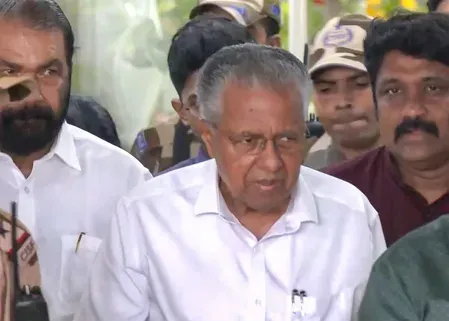
Leader of Opposition Pinarayi Vijayan criticised the budget's private investment focus; Satheesan challenged him to find the word 'privatisation' in the document.
Neither KSRTC nor the Kerala Water Authority has been privatised, the CM clarified, though he flagged rising contract appointments in public sector bodies.
A quarterly performance audit mechanism using technology will review project progress every three months to ensure timely execution.
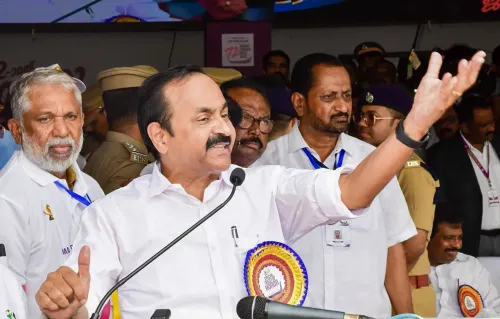
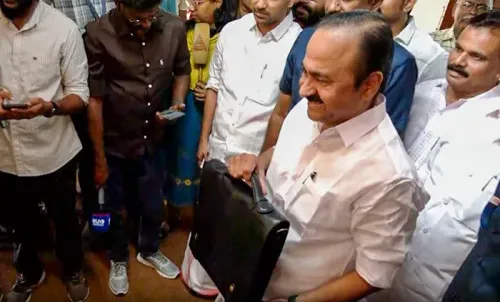
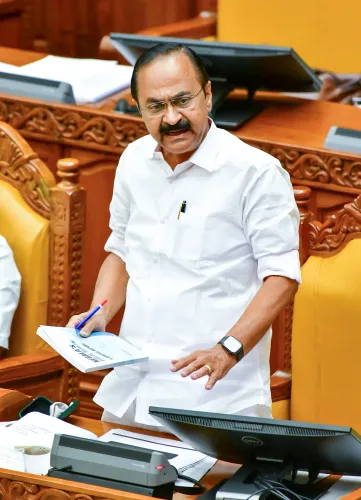
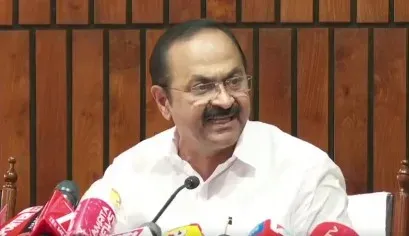
Kerala Chief Minister V.D. Satheesan on Friday, 19 June firmly defended his government's budget strategy of attracting private investment, calling it a deliberate and publicly declared policy aimed at generating employment, accelerating economic growth, and funding welfare programmes for the state's most vulnerable citizens. The remarks came in Thiruvananthapuram after Satheesan presented his first budget as Chief Minister.
The Dispute With the Opposition
Leader of Opposition Pinarayi Vijayan had criticised the budget for its emphasis on drawing private capital into Kerala, framing it as a departure from the state's traditionally public-sector-led development model. Satheesan rejected that framing outright, arguing that his government had never concealed its approach and had placed the same vision before voters ahead of the elections.
'Private investment in Kerala is necessary. Through it, we can create employment opportunities, strengthen the economy and use the additional revenue generated to support the weaker sections of society,' Satheesan told reporters.
The Fiscal Reality Behind the Strategy
Satheesan pointed to Kerala's precarious finances as the primary driver of the shift. The state currently carries temporary liabilities of ₹87,000 crore and a total debt burden of approximately ₹5 lakh crore, making exclusive reliance on the public sector for new development projects untenable, he argued.
'Today, we are in a situation where we do not have even five paisa in hand. Yet the Opposition wants us to continue with the old approach. That is not why we came to power. We had clearly told the people before the elections that our aim was to take Kerala 25 years ahead, not 25 years backwards,' he said.
He also noted that competing states — Tamil Nadu, Karnataka, and Maharashtra — were actively courting investors, and Kerala could not afford to remain outside that race.
Infrastructure and Logistics: The Private Participation Case
Satheesan made a pointed case for private involvement in building modern infrastructure and logistics networks, citing the example of freight movement from Vizhinjam to Kasaragod. 'Kerala does not have the financial capacity to transport goods from Vizhinjam to Kasaragod through its own resources. Therefore, we will bring in private investment, create competition and develop barge and vessel-based logistics,' he said.
Privatisation Charge Rejected
The Chief Minister directly challenged the Opposition to identify any reference to privatisation in the budget document, asserting that neither the Kerala State Road Transport Corporation (KSRTC) nor the Kerala Water Authority had been privatised. He acknowledged, however, that public sector institutions had increasingly shifted to contract appointments — a trend he suggested was contributing to a brain drain, with engineering graduates leaving the state for lack of suitable opportunities.
Accountability Mechanism Announced
Satheesan also unveiled a performance audit framework for budget announcements, under which project progress will be reviewed every three months using technology. A project implementation protocol, he said, would introduce greater accountability among officials overseeing development works. This signals an attempt to move beyond routine budget announcements toward measurable execution — a persistent criticism of Kerala's development administration in recent years.
How effectively the new private investment framework translates into on-ground jobs and infrastructure delivery will be the defining test of Satheesan's first budget.
Point of View
Regardless of what the fine print delivers. The ₹5 lakh crore debt figure is real and constraining, but the harder question is whether Kerala's labour environment, land regulations, and bureaucratic culture are ready to receive the investment the CM is promising. The brain-drain admission — engineering graduates leaving because public sector jobs are now mostly contractual — is the sharpest self-indictment in the speech, and one the Opposition would do well to press rather than debate semantics about the word 'privatisation.'
NationPress
19 Sept 2026
Frequently Asked Questions
Why did Kerala CM Satheesan defend the budget's private investment focus?
Satheesan argued that Kerala's fiscal position — with temporary liabilities of ₹87,000 crore and a total debt of around ₹5 lakh crore — makes exclusive public-sector development impossible. He said attracting private investment was a policy his government had openly committed to before the elections.
What did Pinarayi Vijayan criticise about the Kerala budget?
Leader of Opposition Pinarayi Vijayan criticised the budget for prioritising private investment, framing it as a departure from Kerala's traditional public-sector development model. Satheesan rejected the criticism, saying the approach had been clearly presented to voters.
Has Kerala privatised KSRTC or the Water Authority?
No. Chief Minister Satheesan explicitly stated that neither KSRTC nor the Kerala Water Authority has been privatised. He challenged the Opposition to point to any mention of privatisation in the budget document.
What is the quarterly performance audit mechanism Satheesan announced?
Satheesan announced a technology-driven framework under which budget project progress will be reviewed every three months. A project implementation protocol will be introduced to hold officials accountable for the timely execution of development works.
Why is Kerala looking at private investment for logistics?
Satheesan cited the example of freight movement from Vizhinjam to Kasaragod, saying the state lacks the financial resources to build that corridor on its own. He said private investment would be used to develop barge and vessel-based logistics and create competitive infrastructure.