Kerala Budget 2025: Satheesan's maiden speech tackles ₹5 lakh crore debt
Synopsis
A Chief Minister who was denied a Cabinet seat in 2011 will now present Kerala's entire financial roadmap. Satheesan's maiden Budget is as much a political milestone as a fiscal document — and with ₹5 lakh crore in debt looming, the numbers will test whether symbolism can coexist with hard choices.
Key Takeaways
Satheesan will present Kerala's 79th Budget in the Assembly on Friday, 20 June 2025 .
It is the first time a Kerala Chief Minister with no prior ministerial experience will present the state Budget.
Kerala's public debt stands at an estimated ₹5 lakh crore , posing a severe fiscal constraint.
Satheesan was passed over for a Cabinet post in 2011 under Chief Minister Oommen Chandy, having first entered the Assembly in 2001 .
He was appointed Leader of the Opposition after the UDF's 2021 defeat and is credited with reviving the front's electoral fortunes.
The Budget must balance Kerala's high welfare expectations against tight borrowing limits imposed by the Centre.
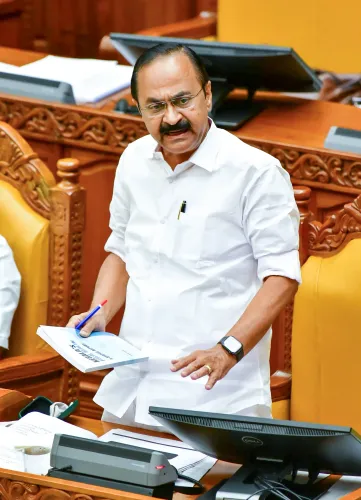
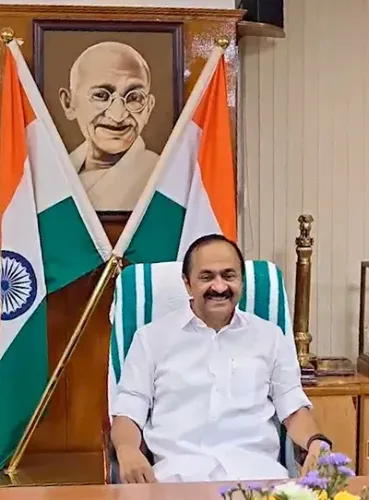
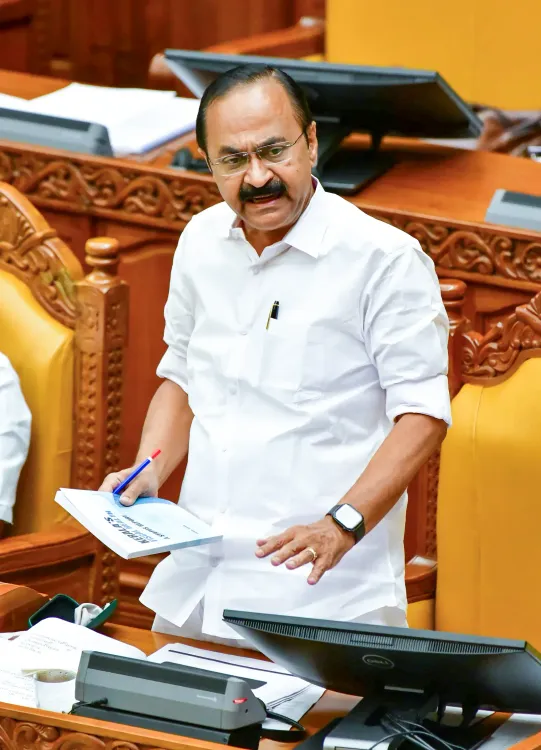
Chief Minister V.D. Satheesan is set to present Kerala's 79th Budget in the state Assembly on Friday, 20 June 2025, marking the first time in the state's history that a Chief Minister with no prior ministerial experience will occupy the Finance Minister's chair. The Budget arrives at a moment of acute fiscal stress, with Kerala's public debt estimated at approximately ₹5 lakh crore.
A Political Journey Two Decades in the Making
For Satheesan, the occasion closes a political circle that remained open for over a decade. When the United Democratic Front (UDF) returned to power in 2011 under Chief Minister Oommen Chandy, Satheesan — widely regarded as one of the Indian National Congress (INC)'s sharpest legislative voices — was widely expected to receive a Cabinet berth. That expectation went unfulfilled, a decision that reportedly surprised many within the party.
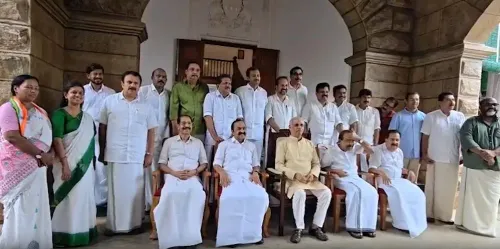
Satheesan had first entered the Assembly in 2001 and had built a reputation as a commanding policy debater and organisational anchor for the UDF. After the Congress-led front suffered a significant setback in 2021, he was appointed Leader of the Opposition. His tenure in that role — marked by aggressive legislative scrutiny and sustained pressure on the Left government — is widely credited with reviving the UDF's electoral fortunes and paving the way for its return to power last month.
Notably, after the UDF's victory, Satheesan visited Chandy's residence and reportedly recalled that he had long wished to serve in Chandy's Cabinet — a wish that never materialised. The Budget presentation on Friday is, in that sense, more than a fiscal exercise.
The Scale of Kerala's Fiscal Challenge
The numbers before Satheesan are formidable. Kerala's public debt is estimated at around ₹5 lakh crore, and the state operates under tight borrowing limits set by the Centre. Revenue expenditure — particularly on salaries, pensions, and welfare schemes — continues to crowd out capital investment. The state has repeatedly sought additional fiscal space from the Union government, with limited success.
This comes amid broader concerns about Kerala's debt trajectory, which analysts have flagged as one of the steepest among major Indian states relative to its GSDP. The new government inherits these constraints with little immediate room to manoeuvre.
Balancing Welfare with Fiscal Discipline
The central tension in Satheesan's Budget will be between sustaining welfare commitments — a political imperative in a state with high public expectations — and stabilising the debt path. Kerala's electorate has historically rewarded governments that deliver on social spending in health, education, and direct transfers. Walking back on those commitments carries political risk; deepening them without new revenue sources carries fiscal risk.
Though Satheesan enters the Finance Department without ministerial experience, he is not regarded as unfamiliar with economic governance. His legislative record reflects a command over policy detail, and party colleagues describe him as someone who has studied the state's fiscal architecture closely during his years in the Opposition.
What to Watch in the Budget
Observers will be tracking whether the Budget outlines a credible medium-term fiscal consolidation path, any new revenue mobilisation measures, and the scale of capital expenditure proposed. Industry bodies and welfare organisations alike are watching for signals on infrastructure investment and social scheme continuity.
With Kerala's 79th Budget, V.D. Satheesan steps into a role that is simultaneously a personal milestone and a governance test — one that will define the early character of his government and set the fiscal tone for the years ahead.
Point of View
But the harder story is structural. Kerala's debt-to-GSDP ratio is among the most stressed of any large Indian state, and the fiscal arithmetic does not bend to political symbolism. The real question is whether a government that won on welfare promises will find the discipline to outline a consolidation path — or whether it will defer that reckoning, as its predecessors did, to the next administration. The absence of prior ministerial experience is less a liability than a test: Satheesan has studied the crisis from the Opposition benches for four years. Friday will reveal whether that study translated into a plan.
NationPress
23 Sept 2026
Frequently Asked Questions
When will V.D. Satheesan present the Kerala Budget?
Chief Minister V.D. Satheesan will present Kerala's 79th Budget in the state Assembly on Friday, 20 June 2025. It will be his maiden Budget presentation and the first by a Kerala Chief Minister with no prior ministerial experience.
What is Kerala's current public debt?
Kerala's public debt is estimated at approximately ₹5 lakh crore. The state operates under borrowing limits set by the Centre and faces significant pressure from revenue expenditure on salaries, pensions, and welfare schemes.
Why is Satheesan presenting the Budget despite having no ministerial experience?
As Chief Minister, Satheesan also holds the Finance portfolio, making him responsible for the Budget. He has no prior Cabinet experience, having served as a legislator since 2001 and as Leader of the Opposition from 2021 until the UDF's return to power.
What are the key challenges in Kerala's 2025 Budget?
The primary challenge is balancing welfare commitments — which Kerala's electorate expects — with fiscal discipline amid a ₹5 lakh crore debt burden and tight Centre-imposed borrowing limits. Capital expenditure, revenue mobilisation, and a credible medium-term consolidation path are the key areas to watch.
What is the political significance of Satheesan presenting the Budget?
Satheesan was passed over for a Cabinet post in 2011 under Chief Minister Oommen Chandy, despite being one of the UDF's most prominent legislators. His Budget presentation as Chief Minister is widely seen as the culmination of a political journey spanning over two decades.