Kerala Budget 2026-27: Satheesan's 'New Age Kerala' plan amid ₹87,012 crore debt
Synopsis
Kerala's new CM V.D. Satheesan walked into Budget day carrying ₹87,012 crore in total liabilities and a ₹20,500 crore revenue hole left by flawed projections — then proceeded to announce a maritime hub, a Gen-Z startup fund, universal health cover of ₹25 lakh per family, and 10,000 new MSME units. The scale of the ambition versus the depth of the fiscal crisis is the real story of Kerala's 2026-27 Budget.
Key Takeaways
Satheesan presented his maiden Budget on 19 June 2026 — only the third Kerala CM after R.
Sankar and Oommen Chandy to do so while in office.
Total State liabilities, including KIIFB and the Social Security Company , stand at ₹87,012 crore ; a revenue shortfall of ₹20,500 crore triggered the revised Budget.
Mission Samudra aims to transform Kerala into a maritime hub integrating ports, roads, railways, and inland waterways, with a shipbuilding centre at Vizhinjam .
The Kerala MSME Growth Scheme targets 10,000 new MSME units ; a Gen-Z startup fund of ₹50 crore was announced.
The Oommen Chandy Health Insurance Scheme promises free treatment up to ₹25 lakh per family ; a Kerala Health and Life Science City gets ₹100 crore .
Rubber support price raised from ₹200 to ₹250 per kg ; tourism declared an industry; film city in Kochi announced.
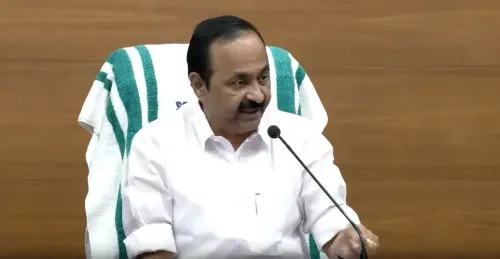
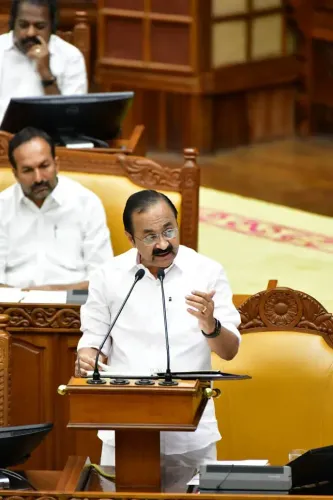
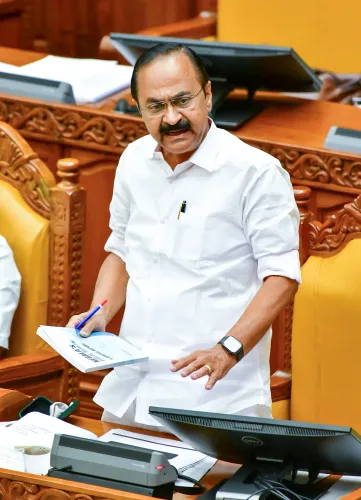
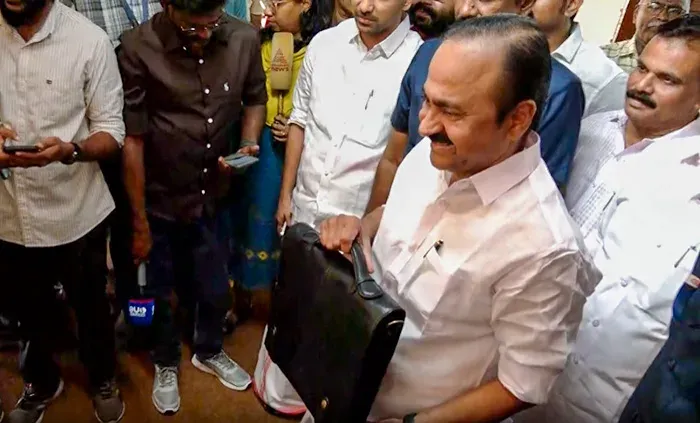
Kerala Chief Minister V.D. Satheesan presented his maiden Budget on Friday, 19 June 2026, unveiling a ₹87,012 crore total-liabilities backdrop while pledging a 'New Age Kerala' built on investment-led growth and sustained welfare commitments. The revised State Budget for 2026-27, delivered in Thiruvananthapuram, makes Satheesan one of only a handful of Kerala Chief Ministers — alongside R. Sankar and Oommen Chandy — to have presented a Budget while serving in office.
Fiscal Crisis and Revenue Shortfall
Opening his speech with data drawn from the government's own White Paper on Kerala's finances, Satheesan acknowledged that the State was navigating a severe financial crisis. A shortfall of ₹20,500 crore in expected revenue — attributed to incorrect projections in the previous Budget — had necessitated the revision. Total State liabilities, including those of the Kerala Infrastructure Investment Fund Board (KIIFB) and the Social Security Company, stand at ₹87,012 crore.
Satheesan launched a pointed critique of KIIFB, stating it had contributed to fiscal imbalance, and announced that an expert committee would be constituted to examine its functioning. The government also cautioned that an upcoming salary and pension revision, along with the restoration of leave surrender benefits, would add further pressure to an already strained exchequer.
Investment Push and MSME Focus
Despite the fiscal headwinds, the Budget outlined an ambitious investment agenda. A Kerala MSME Growth Scheme will support the launch of 10,000 MSME units across the State through financial assistance, revolving funds, and expert mentoring. An Invest Kerala Cell will operate as a single-window mechanism to resolve hurdles related to land, approvals, and investor support.
A dedicated startup initiative targeting Gen-Z entrepreneurs was announced with an initial allocation of ₹50 crore, offering financial assistance, interest-free loans, subsidies, and technological support to young innovators.
Maritime, Aviation and Infrastructure Plans
The Budget's most ambitious infrastructure proposal is 'Mission Samudra', aimed at transforming Kerala into a maritime hub by integrating ports, roads, railways, and inland waterways. Plans include developing Kerala as a port city, establishing a shipbuilding centre at Vizhinjam, and strengthening ports at Kollam, Beypore, and Azhikkal.
The aviation sector received parallel attention, with the government announcing plans to develop Kerala into a South Indian aviation and logistics hub by integrating the State's four international airports. Together, these proposals signal a strategic push to reposition Kerala as a logistics and connectivity corridor in South Asia.
Healthcare, Education and Social Welfare
Healthcare emerged as a central pillar of the Budget. The Oommen Chandy Health Insurance Scheme promises free treatment coverage of up to ₹25 lakh per family, with ₹10 crore allocated for initial implementation. A Kerala Health and Life Science City will be developed with an allocation of ₹100 crore to position the State as a medical and research destination.
On education, the Budget proposed a Kerala Knowledge Valley to attract global universities, expand research facilities, and strengthen higher education. Advanced technology sectors — including Artificial Intelligence, quantum computing, and biotechnology — will be addressed through a Future Readiness Think Tank.
Welfare commitments include the implementation of Indira Guarantee schemes such as free travel for women in KSRTC buses and increased wages for scheme workers including ASHA workers. Additional provisions cover a Silver Economy programme for senior citizens, caregiver certification courses, tribal health clusters, coastal care units, and rare disease treatment support. The rubber support price was raised from ₹200 to ₹250 per kg, and enhanced allocations were made for SC/ST welfare and fisheries support.
Culture, Tourism and What Comes Next
The Budget declared tourism an industry, announced the establishment of a film city in Kochi, and proposed cultural centres and memorials for noted personalities. Satheesan's first Budget, presented under acute fiscal stress, attempts to walk a tightrope — correcting inherited imbalances while laying out a long-term road map to attract investment without abandoning Kerala's welfare tradition. Whether the revenue assumptions underpinning this revised plan prove more reliable than those of its predecessor remains the central question heading into the next financial year.
Point of View
500 crore revenue miscalculation is a rare moment of official candour, but it also raises the question of whether the new projections are any more grounded. The KIIFB critique is significant — the fund was the previous government's off-balance-sheet workaround, and subjecting it to an expert review is overdue. Yet the Budget's investment ambitions — maritime hubs, aviation corridors, a Knowledge Valley — carry the same structural risk: grand sectoral visions without visible financing mechanisms. Kerala has announced film cities, startup funds, and port expansions before. The test is execution, and the fiscal room to execute is narrower than it has been in years.
NationPress
23 Sept 2026
Frequently Asked Questions
What is the 'New Age Kerala' Budget presented by CM Satheesan?
It is the revised State Budget for 2026-27, presented by Kerala Chief Minister V.D. Satheesan on 19 June 2026, combining fiscal correction with investment-led growth proposals. The Budget acknowledges a severe financial crisis — including ₹87,012 crore in total liabilities and a ₹20,500 crore revenue shortfall — while announcing schemes for MSMEs, maritime infrastructure, healthcare, and startup support.
Why was a revised Budget needed for Kerala in 2026-27?
The revision was necessitated by a shortfall of ₹20,500 crore in expected revenue, which the government attributed to incorrect projections in the earlier Budget. The revised Budget attempts to realign expenditure plans with the State's actual fiscal position.
What is Mission Samudra announced in the Kerala Budget?
Mission Samudra is an ambitious project to transform Kerala into a maritime hub by integrating its ports, roads, railways, and inland waterways. It includes plans for a shipbuilding centre at Vizhinjam and strengthening of ports at Kollam, Beypore, and Azhikkal.
What healthcare benefits were announced in the Kerala Budget 2026-27?
The Budget announced the Oommen Chandy Health Insurance Scheme, offering free treatment coverage of up to ₹25 lakh per family, with ₹10 crore allocated for initial implementation. A Kerala Health and Life Science City will also be developed with ₹100 crore to position the State as a medical and research destination.
What support is the Kerala Budget offering to MSMEs and startups?
The Kerala MSME Growth Scheme will support the launch of 10,000 MSME units with financial assistance, revolving funds, and expert mentoring. A separate Gen-Z startup initiative with an initial allocation of ₹50 crore offers interest-free loans, subsidies, and technological support to young entrepreneurs.