Kerala faces ₹20,500 crore fiscal shortfall as Finance Commission grants fall short
Synopsis
Kerala's new government has tabled a White Paper revealing a ₹20,500 crore hole in central transfers — the direct consequence of the LDF's Interim Budget projecting ₹14,138 crore in Finance Commission grants that were never awarded. With ₹48,733 crore in inherited liabilities, CM Satheesan's first budget will have very little room to manoeuvre.
Key Takeaways
Satheesan warned on 5 June that Kerala faces a fiscal shortfall of nearly ₹20,500 crore in 2026-27 .
The LDF Interim Budget projected ₹14,138 crore in revenue deficit grants; the 16th Finance Commission awarded none.
A White Paper tabled in the Assembly reveals total inherited pending obligations of ₹48,733 crore as of 31 March 2026 .
Liabilities include ₹21,670 crore in DA arrears for employees and teachers and ₹14,387 crore in pension arrears.
Satheesan attributed the crisis to 'absolute mismanagement of public finances' by the previous government.
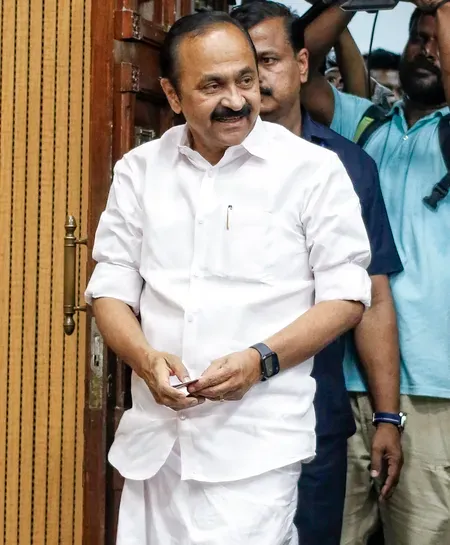
Kerala Chief Minister V. D. Satheesan on Thursday, 5 June warned that the state faces an estimated fiscal shortfall of nearly ₹20,500 crore in the current financial year, after revenue deficit grants projected in the 2026-27 Interim Budget failed to materialise. The shortfall, he said, stems directly from flawed assumptions embedded in the budget presented by the outgoing Left Democratic Front (LDF) government.
The Core Fiscal Gap
The 2026-27 Interim Budget had projected ₹14,138 crore in revenue deficit grants from the Centre. However, the 16th Finance Commission has made no such award to Kerala, leaving a significant hole in the state's anticipated central transfers. Satheesan said this single omission cascades into an overall shortfall of nearly ₹20,500 crore in central fund flows during the financial year.
In a post on X, Satheesan stated: 'The 2026–27 Interim Budget presented by the #LDF Government rests on flawed assumptions. It projected ₹14,138 crore as Revenue Deficit Grants, yet the 16th Finance Commission has made no such award. As a result, Keralam faces an estimated shortfall of nearly ₹20,500 crore in central transfers this year.'
White Paper Reveals Inherited Liabilities
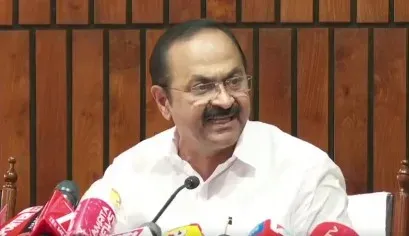
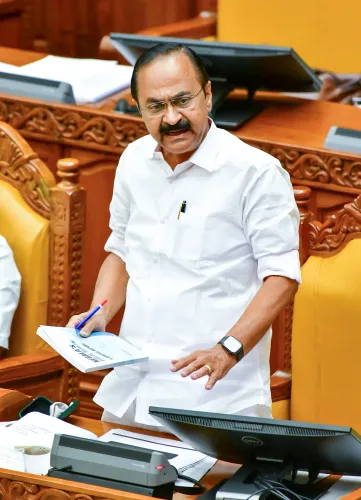
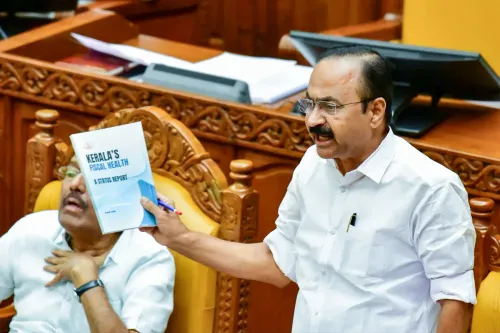
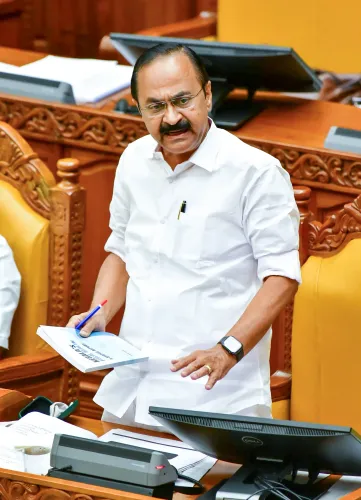
After tabling a White Paper on the state's financial status in the Assembly, Satheesan told reporters the document was not an investigation report but an effort to place Kerala's actual fiscal condition before the public. 'The fiscal health of the state should be known to all our people. They should know what our income is, what our expenditure is and what the way forward is,' he said.
According to the White Paper, the new government has inherited total pending obligations of ₹48,733 crore as of 31 March 2026. The liabilities break down as follows: ₹21,670 crore in dearness allowance arrears owed to government employees and teachers; ₹14,387 crore in pension arrears; ₹3,431 crore under the Bill Discounting System involving banks and contractors; and additional pending commitments covering health scheme claims, Supplyco dues, KMSCL payments, scholarships, and local body instalments.
Satheesan's Charge Against LDF Fiscal Management
The Chief Minister characterised the situation as the result of 'absolute mismanagement of public finances' by the previous administration, and cautioned that the incoming government would need to undertake 'major corrective measures' to restore fiscal stability. He also dismissed the possibility of political deflection, stating that 'Left jargon' could no longer obscure the financial reality that the White Paper had now documented.
Notably, the credibility of the LDF's budget assumptions has come under scrutiny not just politically but structurally — projecting grants from a Finance Commission that had yet to make an award represents a significant departure from conventional fiscal prudence.
What Comes Next
Satheesan indicated that the White Paper presentation was a necessary precursor to the new government's first full budget. The scale of inherited liabilities — nearly ₹48,733 crore — will likely shape the fiscal consolidation roadmap and constrain capital expenditure in the near term. How the state navigates the gap between projected and actual central transfers will be closely watched by bond markets and the Reserve Bank of India (RBI), which monitors state finances as part of its broader macroprudential oversight.
Point of View
500 crore shortfall is not a rounding error — it reflects a structural choice by the LDF to budget against a Finance Commission award that had not been made. Projecting ₹14,138 crore in grants from the 16th Finance Commission without a formal recommendation in hand is the kind of optimistic accounting that papers over a fiscal crisis until a new government inherits it. The White Paper's ₹48,733 crore liability figure is the more alarming number: it suggests that Kerala's off-budget stress has been accumulating well beyond what annual deficit figures reveal. The real question is whether the new government's corrective measures will be structural — rationalising expenditure commitments — or cosmetic, relying on fresh borrowings to clear arrears while the underlying imbalance persists.
NationPress
21 Oct 2026
Frequently Asked Questions
What is the ₹20,500 crore fiscal shortfall in Kerala?
It is the estimated gap in central transfers to Kerala in 2026-27, arising because the LDF Interim Budget projected ₹14,138 crore in revenue deficit grants from the 16th Finance Commission that were never awarded. CM Satheesan flagged this shortfall in an X post on 5 June.
What did the Kerala White Paper reveal?
The White Paper tabled by CM Satheesan in the Assembly shows that the new government has inherited total pending obligations of ₹48,733 crore as of 31 March 2026. These include DA arrears of ₹21,670 crore, pension arrears of ₹14,387 crore, and ₹3,431 crore under the Bill Discounting System, among other dues.
Why did the 16th Finance Commission not award revenue deficit grants to Kerala?
The source material does not detail the Finance Commission's reasoning. CM Satheesan's position is that the LDF government projected the grants without a confirmed award, which he characterises as a flawed budgetary assumption.
How does this affect Kerala's ability to spend?
The shortfall is expected to pose a serious challenge to the state's ability to meet its expenditure commitments, according to Satheesan. It will likely constrain capital expenditure and force the new government to prioritise corrective fiscal measures in its first full budget.
What corrective steps has the Kerala government indicated?
CM Satheesan has said the new government will undertake major corrective measures to restore fiscal stability, though specific steps have not yet been detailed. The White Paper is described as a precursor to the government's first full budget, which is expected to outline the consolidation roadmap.