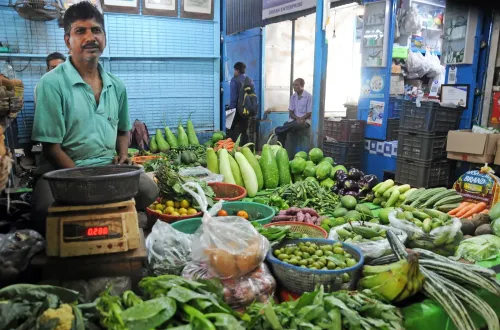
Kolkata markets raided as police crack down on surging essential commodity prices
Synopsis
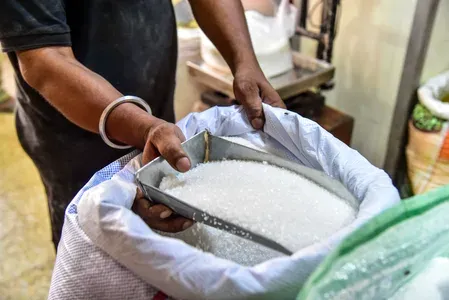
With sugar crossing ₹65 per kg and rising ₹20 in just 20 days, West Bengal CM Suvendu Adhikari ordered Kolkata Police's Enforcement Branch to raid markets citywide. Ten teams hit five major markets simultaneously — but the Centre and traders can't agree on what's actually driving the spike.
Key Takeaways
Kolkata Police's Enforcement Branch deployed 10 teams to raid markets across the city on 24 August .
Markets covered include Shyambazar , Maniktala , Kole Market , Garia Bazaar , and Jadu Babur Bazar .
Sugar prices have reportedly risen by around ₹20 per kg in 20 days , crossing ₹65 per kg .
CM Suvendu Adhikari warned of action against those hoarding rice and sugar illegally.
Traders blame monsoon disruptions for vegetable price spikes; the Centre disputes the ethanol-sugar price link cited by some traders.
Vegetable prices are expected to ease once the monsoon season ends, according to traders.
Kolkata Police's Enforcement Branch (EB) conducted raids across multiple markets in Kolkata on Tuesday, 24 August, acting on directions from West Bengal Chief Minister Suvendu Adhikari to check rising prices of essential commodities including sugar, edible oil, and vegetables. The crackdown follows reports of sharp price escalations over recent weeks, with sugar alone reportedly climbing nearly ₹20 per kg in just 20 days.
Markets Covered and Scale of Operation
Around 10 EB teams fanned out across key commercial hubs including Shyambazar, Maniktala Market, Kole Market in Sealdah, Garia Bazaar, and Jadu Babur Bazar in Bhowanipur. Officials visited individual shops to verify pricing, check stock availability, and determine whether traders were hoarding goods or levying inflated rates on consumers.
The teams were constituted on Monday night following the Chief Minister's public warning, and began operations at dawn on Tuesday — a notably swift operational response to a political directive.
What the Chief Minister Said
Addressing a press conference at the state secretariat Nabanna on Monday, Adhikari said sugar prices had crossed ₹65 per kg and pledged government action to bring them under control. He issued a direct warning to traders involved in illegal hoarding of rice and sugar.
'We have found where the leakage is. We will fix it. There is a strong government here. There will be no scope for injustice here,' Adhikari said.
The Price Surge: What Is Driving It
Sugar prices have reportedly risen by around ₹20 per kg over the past 20 days. Some traders have attributed the increase to the ethanol blending situation, which they say has diverted sugarcane supplies. However, the Centre has maintained that ethanol has played no role in the price rise — a contradiction that remains unresolved.
Beyond sugar, prices of rice, edible oil, garlic, and onions have also risen in recent weeks. Traders attributed the vegetable price spike to prolonged and heavy rainfall in July and August, which disrupted supply chains from producing regions.
Traders' Perspective and Outlook
Sellers told officials that weather-driven supply disruptions were the primary cause of the vegetable price surge, and said steps were being taken to prevent hoarding. According to traders, vegetable prices are likely to ease once the monsoon season ends and normal supplies resume — though no specific timeline was offered.
With the EB operations now underway and political pressure mounting, authorities will be watching closely whether the market raids translate into tangible price relief for consumers in the days ahead.
Point of View
Police inspections will not move prices. West Bengal has seen similar enforcement drives before, and prices have typically eased only when supply normalised — not because of raids. The government's credibility now rests on whether this action produces measurable relief, or fades into the long record of high-visibility, low-impact market interventions.
NationPress
10 Oct 2026
Frequently Asked Questions
Why did Kolkata Police raid markets on 24 August 2024?
Kolkata Police's Enforcement Branch raided markets on 24 August following directions from Chief Minister Suvendu Adhikari to check surging prices of essential commodities. Sugar had crossed ₹65 per kg, rising nearly ₹20 in 20 days, and there were concerns about illegal hoarding of rice, sugar, and vegetables.
Which markets were raided by the Enforcement Branch in Kolkata?
Ten EB teams conducted inspections at Shyambazar, Maniktala Market, Kole Market in Sealdah, Garia Bazaar, and Jadu Babur Bazar in Bhowanipur. Officials checked prices, stock levels, and evidence of hoarding at individual shops.
What did CM Suvendu Adhikari say about rising prices?
Adhikari, speaking at a press conference at Nabanna on Monday, said sugar prices had crossed ₹65 per kg and warned of action against those illegally hoarding rice and sugar. He said the government had identified the source of the problem and would act decisively.
Why have sugar prices risen so sharply in Kolkata?
Sugar prices have reportedly risen by around ₹20 per kg over 20 days. Some traders attribute the rise to the ethanol blending situation diverting sugarcane supply, but the Centre has disputed this, saying ethanol has no role in the price increase. The exact cause remains contested.
When are vegetable prices expected to come down in Kolkata?
Traders say vegetable prices rose due to prolonged rainfall in July and August disrupting supplies, and expect prices to ease once the monsoon season ends and supply chains normalise. No specific date has been given for when relief is expected.