Gadkari: Sugar prices set by global markets, not governments

Synopsis
With domestic sugar prices breaching ₹70 per kg, Union Minister Nitin Gadkari told the cooperative sugar industry what it did not want to hear: that global market forces, not government orders, set commodity prices — and that Brazil's ₹23-per-kg production cost versus India's ₹33–34 makes the case for MSP hikes structurally weak.
Key Takeaways
Nitin Gadkari told the NFCSF event on 22 September 2026 that sugar prices are driven by global demand-supply, not government policy.
Domestic retail sugar prices have reached record levels of over ₹70 per kg amid tightening supplies.
Brazil's sugar production cost is around ₹23 per kg versus ₹33–34 per kg in India, creating a persistent competitiveness gap.
Gadkari pushed back on demands for a higher minimum support price for sugar from state ministers and industry representatives.
The minister advocated diversification into biomass , straw-based products , and organic manure as sustainable revenue alternatives for mills and farmers.
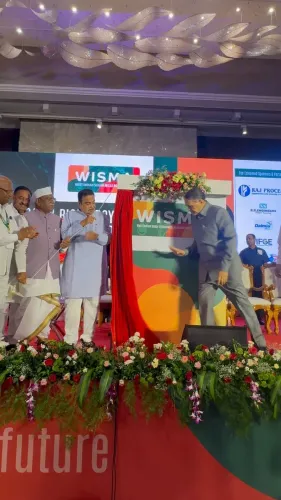
Union Minister for Road Transport and Highways Nitin Gadkari on Tuesday, 22 September 2026, stated that sugar prices are driven by international demand-supply dynamics and that no government can unilaterally determine agricultural commodity rates in today's interconnected global economy. His remarks came at an event organised by the National Federation of Cooperative Sugar Factories Ltd (NFCSF) in New Delhi.
What Gadkari Said
Speaking directly in response to demands from state ministers and industry representatives for a higher minimum support price (MSP) for sugar, Gadkari pushed back on the notion of administered pricing. 'We are in a global economy now, and no government can decide the rates of agricultural produce in such an economy, even if they wanted to,' he said, acknowledging that practical realities make such demands difficult to fulfil.
This comes at a time when domestic retail sugar prices have climbed to record levels of over ₹70 per kg amid tightening supplies — a figure that has intensified pressure on the Centre from millers, cooperatives, and state governments alike.
The Brazil Factor
Gadkari highlighted India's cost competitiveness challenge by pointing to Brazil, which benefits from large-scale mechanised farming that substantially lowers production costs. According to the minister, sugar production costs in Brazil stand at approximately ₹23 per kg, compared to ₹33–34 per kg in India. Surplus production in Brazil, he argued, regularly exerts downward pressure on Indian market prices — a structural disadvantage that policy interventions alone cannot easily offset.
Broader Agricultural Distress
The minister broadened his remarks to address systemic stress in Indian agriculture. He noted that farming remains economically unviable for a large number of cultivators, and that sustainable solutions require improving farm incomes through innovation and diversification rather than reliance on government-fixed prices.
Diversification as the Way Forward
Gadkari advocated strongly for reducing the sugar industry's dependence on a single commodity. He urged mills and farmers to focus on value-added by-products — including biomass utilisation, straw-based products, and organic manure — as additional revenue streams. In his view, diversification into these areas offers a more durable path to financial viability than lobbying for higher support prices.
The minister's remarks signal that the Centre is unlikely to accede quickly to MSP hike demands, even as consumer prices remain elevated. Industry bodies and state representatives are expected to continue their push through formal channels in the weeks ahead.
Point of View
But it is partly a product of policy choices: fragmented landholdings, underinvestment in farm mechanisation, and a sugarcane pricing regime that has historically prioritised cane growers over mill viability. Telling the industry to diversify into biomass is sound advice, but it does not address the immediate crisis of ₹70-per-kg retail prices squeezing consumers. The minister is correct that no government can indefinitely override global price signals — but that framing also conveniently deflects pressure for structural reforms within India's own agricultural supply chain.
NationPress
22 Sept 2026
Frequently Asked Questions
What did Nitin Gadkari say about sugar prices at the NFCSF event?
Gadkari stated that sugar prices are governed by global demand and supply dynamics, not by government decisions, and pushed back on demands for a higher minimum support price. He said: 'We are in a global economy now, and no government can decide the rates of agricultural produce in such an economy, even if they wanted to.'
Why are sugar prices high in India right now?
Domestic retail sugar prices have climbed to record levels of over ₹70 per kg due to tightening supplies. Global production trends, particularly from Brazil, also influence Indian market rates.
How does India's sugar production cost compare with Brazil's?
According to Gadkari, sugar production costs in Brazil are approximately ₹23 per kg, significantly lower than India's ₹33–34 per kg. Brazil's large-scale mechanised farming gives it a structural cost advantage that makes Indian sugar less competitive globally.
What alternatives did Gadkari suggest for the sugar industry?
Gadkari urged the industry to diversify beyond pure sugar production and focus on by-products such as biomass utilisation, straw-based products, and organic manure. He argued these value-added streams can create additional and more sustainable revenue for mills and farmers.
Is the Centre likely to raise the minimum support price for sugar?
Gadkari's remarks suggest the Centre is not inclined to quickly accede to MSP hike demands, citing the constraints of a globalised commodity market. Industry bodies and state representatives are expected to continue pressing their case through formal channels.