KRA: Lashkar's new proxy shield against security agencies in Kashmir
Synopsis
India's security establishment is tracking a new Lashkar-e-Tayiba shell — the Kashmir Revolutionary Army — that shares handlers, operatives and recruitment pipelines with the already-banned TRF. The layered proxy structure is designed to stall investigations and buy the Lashkar leadership time, as suspected operative Mohammad Lateef Bhat continues a low-profile strike pattern across the Kashmir Valley.
Key Takeaways
Security agencies are pursuing Mohammad Lateef Bhat in connection with a Kulgam attack that injured three CRPF personnel.
The Kashmir Revolutionary Army (KRA) is assessed by Indian intelligence as a proxy of Lashkar-e-Tayiba , created after the TRF was banned by India and designated a Foreign Terrorist Organisation by the US in July 2025 .
An Intelligence Bureau official confirmed that KRA and TRF share the same handlers, ground operatives and recruitment pipelines.
Bhat is also linked to the killing of head constable Aashiq Hussain in Anantnag and the murder of two Chhattisgarh migrant workers on 31 July in Kulgam.
Officials warn that more such proxy outfits linked to Lashkar and Jaish-e-Mohammad can be expected, complicating attribution and investigation timelines.
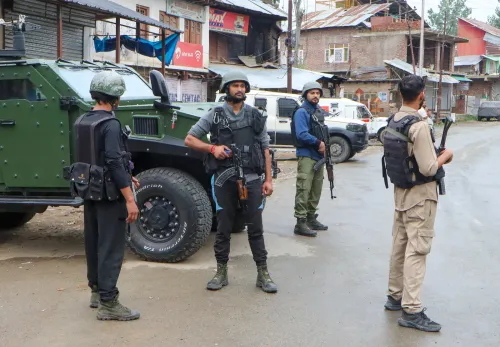
Security agencies are actively pursuing Mohammad Lateef Bhat, a suspected operative of the Kashmir Revolutionary Army (KRA), in connection with an attack in Kulgam in which three Central Reserve Police Force (CRPF) personnel were injured. Intelligence officials believe the KRA is a proxy organisation of the Lashkar-e-Tayiba (LeT), designed to insulate the parent terror outfit from international scrutiny and Indian crackdowns.
What Is the Kashmir Revolutionary Army
Analysts describe the KRA as an offshoot of the The Resistance Front (TRF), itself a front organisation of the Lashkar-e-Tayiba. The TRF was originally created following the abrogation of Article 370 in August 2019 to give the LeT an indigenous appearance inside the Kashmir Valley. India was the first to ban the TRF. Following the Pahalgam attack, the United States designated the TRF as a Foreign Terrorist Organisation in July 2025.
According to officials, once the TRF came under intense heat from both India and Washington, the Lashkar moved to create a secondary layer — the KRA — specifically to bypass international sanctions and evade Indian agency crackdowns on the TRF. Notably, the TRF, which had initially claimed responsibility for the Pahalgam attack, was quick to retract that claim under pressure from India and the international community.
How KRA and TRF Are Linked
An Intelligence Bureau official told reporters that the KRA and TRF are, operationally, one and the same. 'They share the same handlers, ground operatives and their recruitment pipelines are identical,' the official said. 'The objective is to evade international sanctions and avoid attracting the attention of Indian security agencies. However, the emergence of such groups also suggests that these outfits are becoming fragmented and lack unity,' the official added.
By projecting a layered structure, these proxies ultimately shield their parent organisation. When investigators launch a probe, they must first work through the KRA layer, then the TRF, before reaching the Lashkar leadership — a deliberate buffer that buys the parent group time to cover its tracks and plan fresh strikes.
Bhat's Modus Operandi and Track Record
Officials say Mohammad Lateef Bhat carries out swift, small-team strikes — typically with no more than two or three associates — before blending back into the local civilian population. He is reportedly armed with an AK-47 rifle and has been linked to multiple attacks in recent months.
In July 2026, he is believed to have been involved in the fatal shooting of Jammu and Kashmir head constable Aashiq Hussain in Anantnag. He is also suspected in the 31 July targeted killing of two migrant workers from Chhattisgarh — Bhupendra and Deepak — in Kulgam. The latest Kulgam attack on CRPF personnel follows a nearly identical pattern. Notably, Bhat reportedly avoids retreating to secluded hideouts, calculating that blending into the civilian population reduces his chances of being tracked.
A Deliberate Strategy to Confuse Investigators
Officials say all recent attacks bear the distinct signature of the TRF, yet the outfit has conspicuously refrained from claiming responsibility — a calculated move to avoid further international scrutiny. Instead, lesser-known names such as the KRA are surfaced in connection with the strikes, investigators suspect, to create confusion and complicate attribution.
'The idea is to create more layers so that the parent outfit is completely shielded,' an official said, adding that going forward, one could expect more such proxies linked to both the Lashkar-e-Tayiba and Jaish-e-Mohammad. Security officials warn this layering tactic represents an evolving counter-intelligence challenge that could grow more complex if left unaddressed.
Point of View
Splinter it and rebrand. India and the US moved together to designate the TRF, but the Lashkar has responded faster than the international sanctions regime can keep pace. The deeper problem is structural — each proxy layer adds months to any investigation before agencies reach the actual command chain, and that delay is the entire point. Unless India can push for pre-emptive multilateral designation of KRA before it accumulates its own operational footprint, the Lashkar will have succeeded in running out the clock once again.
NationPress
12 Nov 2026
Frequently Asked Questions
What is the Kashmir Revolutionary Army (KRA)?
The Kashmir Revolutionary Army is a relatively new militant outfit that Indian intelligence officials assess as a proxy of Lashkar-e-Tayiba, operationally identical to the already-banned The Resistance Front (TRF). It was reportedly created to evade international sanctions imposed on the TRF and to insulate the Lashkar leadership from direct scrutiny by Indian and global agencies.
What is Mohammad Lateef Bhat's connection to the Kulgam attack?
Mohammad Lateef Bhat is a suspected KRA operative being pursued by security agencies for his alleged role in the Kulgam attack that injured three CRPF personnel. Officials say he employs a distinctive modus operandi — swift strikes with minimal associates — before blending back into the civilian population.
How is the KRA different from the TRF?
According to Intelligence Bureau officials, the KRA and TRF are functionally the same — sharing handlers, ground operatives and recruitment pipelines. The KRA is essentially a new name adopted after the TRF was banned by India and designated a Foreign Terrorist Organisation by the United States in July 2025, intended to create an additional investigative layer shielding the Lashkar-e-Tayiba.
Why did the US designate the TRF as a terror organisation?
The United States designated The Resistance Front as a Foreign Terrorist Organisation in July 2025, following the Pahalgam attack in Kashmir. The TRF had initially claimed responsibility for that attack before retracting, reportedly under pressure from India and the international community.
What does the KRA's emergence mean for Kashmir's security situation?
Officials warn that the KRA's creation signals a deliberate shift toward a multi-layered proxy structure by the Lashkar-e-Tayiba, designed to slow down Indian investigations and avoid international sanctions. Security agencies expect more such proxy outfits linked to both Lashkar and Jaish-e-Mohammad to emerge, complicating attribution and counter-terrorism efforts.