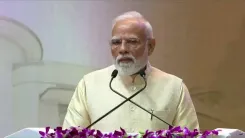
Karnataka HC stays withdrawal of 52 criminal cases, BJP cries 'appeasement'
Synopsis
The Karnataka High Court has now twice blocked the Congress government's attempts to withdraw prosecution in communal riot cases — first 43 cases in May 2025, now 52 more. With the court finding prima facie fault and the BJP calling it 'appeasement,' the state government faces a compounding legal and political crisis over its use of Section 321 of the CrPC.
Key Takeaways
The Karnataka High Court stayed the Congress government's withdrawal of prosecution in 52 criminal cases on 2 July .
The cases include those from the Aland Ladle Mashak Dargah riots in Kalaburagi district , involving attacks on police personnel.
A Division Bench led by Chief Justice Vibhu Bakhru found prima facie fault with the state's invocation of Section 321 CrPC .
This is the second such setback — the court had earlier struck down withdrawal of 43 cases linked to the Hubballi riots in May 2025 .
BJP MP Tejasvi Surya called the order 'a slap' on the government; Home Minister Priyank Kharge said the Cabinet acted within the legal framework.
The state government and the Directorate of Prosecution must file responses within two weeks .
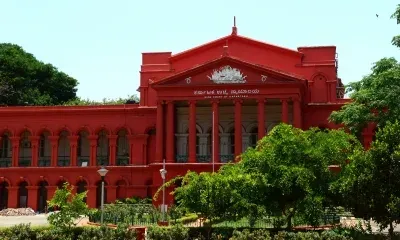
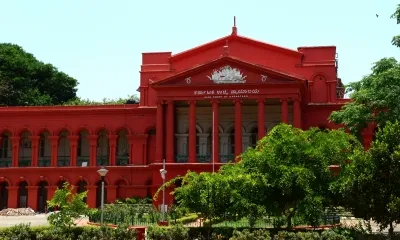
The Karnataka High Court has stayed the Congress government's decision to withdraw prosecution in 52 criminal cases, including those stemming from the communal riots at Aland Ladle Mashak Dargah in Aland taluk of Kalaburagi district. The interim order, passed on 2 July, has dealt a political blow to the state government and reignited the Bharatiya Janata Party (BJP)'s allegations of 'appeasement politics' against the ruling Congress.
A Division Bench comprising Chief Justice Vibhu Bakhru and Justice K.S. Hemalekha passed the interim stay after prima facie finding fault with the state's invocation of Section 321 of the Code of Criminal Procedure (CrPC) to seek withdrawal of the prosecutions. The Bench observed that the government's action appeared contrary to the High Court's own earlier directions governing the withdrawal of criminal cases.
Background: A Pattern of Challenged Withdrawals
This is not the first time the Karnataka government's case-withdrawal decisions have been struck down. In May 2025, the High Court had set aside a government order directing Public Prosecutors to withdraw prosecution in 43 criminal cases involving persons accused in communal violence and other offences — including cases arising from the Hubballi riots. The current batch of 52 cases marks the second such attempt, making this a recurring flashpoint between the Congress administration and the judiciary.
The Public Interest Litigation (PIL) was filed by advocate Girish Bharadwaj, who argued that the executive had usurped the independent discretionary powers vested in the Public Prosecutor under Section 321 of the CrPC, 1973. Bharadwaj further contended that the withdrawal decision was not grounded in any discernible public interest.
What the Court Found
The Division Bench's prima facie finding centred on a critical procedural concern: under Section 321 of the CrPC, the Public Prosecutor is required to independently apply their mind before deciding to withdraw a case — and is not bound by government orders. The High Court had clarified this principle in an earlier ruling. Despite that precedent, the state placed the withdrawal before the Cabinet, which approved all 52 cases. The court has now issued notice to the State Government and the Directorate of Prosecution, directing them to file responses within two weeks.
Notably, in almost all of the 52 cases, the prosecution itself had maintained that the cases should proceed — a fact that reportedly weighed on the court's prima facie assessment.
The Political Fallout
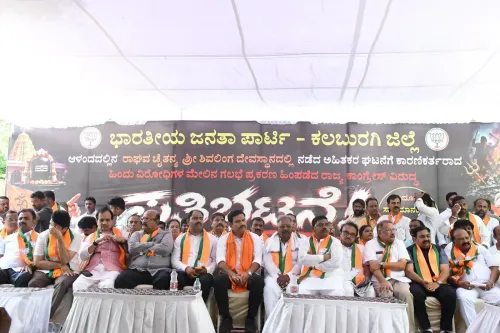
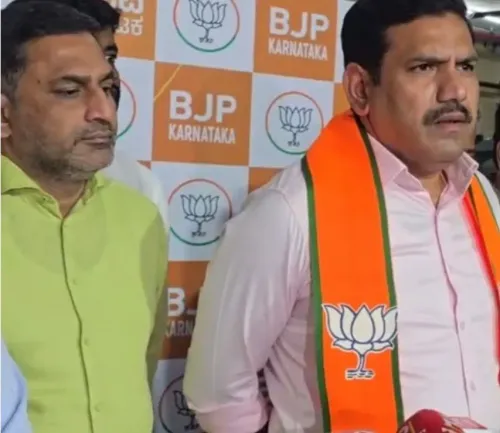
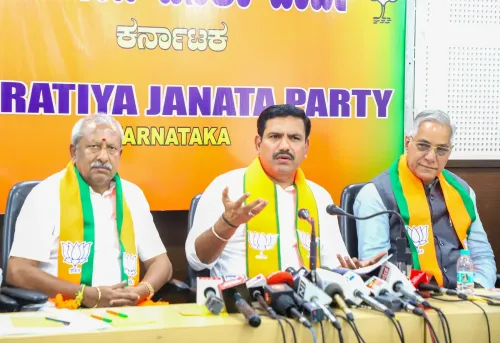
BJP National Yuva Morcha President and Bengaluru South MP Tejasvi Surya welcomed the order and congratulated Bharadwaj, calling it 'a slap on the state government's face, which sought to selectively and unconstitutionally withdraw cases to appease its vote bank.'
The BJP has described the High Court's order as a 'tight slap' to the Congress government, framing the attempted withdrawals as a textbook case of minority appeasement ahead of elections.
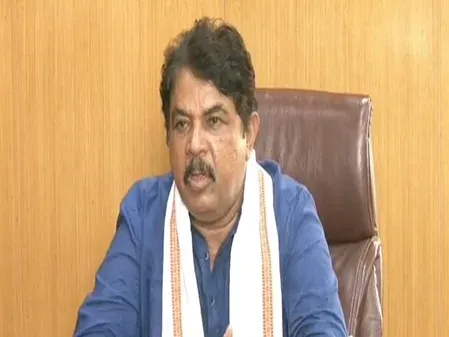
State Home Minister Priyank Kharge pushed back, saying the government would study the court's order before taking any further step. 'We will discuss the matter after obtaining a copy of the High Court's order. The list of cases also includes those involving BJP leaders. We have not issued any order in violation of the law. The Cabinet decided within the legal framework,' Kharge said.
Petitioner's Argument: Police Morale at Stake
Advocate Bharadwaj argued that the cases in question are far from routine. Several involve attacks on police personnel and their vehicles during the Aland riots — incidents he described as amounting to 'a full-scale riot.' He warned that allowing the accused to go free would demoralise the police force and disturb the peace of society.
'The government should think about the morale of the police personnel who were attacked by the rioters,' Bharadwaj said. 'Allowing rioters to go free would certainly dent the image of both the government and the police. It would also have serious consequences for society.'
With the High Court's notice returnable in two weeks, the Congress government now faces a legal and political reckoning over its prosecution withdrawal policy — and whether it can distinguish legitimate discretion from executive overreach.
Point of View
Yet the government proceeded — suggesting either legal overconfidence or deliberate political calculation. The BJP's 'appeasement' framing will resonate beyond Karnataka, feeding into a national narrative ahead of state polls. But the harder question — whether any of these 52 cases had legitimate grounds for withdrawal — is being drowned out by the politics. That question deserves a serious answer, and neither side is providing one.
NationPress
1 Oct 2026
Frequently Asked Questions
Why did the Karnataka High Court stay the withdrawal of 52 criminal cases?
The Karnataka High Court stayed the withdrawal after prima facie finding that the state government's invocation of Section 321 of the CrPC was contrary to its own earlier directions. The court noted that Public Prosecutors must independently apply their mind before withdrawing a case and are not bound by Cabinet orders.
What are the Aland riots cases at the centre of this controversy?
The Aland riots refer to communal clashes at the Aland Ladle Mashak Dargah in Aland taluk, Kalaburagi district, in which police personnel and their vehicles were attacked. Several of the 52 cases whose withdrawal was stayed arise from these incidents, which petitioner Girish Bharadwaj described as amounting to a full-scale riot.
Has the Karnataka government attempted this before?
Yes. In May 2025, the Karnataka High Court struck down the government's earlier attempt to withdraw prosecution in 43 criminal cases linked to the Hubballi riots. The current batch of 52 cases is the second such attempt, making this a recurring legal flashpoint.
What does Section 321 of the CrPC say about withdrawing prosecution?
Section 321 of the Code of Criminal Procedure (CrPC), 1973, empowers the Public Prosecutor to withdraw from prosecution of any person. The Karnataka High Court has clarified that this is an independent discretionary power — Public Prosecutors are not bound by government or Cabinet directions when exercising it.
What happens next in the Karnataka High Court case?
The High Court has issued notice to the State Government and the Directorate of Prosecution, directing them to file their responses within two weeks. The interim stay on the withdrawal of 52 cases remains in force until the matter is heard further.