Why Did Minister Ghising Resign After 115 Days?
Synopsis
In a surprising political shift, Nepali Cabinet Minister Kul Man Ghising has resigned after just 115 days in office. Amidst growing pressure from Prime Minister Sushila Karki, Ghising's departure raises questions about the dynamics of party politics in the interim government. What does this mean for the upcoming elections?
Key Takeaways
Minister Kul Man Ghising resigns after 115 days in office.
Pressure from Prime Minister Sushila Karki amid political affiliations.
Ghising played a key role in the formation of the Ujyalo Nepal Party .
Potential future leader of the Rastriya Swatantra Party .
Notable achievements in reducing load shedding in energy sector.
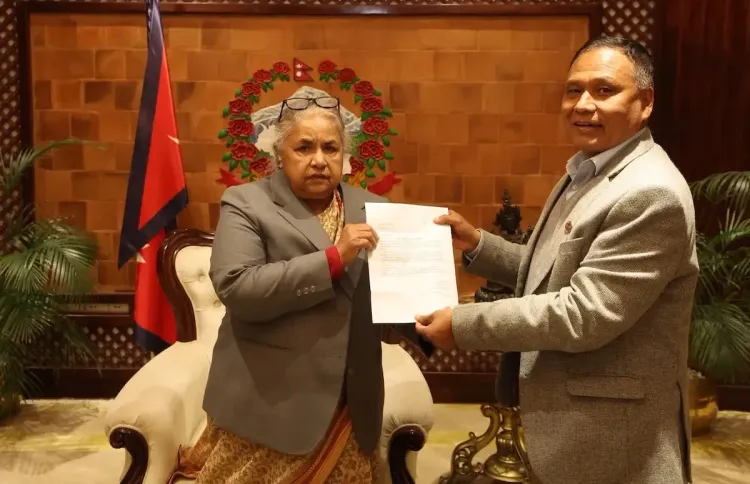
Kathmandu, Jan 7 (NationPress) Nepali Cabinet Minister Kul Man Ghising tendered his resignation on Wednesday under pressure from Prime Minister Sushila Karki, who urged ministers affiliated with political parties to step down from their posts.
Ghising, who held multiple portfolios including Minister for Energy, Water Resources, Irrigation, Physical Infrastructure, Transport, and Urban Development, resigned after a brief tenure of 115 days in office, having been appointed on September 15 of the previous year.
It is believed that Ghising played a pivotal role in establishing the Ujyalo Nepal Party, which merged with the Rastriya Swatantra Party (RSP) on December 29.
According to the agreement between the two parties, Ghising is anticipated to take on the role of senior vice-president of the RSP, which was the fourth-largest political entity in the dissolved House of Representatives.
He is also likely to run for parliamentary elections scheduled for March 5 this year.
Following his resignation, Ghising suggested that the accusations regarding his involvement in party politics influenced his decision to resign.
With increasing criticism about ministers participating in political activities while part of a supposedly non-partisan government, Prime Minister Karki reportedly advised those involved in party politics to resign during a Cabinet meeting on Monday.
The interim government, established on September 12 after the Gen Z movement, is generally perceived as neutral and free from political affiliations.
During a press conference held after his resignation, Ghising reiterated that he is not a member of any political party, emphasizing that the agreement between the Ujyalo Nepal Party and the RSP has yet to be officially enacted.
He also noted that throughout Nepal's history, prime ministers and ministers of interim and election governments have contested elections while still in office.
Ghising is recognized for having significantly reduced load shedding during his previous role as managing director of the Nepal Electricity Authority, making him a widely respected figure in the nation.
To bolster alternative political movements, the RSP had brought together notable personalities like Ghising and Kathmandu Metropolitan City Mayor Balen Shah.
Led by former media figure Rabi Lamichhane, who recently emerged from prison following fraud allegations, the RSP continues to evolve.
During his time overseeing various development ministries, Ghising terminated numerous infrastructure contracts with construction companies that had delayed projects for extended periods.
He claimed to have worked on reforming the energy, water resources, and irrigation sectors, advancing infrastructure projects, and enhancing the living standards of citizens.
Following his departure, Prime Minister Karki expressed gratitude to Ghising for his capable leadership across three critical ministries for three and a half months.
Point of View
It is crucial to recognize the implications of Minister Ghising's resignation. This event underscores the ongoing tensions within Nepal's political framework. While the interim government aims for neutrality, the reality is that political affiliations and pressures remain influential. Monitoring these developments is essential for understanding the evolving political narrative.
NationPress
30 Sept 2026
Frequently Asked Questions
Why did Kul Man Ghising resign?
Kul Man Ghising resigned due to pressure from Prime Minister Sushila Karki, who urged ministers affiliated with political parties to quit their positions.
What is the significance of Ghising's resignation?
Ghising's resignation raises concerns regarding the influence of party politics in the interim government, which was expected to be non-partisan.
What role did Ghising play in the RSP?
Ghising is believed to have been instrumental in forming the Ujyalo Nepal Party, which merged with the Rastriya Swatantra Party.
What are Ghising's future political plans?
Ghising is expected to take on a leadership role in the RSP and is likely to contest in the upcoming parliamentary elections.
How did Ghising's tenure impact the energy sector?
During his time as managing director at the Nepal Electricity Authority, Ghising significantly reduced load shedding and worked on sector reforms.