Kumaraswamy accuses K'taka govt of using SIR row to shield NICE project
Synopsis
H.D. Kumaraswamy is not just counter-punching on the SIR row — he is arguing the entire controversy is a government-manufactured smokescreen. With documents allegedly linking CM Shivakumar's family to NICE project land deals and a ₹2 lakh crore acquisition demand reportedly cited by the promoter, the stakes are higher than a routine electoral rolls dispute.
Key Takeaways
Kumaraswamy on 1 October 2026 accused Karnataka's Congress government of using the SIR row to distract from NICE project allegations against CM D.K.
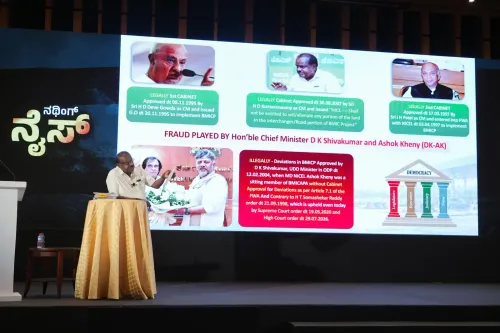
Kumaraswamy claimed he had presented documents three days earlier alleging Shivakumar and family colluded with the NICE company to appropriate project land.
He cited a reported claim by the NICE promoter that acquiring the project would cost the state ₹2 lakh crore or require surrendering Vidhana Soudha and Vikasa Soudha .
He alleged Congress leaders had committed irregularities during the SIR process by organising voter-list revisions at private venues, and that complaints to the Election Commission went unaddressed.
Shivakumar was accused of staging a street protest outside the Chief Electoral Officer's office while skipping a Cabinet meeting, and of acting on orders from Congress leadership in Delhi .
Kumaraswamy also accused the CM of claiming AHINDA voter numbers had fallen while allegedly marginalising AHINDA ministers within his Cabinet.
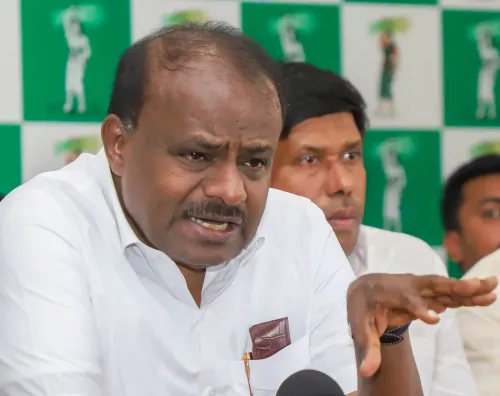
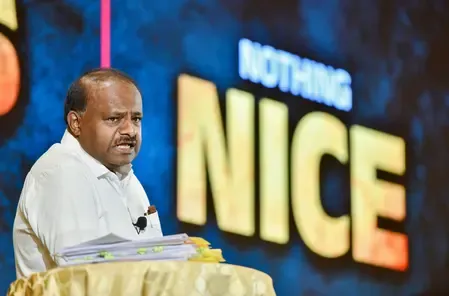
Union Minister H.D. Kumaraswamy on Thursday, 1 October 2026, accused the Congress government in Karnataka of engineering a controversy over the Special Intensive Revision (SIR) of electoral rolls to divert public attention from allegations he had levelled against Chief Minister D.K. Shivakumar and his family members in connection with the NICE project. Speaking to reporters in Bengaluru, Kumaraswamy described the Congress-led agitation as a calculated distraction timed to blunt the impact of his document-backed press conference held three days earlier.
The NICE Allegations at the Core
Kumaraswamy said he had held a detailed press conference and presented documents alleging that Shivakumar and his family members had colluded with the NICE company to appropriate land belonging to the project. He claimed the disclosures had triggered considerable political and public debate — and that the state government moved swiftly to shift the narrative toward the SIR issue in response.
Citing remarks he attributed to the NICE project promoter, Kumaraswamy said the government had been told it would need to surrender Vidhana Soudha and Vikasa Soudha, or pay ₹2 lakh crore, to acquire the project. 'The guarantee schemes have emptied the state treasury. Where does the government have the money to pay him?' he asked, alleging that despite this, Shivakumar continued to protect the project promoter.
Congress Protest Targeted as 'Drama'
Kumaraswamy criticised Shivakumar and other Cabinet members for staging a street protest — reportedly outside the Chief Electoral Officer's office — while a scheduled Cabinet meeting was left unattended. He called the protest 'ridiculous' and questioned why police had permitted the Chief Minister to demonstrate when, according to him, law enforcement had cited court orders to block other political leaders from similar demonstrations.
'Does this not amount to a violation of judicial orders?' he asked. He further alleged that Shivakumar was acting on directions from the Congress central leadership in Delhi rather than taking independent decisions, accusing the Chief Minister of lacking political autonomy.
SIR Irregularities: Counter-Allegations
Turning the tables on the Congress, Kumaraswamy alleged that party leaders had gathered people in large numbers at marriage halls, community halls, and private residences to carry out voter-list revisions when the SIR process was initiated. He described the Congress now raising the spectre of vote theft as akin to 'the devil reciting the Bhagavad Gita.'
He said his party had lodged complaints with the Election Commission of India (ECI), and that National Democratic Alliance (NDA) leaders had subsequently filed complaints as well. 'Despite our complaints, no cases were registered against anyone. The Congress, which indulged in irregularities, is now repeatedly accusing others of irregularities,' he alleged. He also questioned why the Congress government had remained silent when his party raised objections and had not initially flagged any shortcomings in the SIR process, asking: 'Why have you suddenly woken up now?'
AHINDA Charge Adds Another Layer
Kumaraswamy additionally accused Shivakumar of claiming that the number of AHINDA voters — an umbrella term in Karnataka referring to minorities, backward classes, and Dalits — had declined in the electoral rolls, while allegedly sidelining AHINDA ministers within his own Cabinet. The charge adds a social-equity dimension to what is already a multi-front political confrontation.
What Happens Next
The escalating war of words between the Janata Dal (Secular)-led NDA bloc and the Congress government in Karnataka is likely to intensify as both the SIR process and the NICE project allegations remain unresolved. Whether the Election Commission acts on the complaints lodged by NDA leaders — and whether the NICE land-acquisition charges prompt a formal investigation — will determine whether these exchanges remain political theatre or translate into institutional scrutiny.
Point of View
Backed by documents he claims to have tabled, deserve scrutiny independent of party mud-slinging. If the land-appropriation charges have substance, they should not get lost in the SIR noise; if the SIR irregularities are real, they should not be dismissed because the accuser has his own political motives. Karnataka's voters, particularly AHINDA communities now invoked by both sides, are watching a government and opposition each claim to protect them while trading allegations that, so far, have produced more press conferences than formal investigations.
NationPress
1 Oct 2026
Frequently Asked Questions
What is the NICE project controversy Kumaraswamy is referring to?
Kumaraswamy alleges that Chief Minister D.K. Shivakumar and his family members colluded with the NICE company to appropriate land belonging to the NICE project. He claims to have presented supporting documents at a press conference held three days before 1 October 2026, and says the government moved to shift attention to the SIR row after these allegations gained traction.
What is the Special Intensive Revision (SIR) of electoral rolls?
The Special Intensive Revision (SIR) is an Election Commission of India process to update and clean up voter lists. In Karnataka, it has become politically contentious, with the Congress alleging vote theft and Kumaraswamy counter-alleging that Congress leaders conducted irregular voter-list revisions at private venues during the process.
Why did Kumaraswamy criticise the Congress protest outside the Chief Electoral Officer's office?
Kumaraswamy said CM Shivakumar and Cabinet colleagues staged a street protest while skipping a scheduled Cabinet meeting, calling it 'ridiculous.' He also questioned why police allowed the Chief Minister to demonstrate when, according to him, they had cited court orders to prevent other political leaders from holding protests — suggesting an unequal application of the law.
What is the ₹2 lakh crore figure Kumaraswamy cited in connection with the NICE project?
Kumaraswamy claimed the NICE project promoter told the Karnataka government it would need to pay ₹2 lakh crore, or hand over Vidhana Soudha and Vikasa Soudha, to acquire the project. He used this to argue the state lacks the financial capacity for a takeover, and alleged the CM was shielding the promoter despite this.
What is AHINDA, and why is it relevant to this dispute?
AHINDA is a Kannada acronym used in Karnataka politics to refer collectively to minorities, backward classes, and Dalits. Kumaraswamy accused CM Shivakumar of publicly claiming that AHINDA voter numbers had fallen in the electoral rolls while simultaneously sidelining AHINDA ministers within his own Cabinet — a charge that adds a social-equity dimension to the political confrontation.