Owaisi backs Dalit-Muslim-OBC front ahead of polls
Synopsis
AIMIM president Asaduddin Owaisi on 15 November 2026 backed the Samajik Parivartan Morcha, framing it as the united voice of Dalit, Muslim and backward communities — a cross-identity coalition play ahead of India's upcoming assembly elections.
Key Takeaways
AIMIM president Asaduddin Owaisi endorsed the Samajik Parivartan Morcha on 15 November 2026 .
The Morcha is described as the united voice of Dalit, Muslim and backward (OBC) communities .
Owaisi's post included a video, suggesting organised outreach beyond a social media statement.
AIMIM has pursued Dalit-Muslim-OBC coalition strategies since at least the 2019 Lok Sabha election cycle.
The strategy is most consequential in Maharashtra, Bihar and Uttar Pradesh , where marginalised vote blocs can shift constituency results.
Formal seat-sharing deals, leadership announcements and joint events will determine whether the Morcha becomes a durable electoral force.
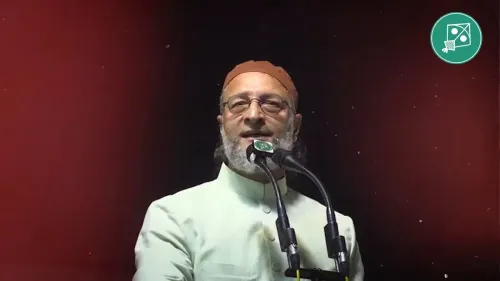
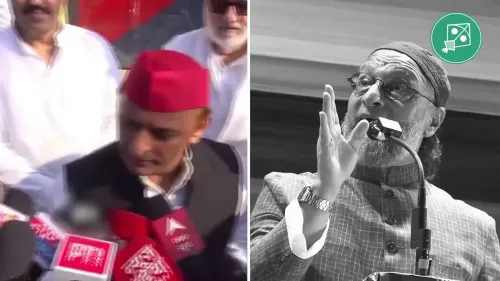
A coalition is taking shape. AIMIM president Asaduddin Owaisi on Sunday, 15 November 2026, threw his weight behind what he called the united voice of Dalit, Muslim and backward communities — the Samajik Parivartan Morcha — in a post on X that arrives as assembly election season heats up across India.
What the Morcha represents
The Hindi phrase in Owaisi's post — 'Dalit, Muslim aur pichhde samaj ki ekjut aawaz' (the united voice of Dalit, Muslim and backward communities) — doubles as a political manifesto in eleven words. The Samajik Parivartan Morcha, or Social Transformation Front, is being pitched as a platform that cuts across caste and religious lines to bring together communities that have historically been underrepresented in India's power structures.
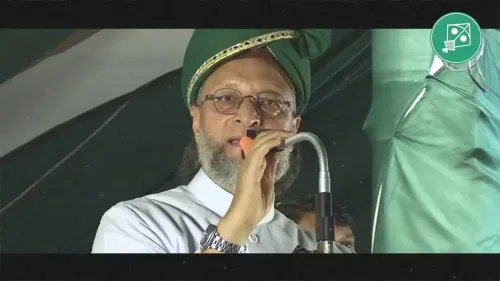
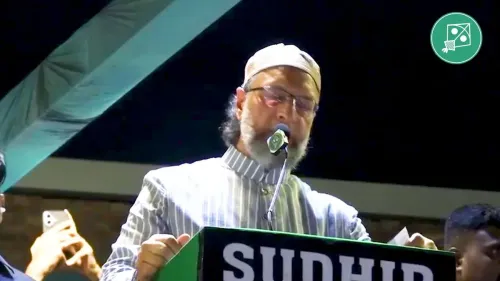
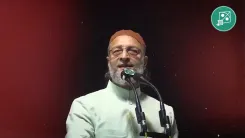
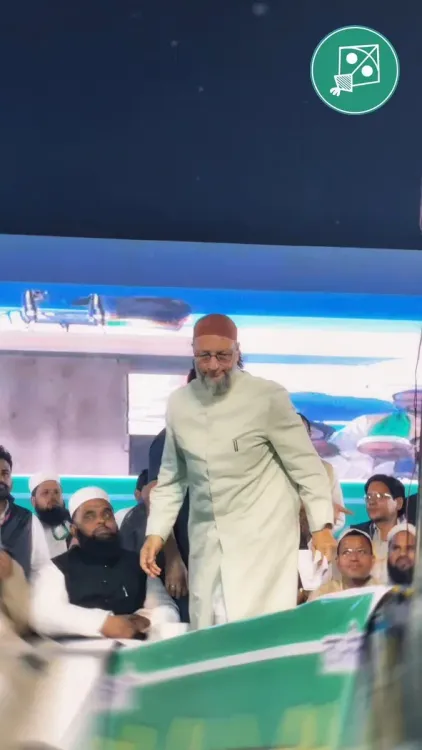
The accompanying video — the only media attached to the post — signals this is more than a social media statement. It suggests organised outreach, though the exact structure and formal launch of the Morcha remain to be announced.
AIMIM's coalition strategy beyond the Muslim vote
This is not Owaisi's first attempt to widen AIMIM's tent. The party has consistently sought Dalit-Muslim-OBC unity ahead of major electoral cycles — a template tried around both the 2019 and 2024 Lok Sabha elections. The calculus is straightforward: no single marginalised community commands a decisive share in most constituencies on its own, but a consolidated bloc could shift outcomes in several states.
The strategy has particular salience in Maharashtra, Bihar and Uttar Pradesh, where identity-based alliance building has been a central feature of state politics for decades. Regional parties across the spectrum have competed to consolidate OBC and Dalit support against national parties — and AIMIM is now explicitly entering that competition through the Morcha framework.
What to watch as elections approach
The real test will be whether the Samajik Parivartan Morcha translates into formal seat-sharing deals, joint rallies or a shared manifesto with Dalit and OBC outfits. Leadership announcements and any declared election schedule will reveal whether this is a durable alliance or an electoral-season gesture.
Owaisi commands a loyal base in Hyderabad and select pockets of Telangana and Maharashtra — but expanding that footprint requires exactly the kind of cross-community credibility the Morcha is designed to signal.
India's marginalised communities are being courted hard. Whether this front becomes the vehicle they choose is the question every rival party will be watching.
Point of View
Then leveraging it in seat negotiations. The move reflects a wider pattern in Indian subaltern politics: regional parties attempting to stitch together Dalit-OBC-minority blocs to remain relevant against the organisational might of the BJP and Congress. The critical variable is whether a formal coalition structure follows — without it, such declarations tend to fade once vote-counting begins. Watch for whether Dalit organisations with ground presence in UP or Maharashtra formally align, which would meaningfully raise the Morcha's electoral weight.
NationPress
15 Nov 2026
Frequently Asked Questions
What is the Samajik Parivartan Morcha?
The Samajik Parivartan Morcha (Social Transformation Front) is a political platform described by AIMIM president Asaduddin Owaisi as the united voice of Dalit, Muslim and backward (OBC) communities in India, aimed at advancing social change through electoral and political mobilisation.
Why is Owaisi promoting a Dalit-Muslim-OBC alliance?
Owaisi and AIMIM have long argued that no single marginalised community can win seats on its own, so a consolidated Dalit-Muslim-OBC bloc can shift outcomes in key constituencies — a strategy the party has pursued since at least the 2019 Lok Sabha election cycle.
Which states are most relevant to this coalition strategy?
Maharashtra, Bihar and Uttar Pradesh are the states where identity-based Dalit-OBC-Muslim coalition politics has historically had the greatest impact, and where AIMIM has sought to expand beyond its Hyderabad base.
Does AIMIM have Dalit and OBC members, or is it only a Muslim party?
AIMIM is primarily associated with Muslim representation, based in Telangana and parts of Maharashtra, but the party has repeatedly sought alliances and outreach with Dalit and OBC groups to broaden its electoral viability beyond its core constituency.
What elections could the Samajik Parivartan Morcha target?
While specific upcoming election dates linked to the Morcha have not been announced, the November 2026 timing aligns with pre-election mobilisation ahead of assembly polls in various states, where seat-sharing talks and joint campaigns would be the logical next step.