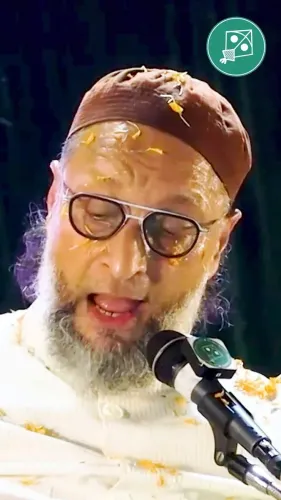
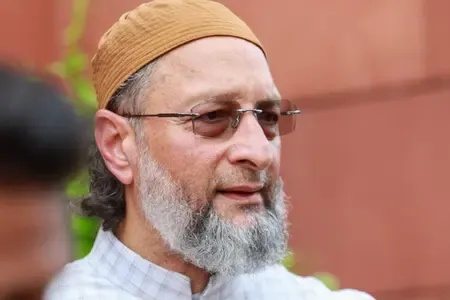
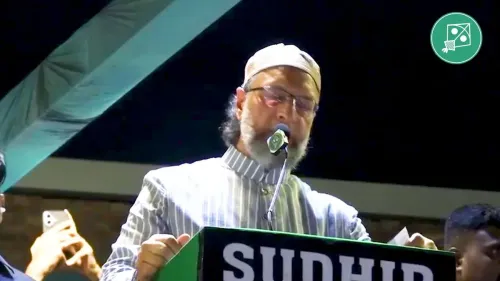
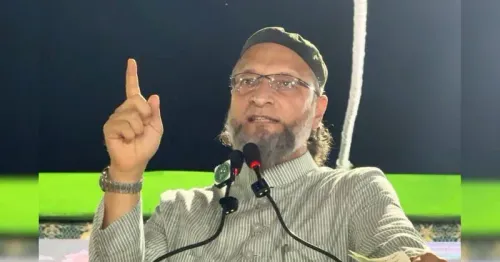
Owaisi, Chandrashekhar Azad announce UP poll tie-up in Lucknow
Synopsis
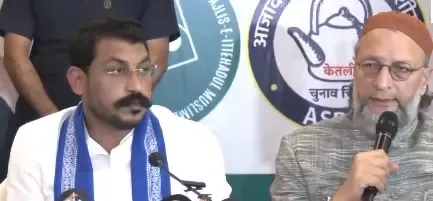
AIMIM president Asaduddin Owaisi and Azad Samaj Party chief Chandrashekhar Azad formally announced a pre-poll alliance for the Uttar Pradesh assembly elections at a joint press conference in Lucknow on 12 November 2026, calling it a victory for all of UP's people.
Key Takeaways
AIMIM president Asaduddin Owaisi and Azad Samaj Party president Chandrashekhar Azad announced a formal alliance for the Uttar Pradesh assembly elections on 12 November 2026 .
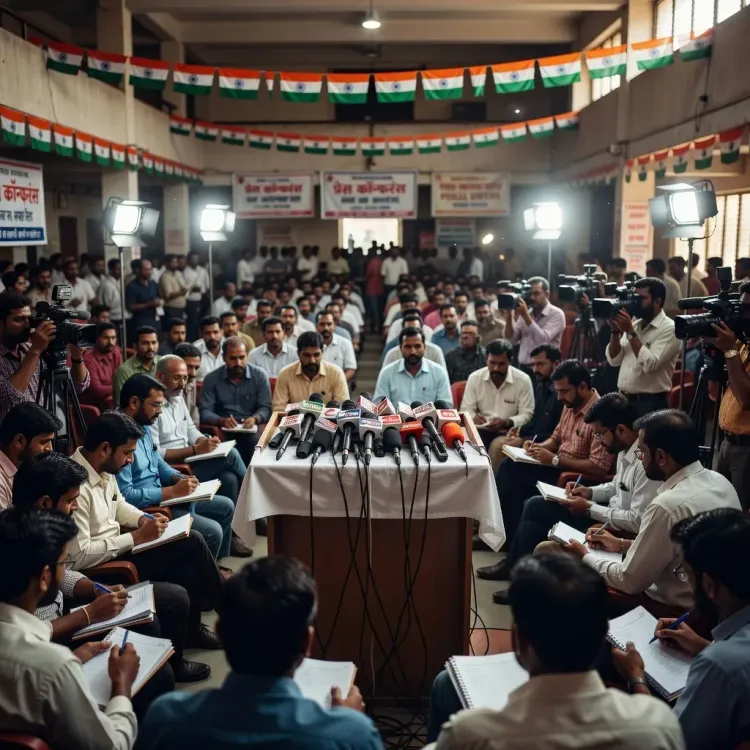
The joint press conference was held in Lucknow , signalling the alliance's intent to contest across the state.
Owaisi framed the coalition as a victory for 'the entire people of Uttar Pradesh,' positioning it beyond a purely community-based pact.
UP's Muslim population (~19%) and Scheduled Caste population (~21%) together represent a substantial potential vote bloc in multiple constituencies.
AIMIM contested the 2022 UP elections independently and won no seats; this alliance marks a strategic shift toward coalition-building.
Seat-sharing details between the two parties remain to be announced and will determine the alliance's real electoral reach.
A Muslim-Dalit political pact took shape in Lucknow on Thursday, 12 November 2026, as AIMIM president Asaduddin Owaisi joined hands with Azad Samaj Party chief Chandrashekhar Azad — the founder of the Bhim Army — to signal a joint front for the upcoming Uttar Pradesh assembly elections.
Owaisi posted from the press conference in Lucknow, writing in Hindi: 'Hamare gathbandhan ki kamyabi poore Uttar Pradesh ki janta ki kamyabi hogi' — 'The success of our alliance will be the success of the entire people of Uttar Pradesh.' The hashtag #Owaisi_AzadTieUp4UP accompanied the announcement, framing what the two leaders described as a broader social coalition rather than a narrow community deal.
Who is standing beside Owaisi in Lucknow
Chandrashekhar Azad, who goes by the handle @BhimArmyChief, is among the most recognisable faces in Dalit mobilisation in northern India. His Bhim Army first drew national attention during protests in Saharanpur and subsequently crystallised into the Azad Samaj Party as a formal electoral vehicle for Dalit and Bahujan communities in Uttar Pradesh. Standing together at a Lucknow podium, the two leaders put a face to what has been a recurring strategic ambition: a unified bloc of Muslim and Dalit voters capable of altering electoral arithmetic in India's most populous state.
Why UP's numbers make this alliance worth watching
Uttar Pradesh sends 80 members to the Lok Sabha — more than any other state — and its 403-seat assembly is the grand prize of Indian state politics. The state's Muslim population is estimated at roughly 19 percent and its Scheduled Caste population at around 21 percent; together they represent a theoretical arithmetic majority in dozens of constituencies. The challenge has always been political: converting demography into votes cast for the same candidates.
AIMIM contested the 2022 Uttar Pradesh assembly elections independently and won no seats, though it polled in ways critics argued split the anti-BJP vote in certain Muslim-concentrated constituencies. Owaisi has consistently rejected that framing, insisting AIMIM gives Muslim voters a genuine choice. The alliance with Azad Samaj Party is, in part, a direct answer to that criticism — an attempt to demonstrate coalition-building rather than lone-ranger candidacies.
The pattern behind the press conference
Uttar Pradesh has seen a succession of such attempted Muslim-Dalit or Bahujan pacts over the years — coalitions assembled with great fanfare before election season and tested by the brutal practicalities of seat-sharing. The critical next step for both parties is exactly that: a credible seat-sharing formula, agreed upon in writing, with enough candidates from each side to signal genuine reciprocity. Until those numbers are public, the alliance remains a declaration of intent.
What is different this time is the profile of both men at the table. Owaisi commands a national platform and significant donor networks. Chandrashekhar Azad carries street-level credibility among younger Dalit voters who have grown impatient with both the Bahujan Samaj Party and the Samajwadi Party. That combination — urban Muslim political capital plus a grassroots Dalit mobilisation network — is precisely the kind of structural fit that coalition architects dream about.
Seat-sharing negotiations will now be the real test of whether Lucknow, 12 November was the opening chapter of a durable alliance — or just another press conference.
Point of View
The tie-up is also a reputational move — an explicit rebuttal to the 'vote-splitter' charge that has followed the party in every northern India contest since 2017. The real indicator of seriousness will be whether seat-sharing talks produce a balanced, publicly announced list; without that, even the most energetic press conference remains symbolic.
NationPress
12 Nov 2026
Frequently Asked Questions
What is the Owaisi and Chandrashekhar Azad alliance about?
AIMIM president Asaduddin Owaisi and Azad Samaj Party chief Chandrashekhar Azad announced a pre-poll alliance to contest the Uttar Pradesh assembly elections together, aiming to consolidate Muslim and Dalit votes against the ruling coalition.
Where was the AIMIM-Azad Samaj Party press conference held?
The joint press conference was held in Lucknow on 12 November 2026.
Who is Chandrashekhar Azad and what is the Azad Samaj Party?
Chandrashekhar Azad is the founder of the Bhim Army, a Dalit-rights movement, and president of the Azad Samaj Party — a political party focused on Dalit and Bahujan issues primarily in Uttar Pradesh.
Did AIMIM win any seats in the 2022 UP elections?
No. AIMIM contested the 2022 Uttar Pradesh assembly elections independently and did not win any seats, which is a key reason Owaisi is now pursuing a coalition approach ahead of the next polls.
What are the seat-sharing details of the AIMIM-Azad Samaj Party alliance?
As of 12 November 2026, specific seat-sharing terms have not been publicly announced. Negotiations between the two parties are the critical next step before the alliance becomes an operational electoral force.