CAQM chief visits Punjab as stubble burning cases hit 5,517

Synopsis
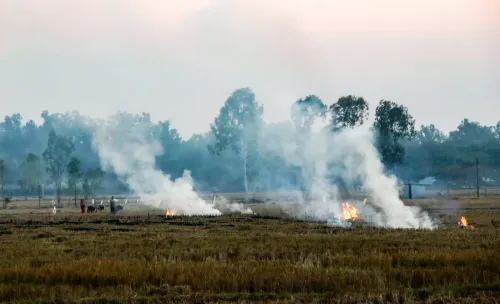
Punjab's stubble-burning tally hit 5,517 by 11 November — reversing a three-year declining trend — prompting Environment Minister Bhupender Yadav to dispatch CAQM chief Rajesh Verma for an on-ground review. With farmers reportedly timing fires to dodge satellite detection, 1,259 FIRs and ₹85 lakh in fines have done little to stem the daily spike.
Key Takeaways
Cumulative stubble-burning cases in Punjab reached 5,517 by 11 November 2026 , with 515 fresh incidents recorded on that day alone.
CAQM chairperson Rajesh Verma visited Fatehgarh Sahib , Khanna , and Patiala on 12 November 2026 on the directions of Union Environment Minister Bhupender Yadav .
Ferozepur ( 728 cases), Tarn Taran ( 687 ), Sangrur ( 628 ), and Bathinda ( 499 ) are the worst-affected districts.
Authorities have filed 1,259 FIRs , imposed fines exceeding ₹85 lakh , and made 1,637 red entries in land records.
Annual fire counts have declined sharply from 36,663 in 2023 to 5,114 in 2025, but the 2026 figure has reversed the trend.
Farmers are reportedly shifting burning to 4–6 pm to evade satellite monitoring, potentially undercounting actual incidents.
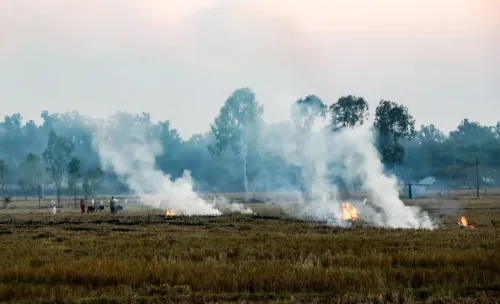
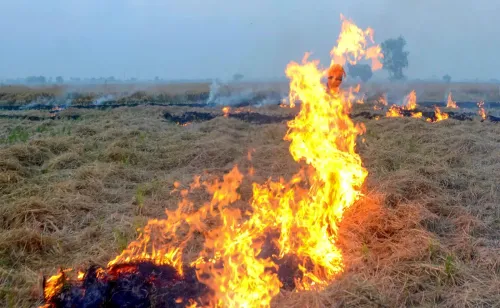
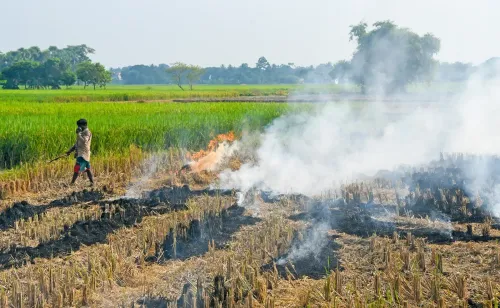
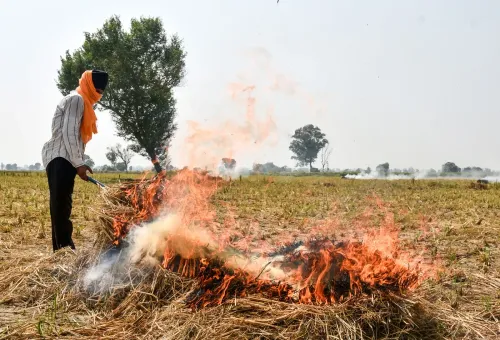
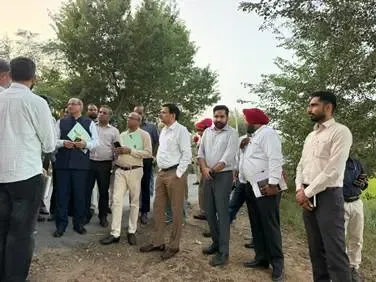
The Centre for Air Quality Management (CAQM) chairperson Rajesh Verma visited Fatehgarh Sahib, Khanna, and Patiala in Punjab on Thursday, 12 November 2026, to review crop residue management and enforcement measures, as cumulative stubble-burning cases in the state climbed to 5,517 by 11 November. The visit came after Union Environment Minister Bhupender Yadav directed Verma to personally assess the ground situation amid a sharp spike in farm fires.
Key Developments on the Ground
On 10 November, Punjab recorded 345 fresh stubble-burning incidents. The following day, the count surged to 515 in a single day — a rise that authorities say has severely impacted air quality across the Delhi-NCR region. The worst-affected districts remain Ferozepur, Tarn Taran, and Sangrur, which together account for a disproportionate share of the season's total fire count.
Between 15 September and 9 November 2026, 4,657 cases were recorded in the state. Ferozepur contributed the highest number at 728, followed by Tarn Taran (687), Sangrur (628), and Bathinda (499).
What CAQM Directed
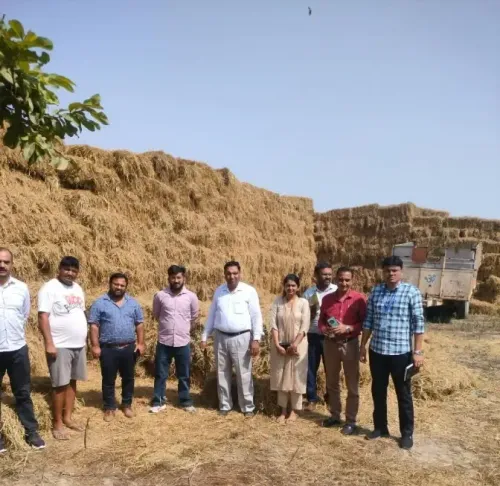
During his meetings with district officials, Verma focused on intensified patrolling, satellite monitoring of fire hotspots, effective deployment of crop residue management (CRM) machinery, and promoting paddy straw as industrial boiler fuel — an alternative that could reduce the economic incentive for burning. Directions were issued to district administrations and police for strict enforcement, stronger field coordination, and zero tolerance towards stubble burning, according to ministry statements.
Enforcement Action So Far
Authorities have registered 1,259 FIRs under Section 223 of the Bharatiya Nyaya Sanhita (BNS), which covers disobedience of orders promulgated by a public servant. Fines totalling more than ₹85 lakh have been imposed in 1,695 cases, of which nearly ₹37 lakh has been recovered. Additionally, 1,637 red entries have been made in land records — a significant deterrent, as farmers with a red entry are ineligible to obtain loans against their farmland or sell it.
A Longer Trend — and a New Evasion Tactic
Despite the current spike, Punjab's annual stubble-burning figures have fallen sharply over recent years. In 2023, the season-total stood at 36,663 cases. This dropped to 10,909 in 2024 and further to 5,114 in 2025. The 2026 count has reversed that downward trend, though it remains well below 2023 peaks.
Officials have flagged an emerging evasion pattern: farmers are reportedly shifting burning activity to between 4 pm and 6 pm to avoid standard afternoon satellite observation windows, meaning actual fire counts may be undercounted. Farmers typically burn paddy stubble to quickly clear fields for the wheat crop sown in October and November, immediately after paddy harvest. The CAQM monitoring season begins on 15 September, two weeks ahead of paddy procurement.
With Delhi's air quality under seasonal stress and enforcement mechanisms still catching up to farmers' workarounds, the coming weeks will test whether CAQM's on-ground intervention translates into a measurable reduction in fire counts.
Point of View
700 cases amount to roughly ₹5,000 per violation — far below the cost or effort of alternative disposal. The red-entry deterrent on land records is structurally stronger, but its reach at 1,637 entries against 5,517 cases shows enforcement is still catching a fraction of offenders. Most tellingly, farmers have already adapted to satellite schedules: an arms-race dynamic that makes remote sensing less reliable just as it was becoming the backbone of monitoring. Without a credible subsidy or market mechanism for paddy straw disposal at scale, the annual fire season will remain a policy treadmill.
NationPress
12 Nov 2026
Frequently Asked Questions
How many stubble-burning cases have been recorded in Punjab in 2026?
As of 11 November 2026, the cumulative count in Punjab stood at 5,517 cases. This marks an increase over the 5,114 cases recorded in the entire 2025 season, reversing a three-year declining trend.
Why did the CAQM chief visit Punjab?
CAQM chairperson Rajesh Verma visited Fatehgarh Sahib, Khanna, and Patiala on 12 November 2026 on the directions of Union Environment Minister Bhupender Yadav to review crop residue management and enforcement measures amid the spike in farm fires. The visits were aimed at directing stricter patrolling, better satellite monitoring, and zero tolerance on stubble burning.
Which Punjab districts have reported the most stubble-burning cases?
Ferozepur leads with 728 cases between 15 September and 9 November 2026, followed by Tarn Taran (687), Sangrur (628), and Bathinda (499). These four districts together account for a large share of the season's cumulative total.
What enforcement action has been taken against stubble burning in Punjab?
Authorities have registered 1,259 FIRs under Section 223 of the Bharatiya Nyaya Sanhita (BNS), imposed fines of more than ₹85 lakh in 1,695 cases, and made 1,637 red entries in land records. Farmers with a red entry cannot obtain loans against their farmland or sell it.
Why do Punjab farmers continue burning stubble despite restrictions?
Stubble burning is a quick and low-cost method to clear paddy fields for the wheat crop sown in October and November. Despite financial penalties and FIRs, the economic incentive remains strong. Officials have also noted that some farmers are now timing fires between 4 pm and 6 pm to avoid standard afternoon satellite observation windows, suggesting deliberate evasion of monitoring systems.