CAQM deploys flying squads in 34 districts of Punjab, Haryana to curb stubble burning
Synopsis
With Delhi-NCR's winter smog season beginning, the CAQM has deployed flying squads across 34 paddy-belt districts in Punjab and Haryana — its broadest ground-level enforcement push yet. Running daily from October 1 to November 30, the squads will report directly to the Commission and coordinate with the Parali Protection Force, putting stubble burning under its most intensive monitoring in recent years.
Key Takeaways
The CAQM has deployed flying squads across 34 districts — 18 in Punjab and 16 in Haryana — to curb paddy stubble burning.
The deployment runs from 1 October to 30 November 2026 , covering the full paddy harvesting season.
Squads will coordinate with the Parali Protection Force , district authorities, and State Pollution Control Boards, filing daily reports to the CAQM.
Key Punjab districts monitored include Sangrur , Ludhiana , Amritsar , and Bathinda ; Haryana districts include Karnal , Hisar , Panipat , and Kurukshetra .
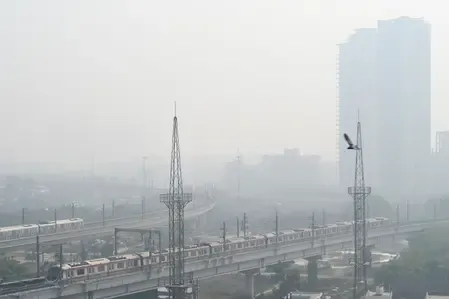
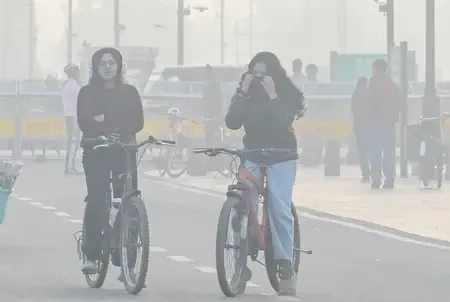
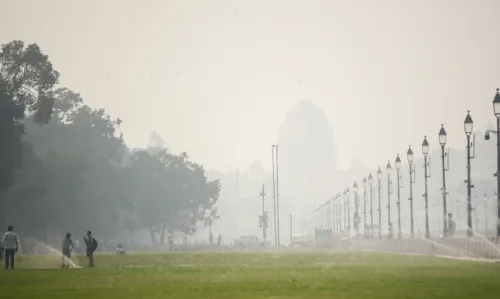
Stubble burning is a leading cause of severe winter smog in Delhi-NCR , with satellite data linking farm fires directly to dangerous AQI spikes.
The Commission for Air Quality Management in NCR and Adjoining Areas (CAQM) has intensified its field-level enforcement against paddy stubble burning by deploying flying squads across 34 districts in Punjab and Haryana from 1 October to 30 November 2026, covering the entire critical paddy harvesting season. The move, communicated through the Central Pollution Control Board (CPCB), aims to prevent the annual air quality crisis that envelops northern India — and particularly the Delhi-NCR region — every winter.
Scale and Structure of the Deployment
The deployment spans 18 districts in Punjab and 16 districts in Haryana, structured in successive phases to ensure uninterrupted monitoring throughout the harvesting period. Teams have been assigned to specific districts for staggered deployment windows, ensuring that no district loses coverage between rotations.
In Punjab, the squads cover key paddy-producing districts including Sangrur, Tarn Taran, Firozpur, Muktsar, Bathinda, Amritsar, Moga, Mansa, Fazilka, Patiala, Ludhiana, Kapurthala, Faridkot, Barnala, Malerkotla, Gurdaspur, Jalandhar, and Fatehgarh Sahib. In Haryana, the monitored districts include Jind, Fatehabad, Hisar, Kaithal, Sonipat, Rohtak, Sirsa, Karnal, Palwal, Jhajjar, Kurukshetra, Ambala, Yamunanagar, Faridabad, Panipat, and Hansi.
What the Flying Squads Will Do
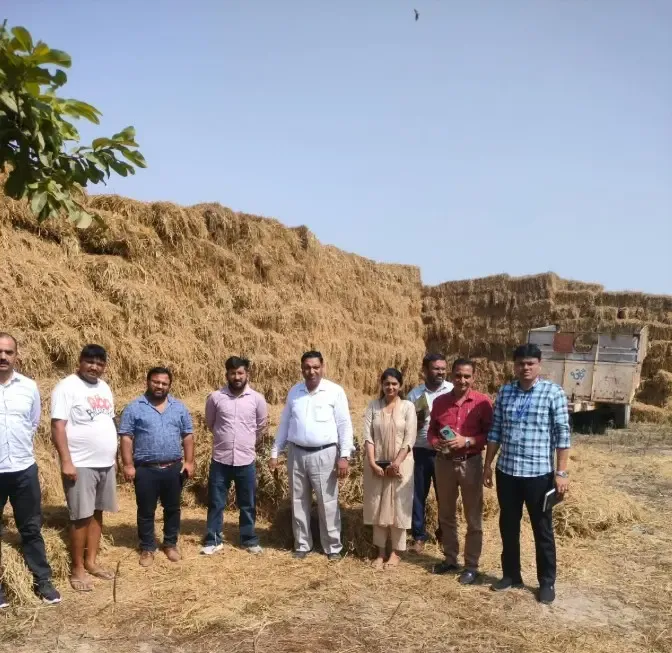
According to the CAQM statement, the squads will coordinate with farmers, the Parali Protection Force, district-level authorities, State Government Nodal Officers, and officers from the respective State Pollution Control Boards. Daily field reports will be submitted to the CAQM Cell at SAS Nagar and directly to the Commission.
'The strengthened field-level mechanism is aimed at ensuring timely assessment of the on-ground situation, close coordination among enforcement agencies and prompt preventive action to tackle stubble burning incidents during the harvesting season,' an official said in a statement on Monday.
Why This Matters for Air Quality
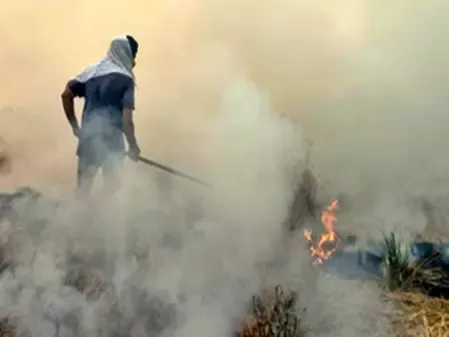
Stubble burning — the practice of setting fire to paddy crop residue after harvesting — is one of the primary contributors to the severe smog that blankets Delhi-NCR and parts of north India between October and December each year. Satellite data from previous years has recorded thousands of farm fire incidents in Punjab and Haryana during this window, directly correlating with dangerous spikes in the Air Quality Index (AQI) across the region.
This is the latest in a series of escalating enforcement measures by the CAQM, which has repeatedly pressed both state governments to incentivise in-situ crop residue management as a longer-term solution. Critics argue that ground-level enforcement alone is insufficient without robust support for alternative stubble disposal — including subsidised machinery and assured procurement for biomass energy plants.
What Happens Next
The flying squads will submit daily situation reports enabling the CAQM to coordinate follow-up action with concerned authorities wherever violations are recorded. The Commission's field mechanism will remain active through 30 November 2026, encompassing the full paddy harvesting season. Air quality outcomes over the coming weeks will be closely watched as an early indicator of whether the intensified monitoring translates into a measurable reduction in farm fire incidents compared to previous years.
Point of View
But it is also one that has been repeated, in varying forms, for several consecutive harvesting seasons — with only marginal progress on overall fire counts. The fundamental problem remains economic: for many smallholder farmers in Punjab and Haryana, burning residue is the cheapest and fastest way to clear fields before the rabi sowing window. Until subsidised alternative machinery reaches the last-mile farmer reliably, and until biomass offtake channels are commercially viable, enforcement squads can document violations but cannot eliminate the underlying incentive to burn. The CAQM's own effectiveness will ultimately be judged not by squad numbers but by satellite fire-count data in November.
NationPress
5 Oct 2026
Frequently Asked Questions
What is the CAQM flying squad deployment for stubble burning?
The Commission for Air Quality Management in NCR and Adjoining Areas (CAQM) has deployed field enforcement teams, called flying squads, across 34 districts in Punjab and Haryana from 1 October to 30 November 2026 to monitor and prevent paddy stubble burning. The squads file daily reports to the Commission and coordinate with state and district authorities.
Which districts in Punjab and Haryana are covered by the flying squads?
In Punjab, 18 districts are covered, including Sangrur, Amritsar, Ludhiana, Bathinda, Patiala, Firozpur, and Jalandhar, among others. In Haryana, 16 districts are covered, including Karnal, Hisar, Panipat, Kurukshetra, Fatehabad, and Faridabad.
Why does stubble burning matter for Delhi-NCR air quality?
Paddy stubble burning in Punjab and Haryana is one of the primary drivers of the severe winter smog that blankets Delhi-NCR between October and December each year. Thousands of farm fire incidents recorded annually during this period directly correlate with hazardous spikes in the Air Quality Index across the region.
How long will the CAQM flying squad monitoring last?
The deployment runs from 1 October to 30 November 2026, covering the full paddy harvesting season. Squads are assigned in successive phases to ensure continuous district-level coverage throughout the period.
Who do the flying squads coordinate with on the ground?
The squads work with farmers, the Parali Protection Force, district-level authorities, State Government Nodal Officers, and officers of the respective State Pollution Control Boards, reporting daily to the CAQM Cell at SAS Nagar and to the Commission itself.