CAQM team visits Moga to review Punjab stubble burning curbs

Synopsis
With Punjab's paddy harvesting season in full swing, CAQM sent a senior team to Moga — one of the state's stubble burning hotspots — to verify on-ground preparedness. Simultaneously, the Commission tightened its grip on NCR industries, mandating real-time PTZ camera surveillance across 17 pollution categories by 30 November, overriding an order issued just 11 days earlier.
Key Takeaways
CAQM delegation led by T.S.
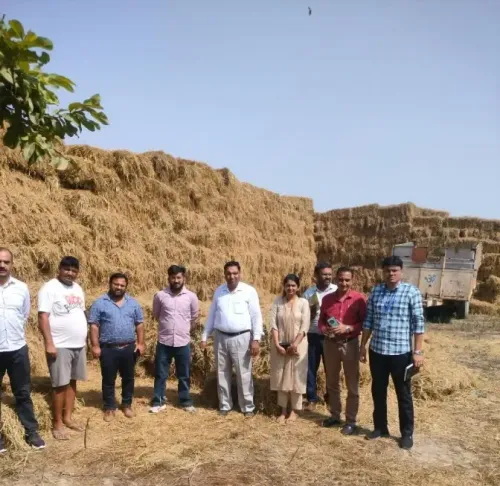
Panwar , Member (Technical), visited Moga, Punjab on 16 October 2026 to review stubble burning prevention measures.
The team assessed CRM machinery deployment, field surveillance, and in-situ and ex-situ paddy residue management at hotspot villages.
CAQM extended the PTZ camera requirement to all industries under Statutory Direction No.
98 in the NCR , superseding an earlier order dated 5 October 2026 .
Coverage includes 17 CPCB-identified highly polluting industries , Red Category units, Food and Textile industries with boilers, and Metal industries with furnaces.
All covered industrial units must install and operationalise PTZ cameras with real-time feeds by 30 November 2026 .
A delegation of the Commission for Air Quality Management in NCR and Adjoining Areas (CAQM) visited Moga district in Punjab on Friday, 16 October 2026, to assess ground-level implementation of measures aimed at preventing stubble burning during the ongoing paddy harvesting season. The inspection is part of the Commission's sustained monitoring drive across hotspot districts ahead of peak winter pollution months.
What the Delegation Assessed
Led by T.S. Panwar, Member (Technical), CAQM, the team held discussions with district officials and conducted field visits to identified hotspot villages in Moga. The delegation reviewed the preparedness of the district administration and evaluated coordination among concerned departments.
The team specifically examined the deployment of Crop Residue Management (CRM) machinery, field-level surveillance mechanisms, and the overall implementation of both in-situ (on-farm decomposition) and ex-situ (off-farm utilisation) paddy residue management measures. Panwar emphasised the need for continuous monitoring and timely action to prevent stubble burning incidents during the harvesting window, according to an official statement.
Why Moga Is a Focal Point
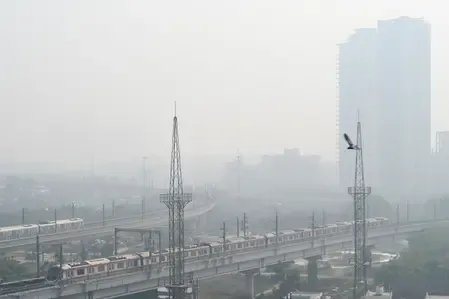
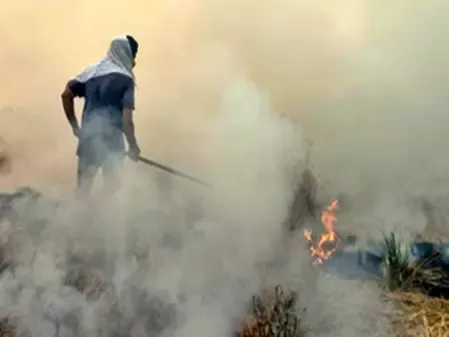
Moga has been identified as one of Punjab's stubble burning hotspots, making it a priority location for CAQM oversight. Paddy straw burning in Punjab and Haryana is a primary contributor to the hazardous smog that envelops the National Capital Region (NCR) each October and November. This comes amid growing pressure on state governments to enforce farm-fire bans more rigorously following several high-pollution winters.
CAQM Expands PTZ Camera Monitoring in NCR Industries
In a separate but related development, the CAQM significantly expanded its remote monitoring infrastructure for air-polluting industries in the NCR. The Commission extended the requirement for installation and operationalisation of Pan-Tilt-Zoom (PTZ) cameras to all categories of industries covered under Statutory Direction No. 98. This order supersedes the Commission's earlier order dated 5 October 2026.
The directive now covers all 17 categories of highly polluting industries identified by the Central Pollution Control Board (CPCB), Red Category (Medium and Large) air-polluting industries, Food and Food Processing and Textile industries with boilers or thermic fluid heaters, and Metal industries with furnaces operating in the NCR.
Compliance Deadline and Requirements
All industrial units covered under the order must ensure the installation and operationalisation of PTZ cameras — including real-time video feed transmission — by 30 November 2026. The measure is designed to enable technology-driven monitoring of fuel usage, industrial emissions, and compliance with prescribed pollution-control norms, according to the official statement. The Commission stated this expansion will broaden the scope of continuous, remote oversight of industrial pollution sources in the region.
With the harvesting season at its peak and winter approaching, both the field inspection in Moga and the tightening of industrial monitoring represent CAQM's escalating effort to contain air quality deterioration in and around Delhi — a challenge that has persisted for years and remains a flashpoint between the Centre, state governments, and environmental regulators.
Point of View
Emphasis on monitoring, coordination meetings — yet stubble fires continue to surge each October. The more significant move is the PTZ camera expansion for NCR industries, which supersedes an order barely 11 days old, suggesting the Commission itself found the earlier directive insufficient. Real-time surveillance of 17 pollution categories is a meaningful escalation in enforcement architecture, but its impact depends entirely on whether violations flagged by cameras translate into swift penalties. CAQM's credibility this winter will be measured not by orders issued but by compliance rates on the ground.
NationPress
16 Oct 2026
Frequently Asked Questions
Why did CAQM visit Moga in Punjab?
CAQM visited Moga on 16 October 2026 to review the ground-level implementation of stubble burning prevention measures during the paddy harvesting season. Moga has been identified as a hotspot district contributing to winter air pollution in the NCR.
What is CRM machinery and why does it matter for stubble burning?
Crop Residue Management (CRM) machinery includes equipment such as happy seeders and balers that allow farmers to manage paddy straw on-farm or repurpose it, instead of burning it. Adequate deployment of CRM machinery is central to reducing farm fires, which are a key driver of hazardous smog in north India each winter.
What are the new PTZ camera rules for NCR industries?
CAQM has mandated that all industries covered under Statutory Direction No. 98 in the NCR install and operationalise Pan-Tilt-Zoom (PTZ) cameras with real-time video feeds by 30 November 2026. The directive covers 17 highly polluting industry categories identified by CPCB, Red Category units, and several other industrial types with boilers, furnaces, or thermic fluid heaters.
Which industries in the NCR must install PTZ cameras?
The requirement covers all 17 CPCB-identified highly polluting industry categories, Red Category (Medium and Large) air-polluting industries, Food and Food Processing and Textile industries with boilers or thermic fluid heaters, and Metal industries with furnaces operating in the NCR.
When is the deadline for PTZ camera installation for NCR industries?
All industrial units covered under CAQM's latest order must complete installation and operationalisation of PTZ cameras, including real-time transmission of video feeds, by 30 November 2026.