Yadav, Chouhan Review Stubble Burning, Crop Residue Plan for Delhi-NCR
Synopsis
Union Environment Minister Bhupender Yadav and Agriculture Minister Shivraj Singh Chouhan met with CAQM on 16 June 2026 to review in-situ and ex-situ crop residue management strategies and stubble-burning prevention to tackle Delhi-NCR air pollution ahead of the 2026 paddy harvest.
Key Takeaways
Bhupender Yadav and Shivraj Singh Chouhan held a joint review with CAQM on 16 June 2026 on crop residue and stubble-burning management.
The meeting covered both in-situ (field incorporation) and ex-situ (biomass reuse) approaches to paddy straw management.
CAQM , constituted in 2020 and given statutory status in 2021 , coordinates air-quality action across Delhi , Haryana , Punjab , Uttar Pradesh , and Rajasthan .
A central subsidy scheme for crop-residue machinery has been running since 2018 in Punjab , Haryana , Uttar Pradesh , and Delhi .
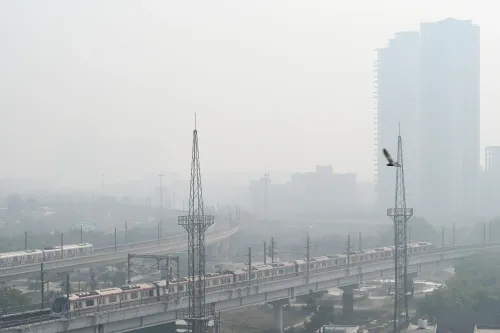
Stubble burning after the October–November paddy harvest is a major seasonal driver of severe air pollution in Delhi-NCR .
The inter-ministerial format signals intent to align enforcement and monitoring protocols before the 2026 harvest season.
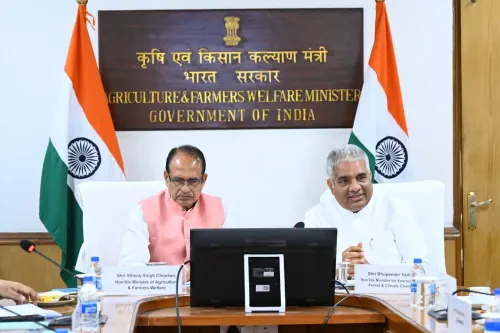
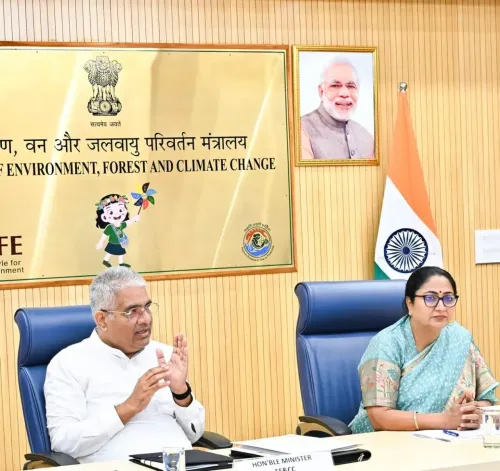
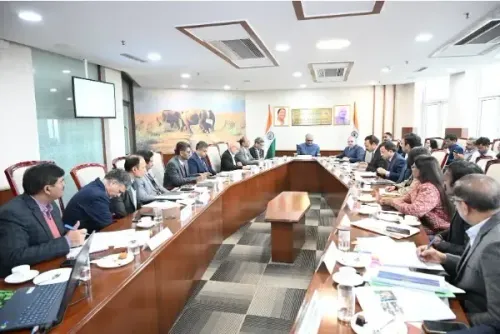
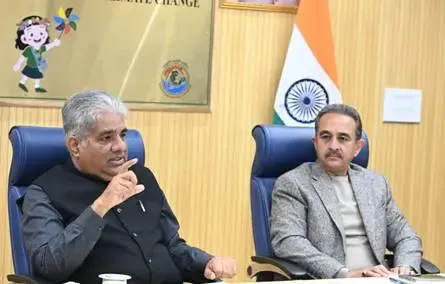
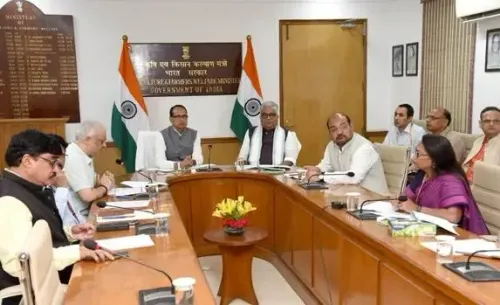
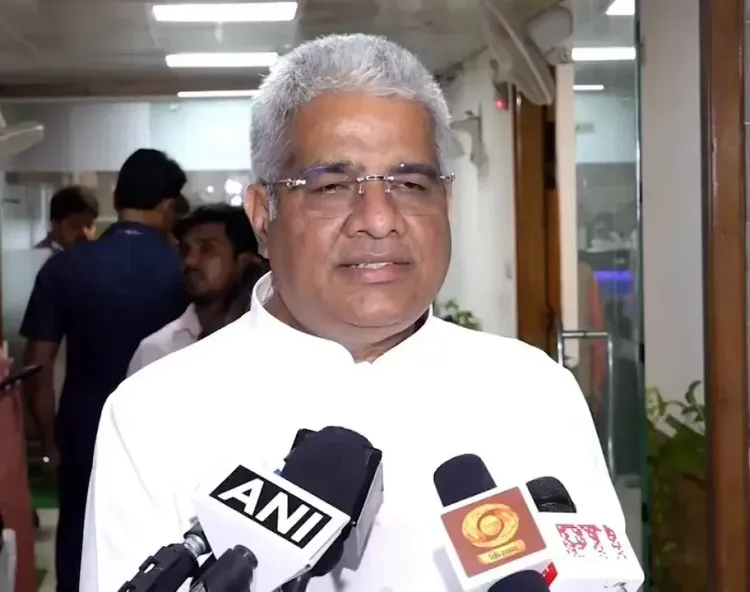
Union Environment Minister Bhupender Yadav on Tuesday, 16 June 2026 held a detailed inter-ministerial review with Union Agriculture Minister Shivraj Singh Chouhan and the Commission for Air Quality Management (CAQM) to assess strategies for in-situ and ex-situ crop residue management and the prevention of stubble burning in Delhi-NCR and adjoining areas.
Context
Yadav stated that the review 'focused on ways and means to efficiently and effectively manage and monitor crop residue in a bid to combat air pollution in the Delhi-NCR region.' The joint session brought together the two ministries most directly responsible for both the agricultural source of the problem and its environmental consequences, alongside the statutory body mandated to coordinate regional air-quality action.
Stubble burning — the practice of setting paddy crop residue alight after harvest — is a well-documented seasonal driver of severe air pollution across Delhi-NCR every October–November. Smoke from fields in Punjab and Haryana routinely pushes the region's air quality index into the 'severe' category, triggering public-health advisories and school closures.
Policy Backdrop
The CAQM was constituted by ordinance in 2020 and granted full statutory status in 2021, specifically to bring a coordinated, multi-state approach to air-quality governance in the National Capital Region. The commission has powers to issue binding directions to state governments and agencies across Delhi, Haryana, Uttar Pradesh, Rajasthan, and Punjab.
A central scheme launched in 2018 has provided subsidised machinery — including happy seeders, super-SMS attachments, and bio-decomposer solutions — to farmers in Punjab, Haryana, Uttar Pradesh, and Delhi to encourage in-situ incorporation of paddy straw rather than burning. Ex-situ alternatives, such as using crop residue as feedstock for biomass power plants and industrial boilers, have also been promoted in parallel. The Supreme Court has issued successive directions on stubble burning since 2015, including a strengthened enforcement order in 2019.
Stakeholders and Impact
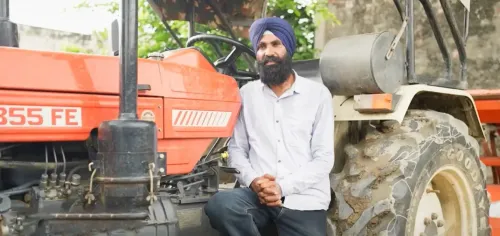
Farmers in Punjab and Haryana are the primary stakeholders on the agricultural side: many continue to burn residue because it is the fastest and cheapest way to clear fields between the paddy and wheat cycles. Subsidy access, awareness of alternatives, and ground-level machinery availability remain persistent implementation challenges.
For the estimated 3 crore-plus residents of Delhi-NCR, crop-residue smoke compounds urban emission sources to produce some of the world's worst seasonal air quality. The joint review signals that the central government intends to align monitoring and enforcement protocols ahead of the 2026 paddy harvest season.
What's Next
Attention will now turn to whether the CAQM issues updated directions on machinery deployment, monitoring grids, or penalties for violations ahead of the October–November 2026 harvest window. Any expansion of subsidy coverage or introduction of new bio-decomposer programmes would need to be operationalised before the kharif harvest begins.
The inter-ministerial format of Tuesday's review — pairing environment and agriculture at the cabinet level with the CAQM — reflects a recognition that durable solutions require simultaneous action on farm economics and regulatory enforcement. How that coordination translates into field-level outcomes will be the critical test as winter approaches.
Point of View
Well ahead of the October–November harvest — suggests the government is trying to break from the pattern of reactive crisis management that has characterised Delhi's annual pollution emergency. Holding the meeting jointly at the cabinet level, with CAQM present, is structurally significant: it reflects an acknowledgement that environment-side bans alone cannot succeed without agriculture-side buy-in on alternatives. The broader policy arc points toward institutionalising pre-season coordination rather than scrambling for emergency measures when AQI spikes. Whether this translates into measurable reductions in fire counts will depend on how quickly subsidy and monitoring decisions move from the review room to the farm.
NationPress
21 Sept 2026
Frequently Asked Questions
Why did Bhupender Yadav meet Shivraj Singh Chouhan on stubble burning?
The two ministers held a joint review with CAQM on 16 June 2026 to assess in-situ and ex-situ crop residue management strategies and plan measures to prevent stubble burning before the 2026 paddy harvest season, which is the primary source of seasonal air pollution in Delhi-NCR.
What is CAQM and what role does it play in stubble burning?
The Commission for Air Quality Management (CAQM) is a statutory body set up in 2021 to coordinate pollution control across Delhi, Haryana, Punjab, Uttar Pradesh, and Rajasthan. It can issue binding directions to state governments and agencies on measures including stubble-burning enforcement and alternatives.
What is in-situ and ex-situ crop residue management?
In-situ management means incorporating paddy straw back into the soil using machinery such as happy seeders or bio-decomposers instead of burning it. Ex-situ management means removing the straw from the field and using it elsewhere — for example, as feedstock for biomass power plants or industrial boilers.
What government schemes exist to stop stubble burning in India?
The central government has run a crop residue management scheme since 2018 that subsidises machinery for farmers in Punjab, Haryana, Uttar Pradesh, and Delhi. Bio-decomposer programmes and promotion of ex-situ biomass uses have also been pursued alongside regulatory bans enforced through CAQM directions.
When does stubble burning affect Delhi air quality the most?
Stubble burning peaks during the October–November paddy harvest window in Punjab and Haryana. Smoke from these fires, combined with urban emission sources and calm winter winds, typically pushes Delhi-NCR's air quality into the 'severe' category during this period.