Shivraj, Bhupender Yadav hold stubble-burning meet at Krishi Bhawan
Synopsis
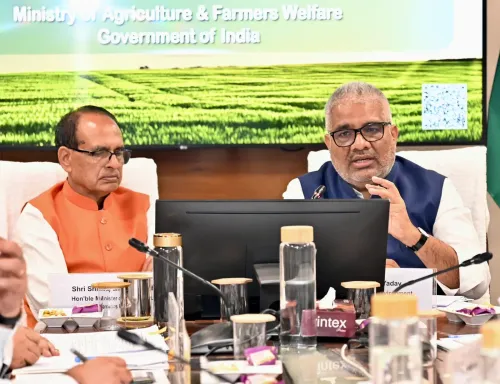
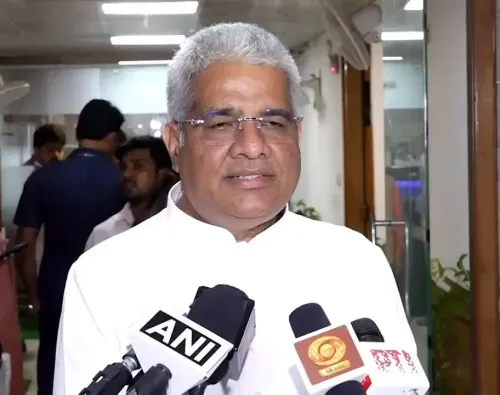
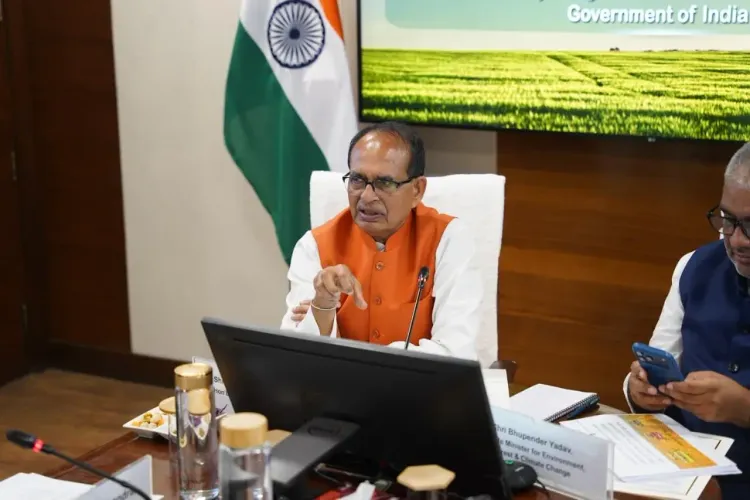
Union Agriculture Minister Shivraj Singh Chouhan and Environment Minister Bhupender Yadav met state agriculture ministers at Krishi Bhawan on 13 October 2026 to push alternatives to stubble burning, stressing machinery access, better utilisation, and farmer awareness to protect soil health and reduce winter air pollution.
Key Takeaways
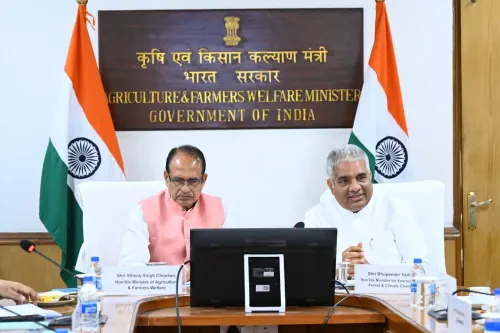
Shivraj Singh Chouhan and Bhupender Yadav jointly chaired a meeting on stubble management at Krishi Bhawan on 13 October 2026 .
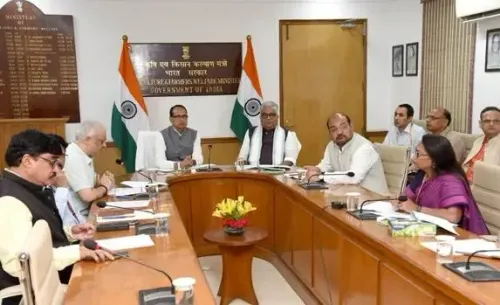
State agriculture ministers and senior officials from key states participated in the discussion.
The government is emphasising three levers: machinery availability, better utilisation of equipment, and farmer awareness campaigns.
Central subsidies on crop-residue management machinery for Punjab, Haryana and Uttar Pradesh have been in place since 2018 .
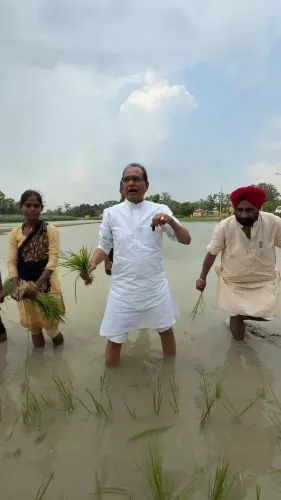
Chouhan linked stubble management directly to farmer income growth and soil health , framing it as an economic opportunity.
Satellite-tracked farm fire counts in October–November will be the key indicator of whether this year's efforts translate into results.
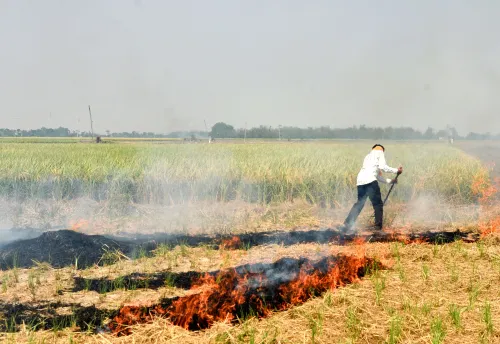
Every October, as harvest season peaks across Punjab, Haryana and Uttar Pradesh, farm fires light up the Indo-Gangetic plains — and Delhi's air turns lethal. On Tuesday, 13 October 2026, Union Agriculture Minister Shivraj Singh Chouhan convened a high-level inter-ministerial meeting at Krishi Bhawan, New Delhi, bringing together state agriculture ministers, senior officials, and Union Environment Minister Bhupender Yadav to chart a sharper course on stubble management before the crisis deepens.
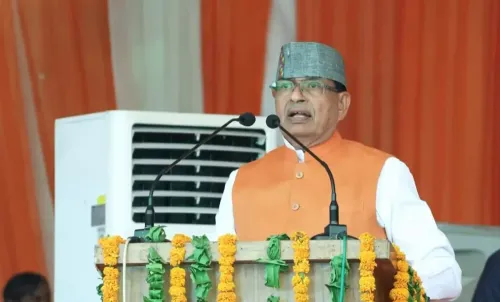
Posting on X after the meeting, Chouhan framed the central goal plainly: 'किसान भाई पराली जलाने के बजाय उसका बेहतर उपयोग करें' — 'farmer brothers should put crop residue to better use rather than burning it' — so that their incomes rise and soil health is preserved. He flagged three specific levers: machinery availability, better utilisation of existing equipment, and farmer awareness campaigns.Why this meeting, why now
The window between the kharif harvest and the rabi sowing — roughly October and November — is when millions of tonnes of paddy straw accumulate across the north Indian plains. Burning it is cheap and fast; the consequences are not. Satellite-tracked farm fire counts typically spike during this fortnight, pushing air-quality indices in the National Capital Region into hazardous territory. The joint presence of the agriculture and environment ministers signals that the government is treating this as a shared accountability, not a single-ministry problem.The machinery subsidy programme and its limits
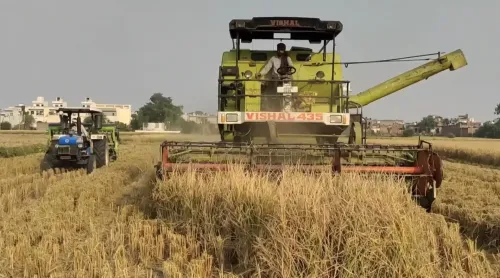
The central government has subsidised crop-residue management machinery — happy seeders, rotavators, balers — for Punjab, Haryana and Uttar Pradesh since 2018. The logic is straightforward: if a farmer can profitably mulch, bale, or incorporate stubble into the soil, the incentive to burn it disappears. Chouhan's emphasis on 'better utilisation' of machines suggests that distribution alone has not been enough; equipment reportedly sits underused in custom-hiring centres while awareness of its availability remains patchy at the village level.Soil health and farmer income as the new framing
What is notable in Chouhan's post is the deliberate pivot away from purely punitive or regulatory language. By tying stubble management to farmer income enhancement and soil health — two concerns that resonate directly in agrarian constituencies — the government is attempting to recast the issue as an economic opportunity rather than a compliance burden. Residue can be converted into bioethanol, compost, cardboard feedstock, or energy pellets; each pathway adds a revenue stream that open burning destroys.Whether this year's coordination translates into measurably fewer fire counts will be visible within weeks on satellite monitors — and in every Delhiite's morning commute.
Point of View
Potentially improving compliance in electorally sensitive states like Punjab and Haryana. However, the recurring focus on awareness and machinery utilisation suggests that the programme's structural bottlenecks — equipment concentrated in custom-hiring centres, inadequate last-mile outreach — remain unresolved. The real test arrives with the satellite fire-count data in late October and November.
NationPress
13 Oct 2026
Frequently Asked Questions
What was discussed at the Krishi Bhawan meeting on stubble burning?
Union Agriculture Minister Shivraj Singh Chouhan and Environment Minister Bhupender Yadav met state agriculture ministers and officials on 13 October 2026 to discuss alternatives to stubble burning, focusing on machinery availability, better equipment utilisation, and farmer awareness campaigns.
Why do farmers burn stubble in north India every year?
After the kharif paddy harvest in October, farmers face a narrow window before rabi sowing begins. Burning leftover crop residue is the cheapest and fastest way to clear fields, even though it causes severe air pollution across the Indo-Gangetic plains and the National Capital Region.
What government schemes exist to stop stubble burning?
Since 2018, the central government has subsidised crop-residue management machinery — including happy seeders, rotavators and balers — for Punjab, Haryana and Uttar Pradesh to give farmers affordable alternatives to burning paddy straw.
How does stubble management increase farmer income?
Crop residue can be converted into compost, bioethanol, energy pellets or cardboard feedstock, each creating a revenue stream. Incorporating residue into the soil also improves soil organic content, reducing input costs over time.
When is farm fire season in north India?
Farm fires typically peak in October and November, when satellite monitoring records the highest number of stubble-burning incidents in Punjab, Haryana and western Uttar Pradesh, directly driving the winter air-quality crisis in Delhi-NCR.