Akhilesh Yadav fires 8-point salvo at PDA leaders serving BJP
Synopsis
Samajwadi Party president Akhilesh Yadav launched a sharp eight-point Hindi post calling unnamed leaders 'devoid of self-respect' for accepting humiliation — including being seated on stools and losing ministries in silence — while representing PDA communities in Uttar Pradesh.
Key Takeaways
Akhilesh Yadav on 13 October 2026 posted an eight-count attack on unnamed leaders he calls 'swabhiman-shunya' (devoid of self-respect).
The post targets leaders from PDA communities — Pichhda, Dalit, and Alpsankhyak — who he says serve those who oppress their own people.
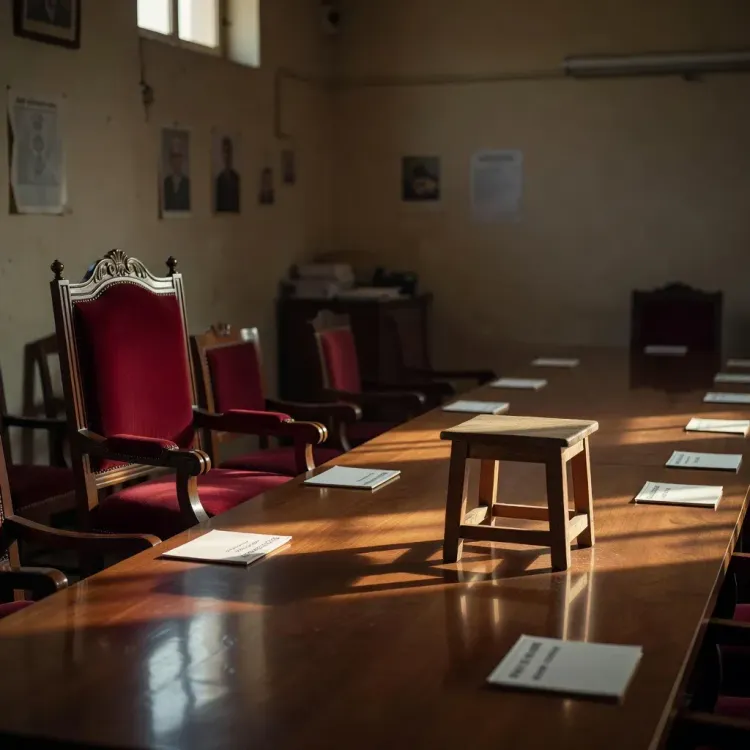
Specific alleged indignities cited include: being seated on a stool over a chair, having a nameplate removed, losing a ministry in silence, and accepting a post after being voted out.
No individual is named, giving the post maximum political reach while keeping legal exposure minimal.
The attack fits the Samajwadi Party's long-running argument that BJP co-opts backward-community leaders without granting them real power or dignity.
The timing, with UP assembly elections approaching, points to an effort to consolidate PDA voters who may have accepted rival offers of junior posts.
Eight bullet points. No names. Maximum sting. Samajwadi Party president Akhilesh Yadav on Tuesday, 13 October 2026, fired a pointed, eight-count indictment at leaders he describes as 'swabhiman-shunya' — 'devoid of self-respect' — accusing them of absorbing public humiliation in exchange for proximity to power in Uttar Pradesh.
The post, written entirely in Hindi, lists a series of alleged indignities: being made to sit on a stool instead of a chair, accepting a 'grace-given post' after being voted out by the public, staying silent when a key ministry is stripped away, and allowing a Chief Minister to publicly lower one's hand. The cumulative charge: leaders from the PDA — Pichhda (backward), Dalit, and Alpsankhyak (minority) communities — are enabling the very forces that oppress their own people.
The 'stool over chair' imagery and what it signals
The imagery Yadav deploys is visceral and deliberately humiliating. A nameplate removed. A stool where a chair should be. A Chief Minister openly pressing down someone's hand in public. These are not abstract policy grievances — they are scenes. Whether literal events or composite metaphors for a pattern of political subordination, they are designed to land with an audience that has watched such dynamics play out in state politics for decades.
The closing line sharpens the accusation: being from the PDA community while serving those who suppress and persecute the PDA. In Akhilesh's framing, that is not political pragmatism — it is betrayal dressed up as loyalty.
SP's long war over who truly speaks for PDA
The Samajwadi Party has anchored its identity in the PDA coalition since the 1990s, when Mulayam Singh Yadav built the party's base among backward, Dalit, and minority communities in Uttar Pradesh. The challenge the party has faced — especially since the BJP's dominant run in the state — is the rival claim that backward-community leaders within the ruling dispensation are proof of genuine inclusion.
Akhilesh's post is a direct rebuttal of that claim. His argument: holding a post without honour is not representation, it is decoration. The SP has pressed this line consistently — pointing to what it calls tokenism in ministerial berths and party positions — and this post intensifies that attack with the most personal and image-rich language yet.
Unnamed targets, unmistakable aim
The post names no one, which is both a legal shield and a rhetorical weapon. By leaving the target blank, Akhilesh invites every reader to fill in the name themselves — and ensures the attack lands across multiple potential figures simultaneously. It also forces any intended target into an impossible choice: stay silent and implicitly accept the description, or respond and confirm that the post is about them.
With Uttar Pradesh assembly elections on the horizon, the calculus is clear. The SP needs to consolidate PDA voters who may have drifted toward parties that offer them cabinet seats, even junior ones. Yadav's message is unambiguous: a seat at the table means nothing if you cannot speak at it, and a post handed to you in condescension is a leash, not a ladder.
Point of View
He forces a structural argument — that inclusion without dignity is domination with better optics. The 'stool over chair' motif is the kind of image that travels far in vernacular political culture, converting an abstract caste-power critique into a scene every voter can picture. Ahead of the next UP assembly election, the SP's core task is to prevent the BJP from retaining PDA-community leaders as visible symbols of outreach; this post is less a tweet and more a public defection notice directed at those leaders.
NationPress
13 Oct 2026
Frequently Asked Questions
What did Akhilesh Yadav post on 13 October 2026?
Akhilesh Yadav posted an eight-point Hindi attack on unnamed leaders he called 'swabhiman-shunya' (devoid of self-respect), accusing them of absorbing public humiliations — such as being seated on a stool, losing a ministry in silence, and accepting posts after electoral defeat — in order to remain close to power.
Who is PDA in UP politics?
PDA stands for Pichhda (Other Backward Classes), Dalit, and Alpsankhyak (minorities). It is the social coalition that forms the Samajwadi Party's core support base in Uttar Pradesh, a framing the party has used since the 1990s under Mulayam Singh Yadav.
Who is Akhilesh Yadav targeting in this post?
The post names no individual, but its description of PDA-community leaders who serve dominant-caste political interests is widely read as directed at BJP-aligned backward and Dalit leaders in Uttar Pradesh. The deliberate anonymity maximises political impact while minimising legal exposure.
What does 'stool instead of chair' mean in Akhilesh's post?
It is a metaphor — and possibly a reference to a specific incident — suggesting that a leader from a marginalised community has been made to literally or symbolically occupy a lesser position than their peers, a visible sign of diminished status within the ruling setup.
Why is Samajwadi Party attacking BJP over PDA community representation?
The SP argues that the BJP co-opts backward, Dalit, and minority leaders into government while denying them real power, significant ministries, or basic respect — framing this as tokenism rather than genuine representation. This argument forms the backbone of SP's electoral pitch to PDA voters ahead of the next UP assembly elections.