How is Delhi Tackling Pollution? Union Minister Calls on Punjab for Efficient CRM Machine Use
Synopsis
In a crucial response to the deteriorating air quality in Delhi-NCR, Union Minister Bhupender Yadav has directed Punjab to ensure all Crop Residue Management machines are operational. This initiative aims to curb stubble burning and improve environmental conditions through innovative strategies and monthly reviews of state action plans.
Key Takeaways
Effective use of Crop Residue Management machines is crucial for reducing air pollution.
Monthly reviews of state action plans will facilitate accountability.
Innovative strategies are necessary to combat stubble burning.
Immediate action is required for non-compliant industrial units.
Electric buses and improved public transport infrastructure are priorities.
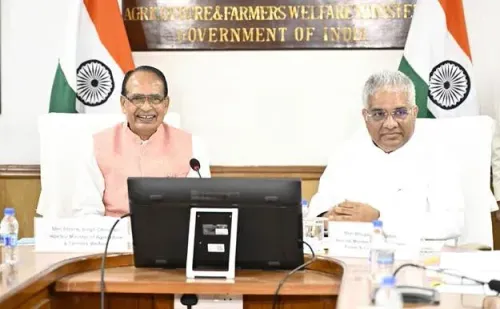
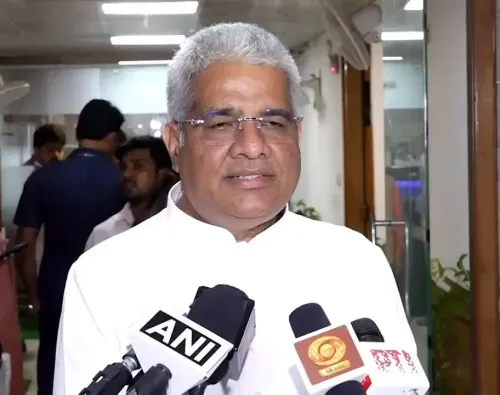
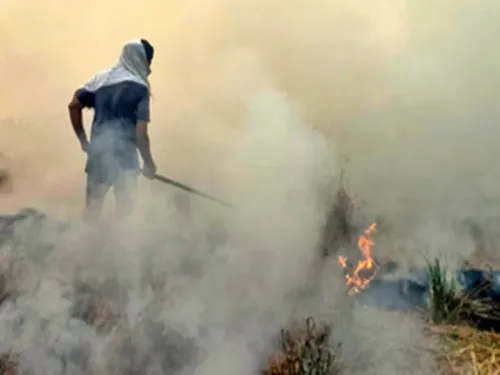
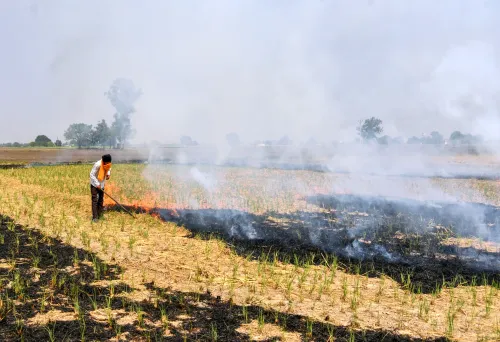
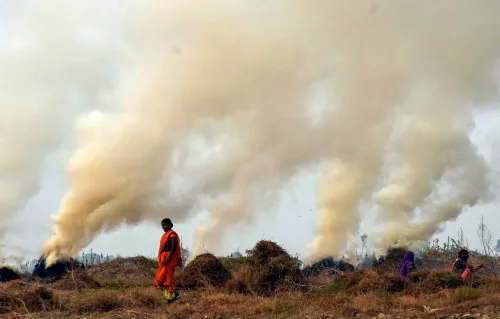
New Delhi, Jan 6 (NationPress) Concerned about the air quality in the Delhi-NCR region, Union Minister for Environment, Forest and Climate Change, Bhupender Yadav, has urged the Punjab government to guarantee that all Crop Residue Management (CRM) machines are operational and utilized effectively. The Minister also called on the Ministry of Agriculture to devise innovative strategies, in collaboration with stakeholders and the scientific community, to enhance crop residue management and combat stubble burning.
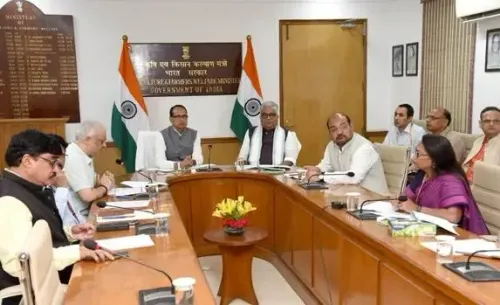
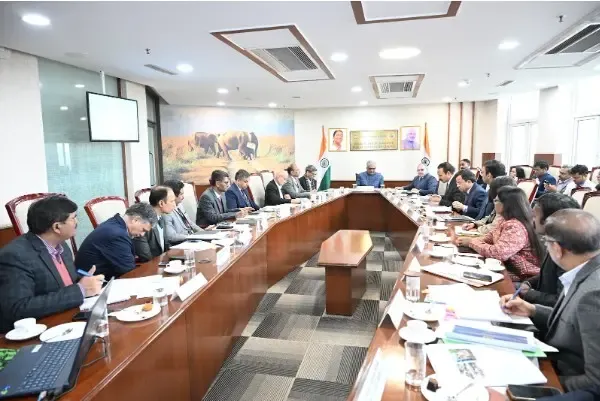
He emphasized the importance of evaluating the success of current measures. During a review of the action plans from Punjab and Rajasthan aimed at reducing air pollution in Delhi-NCR, it was decided that state-level action plans would be reviewed monthly at the Ministerial level.
The Minister instructed that sector-specific targeted action plans be created, with clear responsibilities assigned to relevant departments. With the action plans being developed eight months in advance, it was noted that effective execution would lead to visible improvements in the upcoming season.
This meeting marked the fifth in a series of reviews conducted according to guidelines established by the Minister during a previous meeting on December 3, 2025.
The Minister assured that any implementation obstacles would be resolved through regular inter-State coordination meetings at the highest levels. Reviewing Punjab’s presentation, Yadav reinforced the need for all Crop Residue Management (CRM) machines to be in good working order and utilized properly.
To facilitate this, he suggested that Standard Operating Procedures (SOPs) be created for certifying machines that are operational. He advocated for the promotion of pelletization plants and the use of crop residue in thermal power plants and brick kilns.
The installation of Compressed Bio Gas (CBG) plants was highlighted as a highly eco-friendly solution for managing crop residue. Additionally, drone surveillance was recommended to deter stubble burning.
In reviewing Rajasthan’s action plan, Yadav pointed out the need to address public transportation deficiencies in Alwar, Bhiwadi, Neemrana, and Bharatpur. He stressed the priority procurement of electric buses and the submission of a timeline-based proposal. He also emphasized the need to enhance charging infrastructure in urban areas and along highways in a mission-oriented approach.
The urgent issue of unregulated truck parking in Bhiwadi and Neemrana along the National Highway was raised as a significant concern that requires immediate action, including the identification of parking lots and the development of a parking strategy to alleviate congestion.
The Minister called for city-specific road redevelopment plans for Alwar, Bhiwadi, Neemrana, and Bharatpur to be submitted promptly. Furthermore, he directed that immediate closure notices be issued to non-compliant industrial units that have yet to install Online Continuous Emission Monitoring Systems (OCEMS).
Point of View
This initiative by Union Minister Bhupender Yadav reflects a proactive approach towards addressing the critical air pollution issue facing Delhi-NCR. The emphasis on efficient use of Crop Residue Management machines and the formation of targeted action plans showcases the government's commitment to sustainable agricultural practices and environmental health.
NationPress
29 Sept 2026
Frequently Asked Questions
What is the role of Crop Residue Management machines?
Crop Residue Management machines are designed to efficiently manage and process agricultural residues, helping to reduce stubble burning and improve soil health.
How often will the action plans be reviewed?
The action plans will be reviewed monthly at the Ministerial level to ensure effective implementation and timely adjustments.
What are the consequences for non-compliant industrial units?
Non-compliant industrial units that have not installed Online Continuous Emission Monitoring Systems (OCEMS) will receive immediate closure notices.
Why is drone surveillance being encouraged?
Drone surveillance is encouraged as a modern approach to monitor and deter stubble burning effectively.
What initiatives are being taken for public transport?
Initiatives include procuring electric buses and enhancing charging infrastructure in urban areas and along highways.