BRE Summit 2026: Pralhad Joshi says India cements global renewable energy standing
Synopsis
The BRE Summit & Expo 2026 wrapped up in New Delhi with a striking show of global scale — 75,000 visitors, 135 countries, 32 international ministers, and pension funds joining strategic investors at India's clean energy table. The ₹5.25/unit FDRE tariff from a recent SECI tender turned heads among foreign delegates, signalling that India's energy transition is no longer just a domestic ambition but a globally competitive investment proposition.
Key Takeaways
The BRE Summit & Expo 2026 concluded on 5 November 2026 in New Delhi , drawing over 75,000 visitors from more than 135 countries .
The four-day event featured 400-plus exhibitors , 627-plus speakers , and 113 sessions .
32 international ministers , 6 Chief Ministers , and 10 state energy ministers participated.
Investor interest extended to pension funds and institutional capital providers, reflecting the maturing clean energy financing ecosystem.
A ₹5.25 per unit FDRE tariff from a recent SECI tender attracted significant interest from foreign delegates.
More than a quarter of India's annual electricity consumption came from renewable sources in the last financial year; 37 reports and guidebooks were released at the summit.
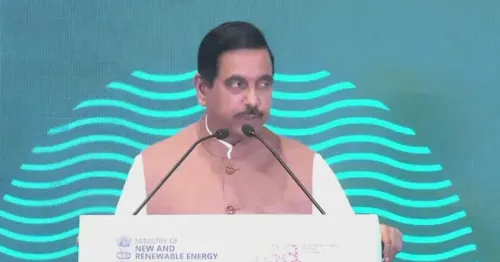
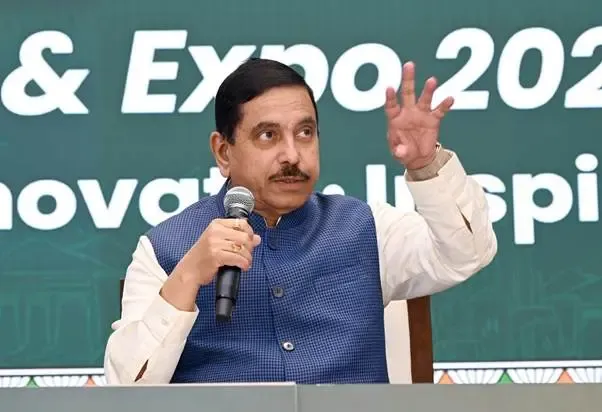
Union Minister for New and Renewable Energy Pralhad Joshi on Thursday, 5 November 2026, declared that the BRE Summit & Expo 2026 had firmly reinforced India's standing as a major global force in clean energy, with the country earning wide international recognition for both its ambitions and its measurable achievements in the sector.
Scale and Participation
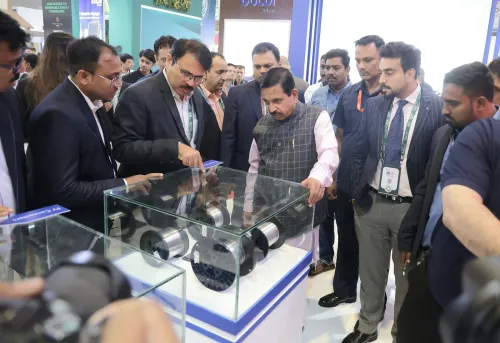
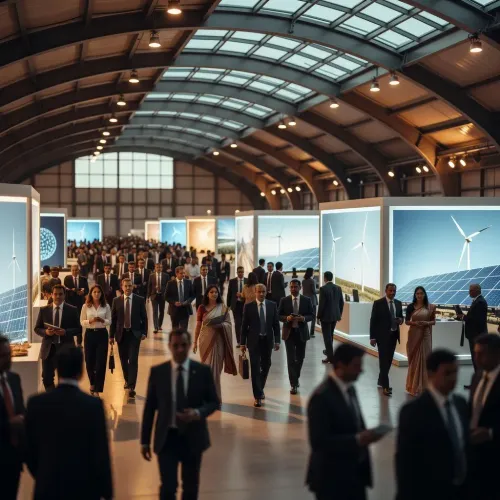
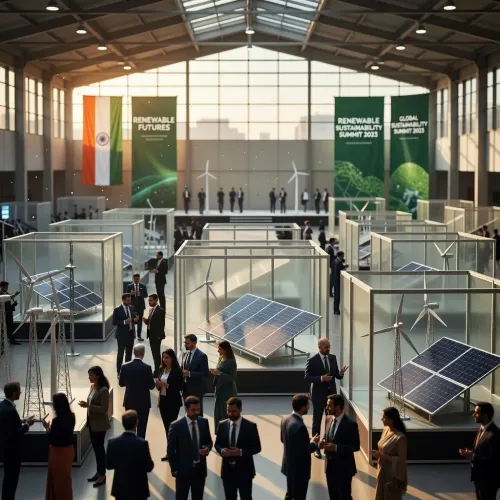
The four-day summit, which concluded on 5 November, drew policymakers, investors, industry leaders, innovators, and researchers from more than 135 countries. The event attracted over 75,000 visitors, featured more than 400 exhibitors, and hosted 627-plus speakers across 113 sessions, establishing itself as one of India's largest-ever global renewable energy platforms.
High-level ministerial representation added significant diplomatic weight, with 32 international ministers, 6 Chief Ministers, and 10 state energy ministers participating — reflecting strong engagement from both national and sub-national decision-makers.
Investor Interest and Financing Depth
Investor appetite at the summit extended well beyond India's immediate 2030 clean energy targets, according to official statements. Notably, participation moved beyond traditional strategic investors to include pension funds, institutional investors, and providers of long-term patient capital — a signal, officials argued, of the growing maturity and depth of India's clean energy financing ecosystem.
Key Technical Discussions
Delegates examined critical infrastructure challenges, including aligning storage and transmission planning with renewable procurement timelines and emerging demand centres. Discussions also covered strengthening grid management institutions and deploying modern AI-based forecasting systems for wind and solar generation.
New contract structures such as Round-the-Clock Renewable Energy and Firm and Dispatchable Renewable Energy (FDRE) drew considerable interest from foreign delegates. Particular attention was paid to a globally competitive tariff of ₹5.25 per unit discovered in a recent SECI tender, which officials said attracted significant curiosity from international policymakers.
PM Modi's Inaugural Address
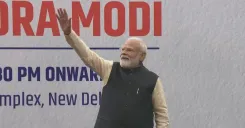
Prime Minister Narendra Modi, in his inaugural address, highlighted the strategic importance of India's sustained renewable energy investments in building the country's resilience to global disruptions. Modi underscored that India's energy transition journey had generated solutions and experiences that could benefit the wider world.
The Prime Minister also called for greater participation in the clean energy innovation ecosystem, specifically inviting startups, IITs, innovators, and entrepreneurs to develop solutions and business models capable of meeting a growing share of household energy needs through clean sources.
India's Energy Transition Progress
According to official data, more than a quarter of India's annual electricity consumption was sourced from renewable energy in the last financial year — a figure that underscores the pace of the country's energy shift. The summit also strengthened the knowledge base of India's renewable energy ecosystem through the release of 37 reports, assessments, guidebooks, and digital platforms.
Minister Joshi described the event as a maiden initiative that brought together three important pillars of the renewable energy sector under one roof, with the scale of domestic and international participation reflecting broad global confidence in India's clean energy growth story. With the summit now concluded, attention turns to translating the investment interest and policy dialogue into on-ground project pipelines.
Point of View
75,000 visitors, pension fund participation — reflect genuine momentum, but the harder question is whether global attention translates into committed capital and project execution on the ground. India's renewable target timelines have repeatedly slipped on transmission and storage bottlenecks, the very issues flagged in summit discussions. The ₹5.25/unit FDRE tariff is a credible pricing signal, but FDRE volumes remain a fraction of total procurement. The real measure of this summit's legacy will not be the number of sessions held but whether the investment interest logged here shows up in financial closures over the next 18 months.
NationPress
5 Nov 2026
Frequently Asked Questions
What was the BRE Summit & Expo 2026?
The BRE Summit & Expo 2026 was a four-day global renewable energy conference held in New Delhi, concluding on 5 November 2026. It brought together policymakers, investors, innovators, and industry leaders from more than 135 countries, featuring 400-plus exhibitors and over 627 speakers across 113 sessions.
What did Union Minister Pralhad Joshi say about the summit?
Minister Pralhad Joshi said the BRE Summit & Expo 2026 reinforced India's position as a major global force in renewable energy, describing it as a maiden initiative that brought together three important pillars of the sector. He pointed to the scale of domestic and international participation as evidence of global confidence in India's clean energy growth story.
What is the significance of the ₹5.25 per unit FDRE tariff discussed at the summit?
The ₹5.25 per unit tariff was discovered in a recent SECI tender for Firm and Dispatchable Renewable Energy (FDRE) — a contract structure that guarantees round-the-clock clean power supply. Officials noted it attracted significant interest from foreign delegates and policymakers as a sign of India's globally competitive clean energy pricing.
What did PM Modi say at the BRE Summit 2026?
Prime Minister Narendra Modi, in his inaugural address, highlighted how India's sustained renewable energy investments have strengthened the country's resilience to global disruptions. He also urged startups, IITs, innovators, and entrepreneurs to develop clean energy solutions that can meet a growing share of household energy requirements.
How much of India's electricity currently comes from renewable sources?
According to official statements made at the summit, more than a quarter of India's annual electricity consumption was sourced from renewable energy in the last financial year. Officials cited this figure as evidence that sustained investment, stable policy, and institutional reforms can deliver both energy security and economic growth.