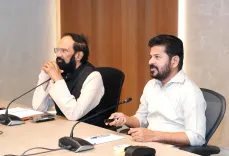
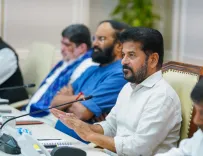
CM Bhupendra Patel Hails UNESCO Nod for Mahabharata, Arthashastra
Synopsis
Gujarat Chief Minister Bhupendra Patel has welcomed the inclusion of the Mahabharata, Kalhana's Rajatarangini, and Kautilya's Arthashastra in UNESCO's Memory of the World Asia-Pacific Regional Register, calling it a matter of pride and a sign of growing global recognition of India's civilisational heritage under PM Modi.
Key Takeaways
The Mahabharata , Rajatarangini , and Arthashastra have been included in UNESCO's Memory of the World Asia-Pacific Regional Register .
Gujarat CM Bhupendra Patel described the recognition as 'a matter of pride for every Indian' on 5 November 2026 .
Kalhana was a 12th-century Kashmiri historian ; Kautilya (Chanakya) was the ancient author of the treatise on statecraft and economics.
India has pursued UNESCO documentary-heritage listings since the 2010s , but this round extends to canonical literary and philosophical texts.
The recognition aligns with the government's broader strategy of advancing India's civilisational soft power through international institutions.
Further Indian nominations to UNESCO Memory of the World registers and related cultural programming are anticipated.
Three pillars of India's ancient intellectual tradition — the Mahabharata, Kalhana's Rajatarangini, and Kautilya's Arthashastra — have earned a place on UNESCO's Memory of the World Asia-Pacific Regional Register, and Gujarat Chief Minister Bhupendra Patel called the recognition 'a matter of pride for every Indian' on Thursday, 5 November 2026.
Three texts, three pillars of a civilisation
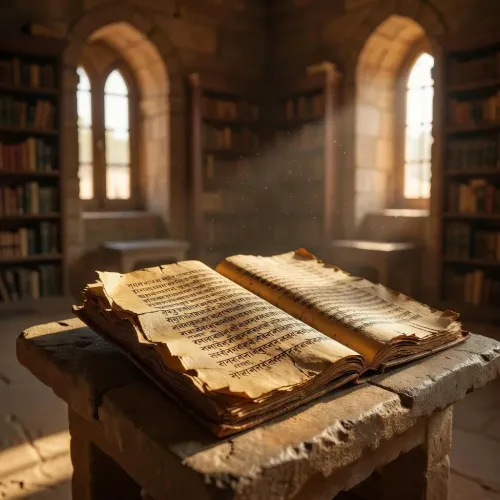
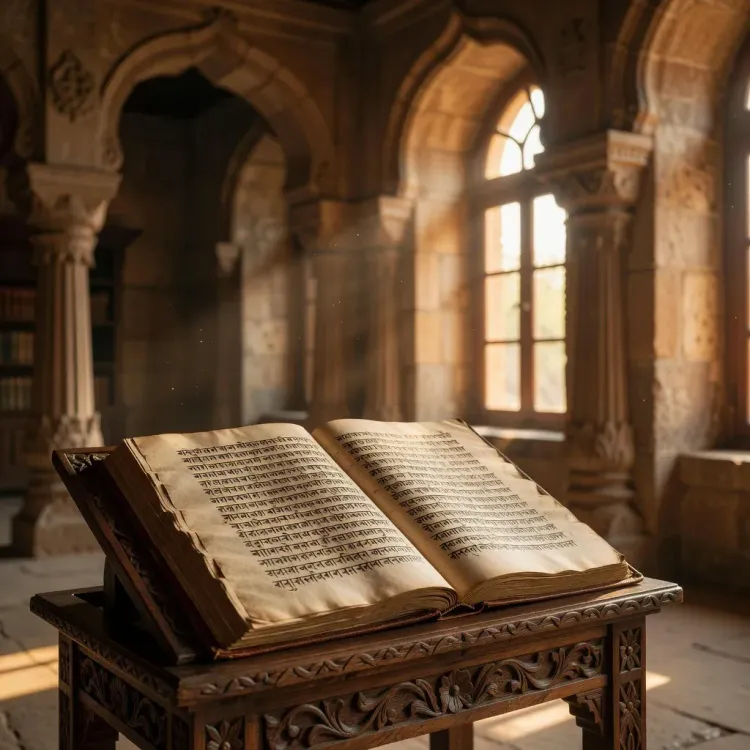
The three works together span dharma, history, and governance — the foundational triad of classical Indian thought. The Mahabharata is among the longest epic poems in world literature, encoding moral philosophy, law, and cosmology across nearly 100,000 verses. Kalhana's Rajatarangini, composed in 12th-century Kashmir, stands as one of the subcontinent's earliest systematic works of historiography, tracing the dynasties of the Kashmir Valley with a critical eye remarkable for its era. Kautilya's Arthashastra — authored by the scholar also known as Chanakya — is a treatise on statecraft, economic policy, and military strategy that continues to be studied in governance programmes worldwide.
Patel wrote that these works 'carry the essence of our dharma, history and statecraft, and have guided generations,' framing the UNESCO listing not as an archival footnote but as living validation of a knowledge tradition still in use.
UNESCO's Memory of the World and India's documentary heritage push
UNESCO's Memory of the World programme was established to safeguard documentary heritage — manuscripts, archives, audiovisual records — deemed of outstanding universal value. The Asia-Pacific Regional Register targets documentary heritage of significance within the region specifically. India has previously secured listings on the global and regional registers for items including historical manuscripts and administrative records, building a track record of successful nominations through the 2010s.
The latest inclusion signals a broadening of that effort to cover canonical literary and philosophical texts, not just archival documents — a qualitative shift in how India is packaging its heritage case at the multilateral level.
Soft power, cultural diplomacy, and the Modi government's heritage arc
Patel explicitly linked the recognition to Prime Minister Narendra Modi's leadership, arguing that 'the world is increasingly recognising the depth of India's civilisational heritage' under his tenure. The framing is consistent with a wider government strategy that has treated international validation of Indian knowledge systems — from yoga's UNESCO Intangible Cultural Heritage listing to the promotion of Ayurveda through global health bodies — as a measurable foreign-policy output.
Heritage scholars have long argued that the Arthashastra's insights on public finance and diplomacy, the Rajatarangini's methodology, and the Mahabharata's ethical architecture deserve the same global academic visibility accorded to Greco-Roman classical texts. A UNESCO registration, while primarily archival in intent, lends institutional weight to that argument and can open doors to digitisation funding and international collaborative research.
With more Indian nominations to Memory of the World registers expected, and potential follow-on events in curriculum design and cultural programming, this listing may be a data point in a much longer campaign — one that bets India's soft-power future on the depth of its past.
Point of View
Globally relevant documents — not museum relics — the government converts archival recognition into contemporary soft-power currency. The explicit invocation of PM Modi's leadership by a state-level BJP figure like CM Patel also illustrates how cultural-diplomacy wins are being threaded into a unified national political narrative. Watch whether this triggers parallel moves in school curricula or publicly funded digitisation drives, which would be the real downstream test of the listing's domestic impact.
NationPress
5 Nov 2026
Frequently Asked Questions
What is UNESCO's Memory of the World Asia-Pacific Regional Register?
It is a UNESCO register that recognises and safeguards documentary heritage — manuscripts, archives, and significant texts — of outstanding value within the Asia-Pacific region, forming part of the broader global Memory of the World programme.
Why have the Mahabharata, Rajatarangini, and Arthashastra been added to the UNESCO register?
The three works were recognised for their outstanding documentary heritage value — the Mahabharata as a foundational epic of moral and philosophical thought, Rajatarangini as a pioneering work of South Asian historiography, and Arthashastra as a seminal treatise on statecraft and governance.
Who was Kalhana and what is the Rajatarangini?
Kalhana was a 12th-century Kashmiri historian who authored the Rajatarangini, a chronicle of the rulers of Kashmir widely regarded as one of the earliest systematic works of historiography on the Indian subcontinent.
Who was Kautilya and what is the Arthashastra?
Kautilya, also known as Chanakya, was an ancient Indian scholar and statesman who authored the Arthashastra, a comprehensive treatise covering statecraft, economic policy, military strategy, and diplomacy that remains studied in governance and policy circles today.
What did Gujarat CM Bhupendra Patel say about the UNESCO recognition?
CM Patel called the inclusion 'a matter of pride for every Indian,' stating that the three works carry the essence of India's dharma, history, and statecraft, and credited PM Narendra Modi's leadership for the growing global recognition of India's civilisational heritage.