CM Saini honours Amit Shah with 1857 martyrs' memorial token in Ambala
Synopsis
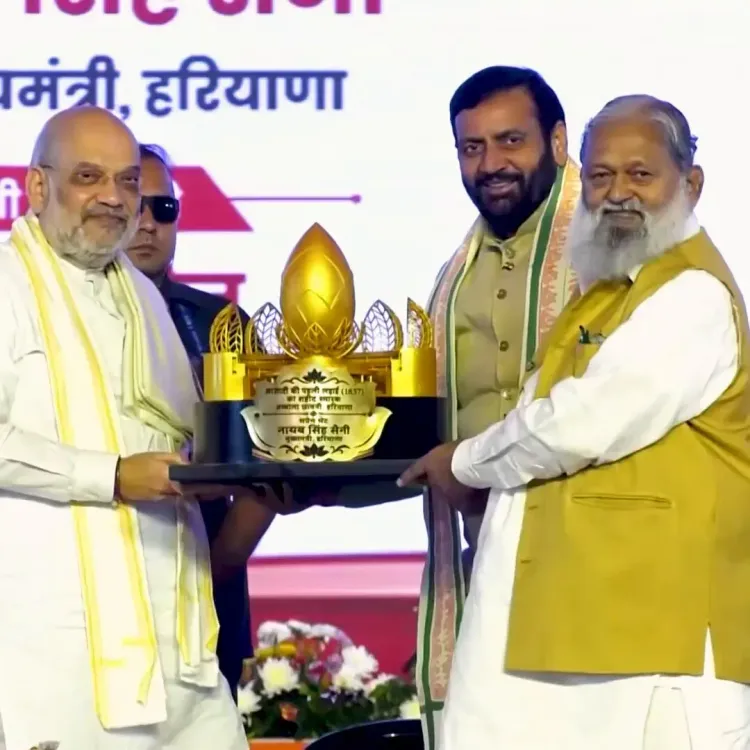
Haryana CM Nayab Singh Saini welcomed Union Home Minister Amit Shah in Ambala by presenting him a souvenir from the Shaheed Smarak, honouring the martyrs of the 1857 Indian Rebellion on behalf of the people of Haryana.
Key Takeaways
Haryana CM Nayab Singh Saini presented Union Home Minister Amit Shah with a commemorative token from the Ambala Shaheed Smarak on 5 November 2026 .
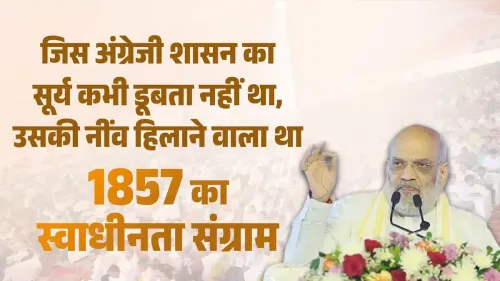
The Shaheed Smarak is dedicated to the martyrs of the 1857 Indian Rebellion , India's First War of Independence.
Ambala was one of the early centres of the 1857 sepoy uprising against the British East India Company.
Saini described the gesture as being on behalf of all the families of Haryana .
The event reflects ongoing BJP state-central coordination in commemorating 1857 as a defining moment of Indian national identity.
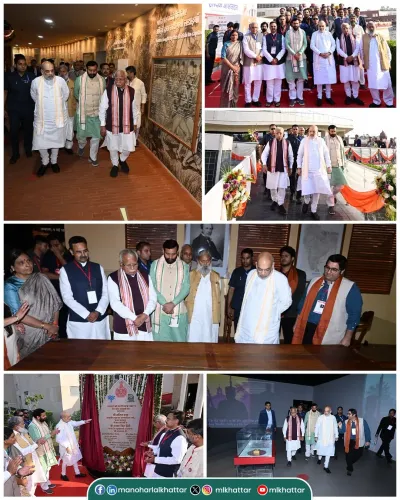
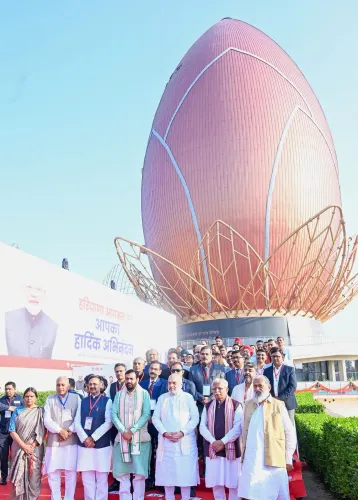
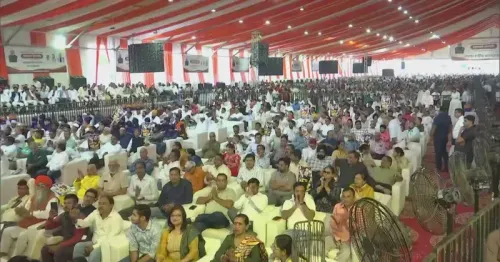
On the sacred soil of Ambala — a city whose sepoy uprisings helped ignite India's first organised revolt against British rule — Haryana Chief Minister Nayab Singh Saini presented Union Home and Cooperation Minister Amit Shah with a commemorative token from the Shaheed Smarak, dedicated to the immortal martyrs of 1857, on Thursday, 5 November 2026.
A memento rooted in Ambala's revolt history
Saini described the gesture as a tribute on behalf of the people of Haryana — 'हरियाणा के समस्त परिवारजनों की ओर से' (on behalf of all the families of Haryana) — as he presented the Shaheed Smarak souvenir to Shah. The memorial is dedicated to the 1857 Indian Rebellion, widely remembered as India's First War of Independence, in which Ambala's cantonment played an early and pivotal role when sepoys rose against the British East India Company.
Ambala's cantonment was one of the flashpoints where unrest spread rapidly among Indian soldiers, making the city a natural home for a memorial honouring those who fell in that uprising. Presenting a token from that smarak to the country's Home Minister carries deliberate symbolic weight.
State-centre coordination and the politics of 1857 commemoration
BJP-led administrations at both the state and central level have consistently elevated the memory of 1857 as a cornerstone of India's freedom narrative. Ceremonial presentations of this kind — a state chief minister honouring a senior central minister with a symbol of regional sacrifice — reinforce that alignment between Haryana and the Union government on questions of historical memory and national identity.
Shah, as Union Home Minister, is among the most senior figures in the central government, and his visit to Ambala underscores the city's continued strategic and symbolic importance. The event points toward possible further ceremonies or developments linked to the Ambala Shaheed Smarak in the period ahead.
For Haryana, asserting its share in the 1857 story is both a matter of historical pride and contemporary political messaging — reminding the country that the state's sons were among those who first raised arms for freedom.
Point of View
CM Saini simultaneously elevates Haryana's contribution to the freedom movement and signals seamless state-centre coordination. Such gestures have become a recurring feature of BJP political culture — blending heritage diplomacy with contemporary messaging. The focus on Ambala, whose cantonment was a flashpoint of the original revolt, grounds the symbolism in credible local history rather than abstraction.
NationPress
5 Nov 2026
Frequently Asked Questions
What is the Ambala Shaheed Smarak?
The Ambala Shaheed Smarak is a memorial dedicated to the martyrs of the 1857 Indian Rebellion — the First War of Independence — located in Ambala, Haryana, a city that was an early centre of the sepoy uprising against British East India Company rule.
Why did CM Nayab Saini present a souvenir to Amit Shah in Ambala?
CM Nayab Singh Saini presented Amit Shah with a commemorative token from the Shaheed Smarak on behalf of the people of Haryana as a gesture of honour during Shah's visit to Ambala on 5 November 2026.
What was Ambala's role in the 1857 revolt?
Ambala's cantonment was one of the flashpoints of the 1857 Indian Rebellion, where Indian sepoys rose early against the British East India Company, making the city a historically significant site in India's independence narrative.
Who is Nayab Singh Saini?
Nayab Singh Saini is the Chief Minister of Haryana and a BJP leader.
What is the significance of 1857 in Indian history?
The 1857 Indian Rebellion, also called the First War of Independence, was a widespread uprising against British East India Company rule and is considered a foundational event in India's freedom movement.