Joshi fires back at CM Shivakumar over diesel price demands
Synopsis
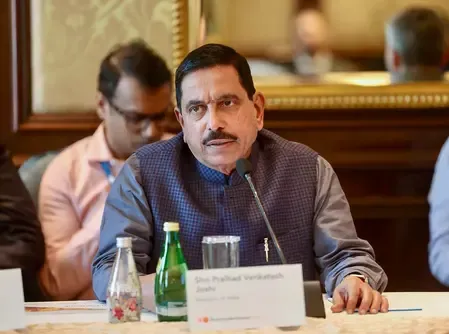
Union Minister Pralhad Joshi hit back at Karnataka CM D. K. Shivakumar on November 5, 2026, saying the Chief Minister should account for his own government's fuel price hikes before demanding diesel price cuts from the Prime Minister.
Key Takeaways
Pralhad Joshi posted in Kannada on November 5, 2026 , directly targeting CM D.
Shivakumar over his demand for diesel price cuts from the Prime Minister.
Joshi asked how many times the Karnataka government had itself raised petrol and diesel prices before blaming the Centre.
Indian states independently control VAT rates on fuel, giving them direct authority to reduce retail prices without waiting for central action.
The central government deregulated diesel prices in 2014 , linking them to international crude benchmarks.
The exchange reflects the recurring Centre-state standoff on fuel taxation that intensifies every time global crude prices rise.
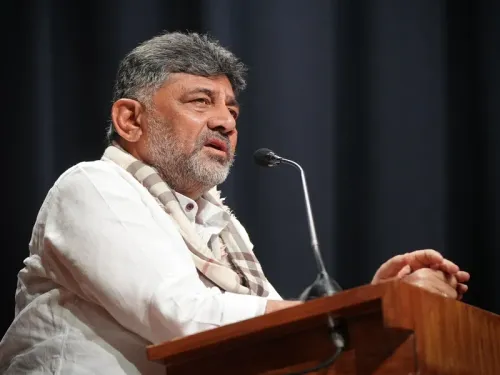
When Karnataka Chief Minister D. K. Shivakumar turned to the Prime Minister this week demanding a cut in diesel prices, Union Minister Pralhad Joshi had a sharp answer ready — and it pointed straight back at the state's own record. In a pointed post on X on November 5, 2026, the senior BJP leader from Karnataka threw the question back at the Congress-led state government: how many times have you raised petrol and diesel prices before lecturing New Delhi?
Writing in Kannada, Joshi did not mince words. 'Chief Minister D. K. Shivakumar, who asks the Prime Minister to reduce diesel prices, should first find out how many times his own government has raised petrol and diesel prices,' he posted. 'Instead of blaming the Centre, let him first uphold the responsibility of a Chief Minister.'
The VAT lever Karnataka controls
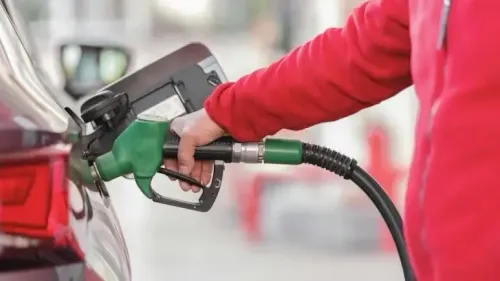
The jab lands on a genuine fault line in India's fuel-pricing architecture. Since the central government deregulated diesel prices in 2014, linking them to international crude benchmarks, the retail price a Karnataka driver pays at the pump has two distinct layers of taxation — Union excise duty and the state's own Value Added Tax (VAT). States hold full authority to revise their VAT rates upward or downward at any time. When retail prices climb and voters feel the pinch, both levels of government have a habit of pointing at each other.
Joshi's post does not cite a specific number of state-level hikes — and the research background flags those precise figures as unverified — but his broader argument is well-worn in Centre-state fuel politics: that Opposition-governed states which collect higher VAT revenue have little political standing to demand central excise cuts.
A fight that surfaces every time crude spikes
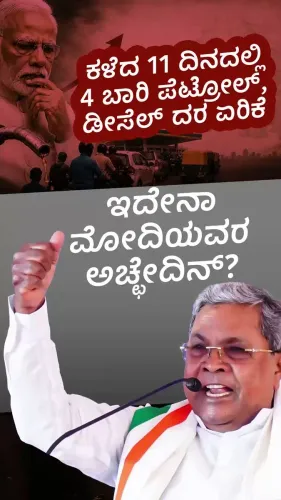
This is not the first time the Karnataka government and Delhi's ruling party have clashed over pump prices. Whenever global crude oil climbs and domestic retail rates follow, state governments — particularly those led by the Opposition — amplify public frustration by calling on the Union to slash excise. The Centre, in turn, points to state VAT as the more flexible and immediately actionable lever. The cycle is as predictable as it is unresolved.
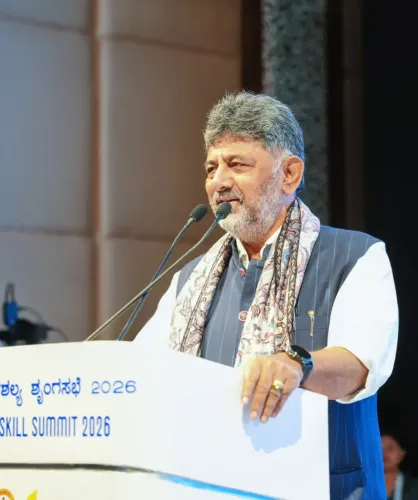
Shivakumar, who holds a commanding position in the Karnataka Congress organisation, has in recent months positioned his government as a consumer-friendly administration. Joshi's counter-attack is designed to complicate that narrative by raising the state's own pricing decisions before any central response can be framed as relief.
With both sides now on record, the pressure falls on Bengaluru to either defend its VAT position or announce a revision — and on New Delhi to respond in its next petroleum ministry review. Until one of them blinks, Karnataka's fuel consumers will keep watching the meter.
Point of View
Forcing an Opposition Chief Minister onto the defensive on his home turf. With Karnataka heading into a politically charged fiscal cycle, the fuel-pricing row gives both sides a high-visibility arena to shape voter perception of economic stewardship. The deeper structural truth — that both Union excise and state VAT contribute meaningfully to pump prices — gets lost in the finger-pointing, leaving consumers holding the bill. Until Karnataka either cuts VAT or the Centre revises excise, this war of words will keep running on empty.
NationPress
6 Nov 2026
Frequently Asked Questions
Why is Pralhad Joshi attacking DK Shivakumar over diesel prices?
Joshi countered CM Shivakumar's demand for a central diesel price cut by pointing out that the Karnataka state government itself has raised petrol and diesel prices multiple times, arguing Shivakumar should address his own government's pricing decisions first.
Does the Karnataka government have power to reduce fuel prices?
Yes. State governments in India can independently revise the Value Added Tax (VAT) they levy on petrol and diesel, which directly reduces retail prices at the pump without requiring any action from the central government.
What controls diesel prices in India?
Since deregulation in 2014, diesel prices are linked to international crude oil benchmarks. The final retail price includes both Union government excise duty and each state's VAT, meaning both levels of government share responsibility for what consumers pay.
What did DK Shivakumar say about diesel prices?
CM Shivakumar urged the Prime Minister to reduce diesel prices, a move Joshi described as blaming the Centre while ignoring the state government's own record of fuel price hikes.
Is the Centre-state fuel price blame game common in India?
It is a recurring pattern. Whenever global crude oil prices rise and domestic rates climb, Opposition-led state governments call on the Centre to cut excise duties, while the Centre responds by pointing to states' VAT rates as the more immediately adjustable lever.