Karnataka CM Siddaramaiah hits back at Centre over fuel price hike
Synopsis
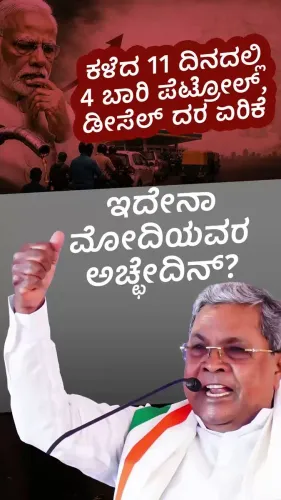
Karnataka CM Siddaramaiah refused to signal any fuel tax cut on 21 May, flipping the question back at the Centre and comparing today's pump prices to the ₹48 diesel and ₹70 petrol of the Manmohan Singh era. His silence when asked about citizen relief speaks louder than any answer.
Key Takeaways
Karnataka CM Siddaramaiah on 21 May indicated the state will not roll back taxes on petrol and diesel.
He questioned why media scrutinises state levies while the Centre raises fuel prices sharply.
Siddaramaiah cited Manmohan Singh -era prices: diesel at ₹48/litre , petrol at ₹70/litre , and an LPG cylinder at ₹414 .
When asked about relief for citizens, the Chief Minister did not respond and walked away.
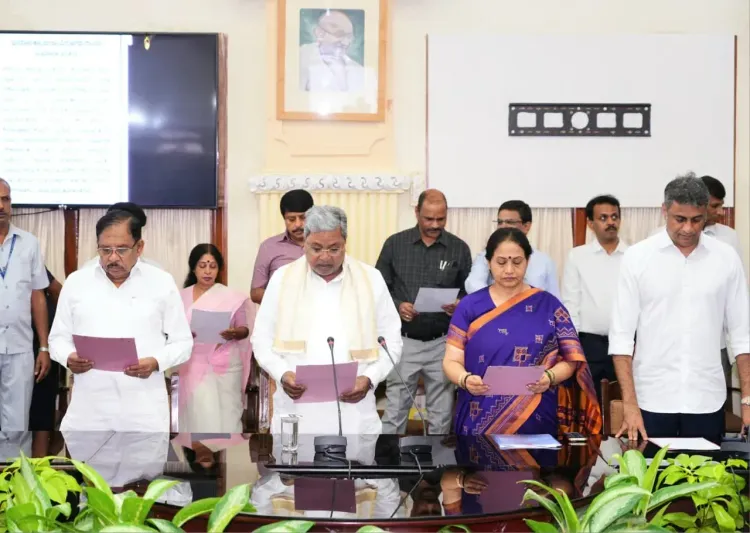
Siddaramaiah also administered the Anti-Terrorism Day pledge at Vidhana Soudha , with Home Minister G.
Parameshwara and Chief Secretary Shalini Rajneesh present.
Karnataka Chief Minister Siddaramaiah on Thursday, 21 May deflected calls for state-level fuel tax relief, sharply questioning why the media scrutinises state taxation while the Centre raises fuel prices. His remarks signal that the Karnataka government has no immediate plans to roll back its levies on petrol and diesel.
What Siddaramaiah Said
'They (the Centre) will hike the prices of fuel, and are we supposed to reduce them? Why doesn't the media question them on this issue? Instead, the media keeps asking us whether we will reduce prices,' Siddaramaiah told reporters in Bengaluru.
When journalists pointed out that the state government had itself levied higher taxes on fuel, he countered: 'Why are you asking me about it? Shouldn't you ask those who increased the prices first?'
Modi vs Manmohan: The Price Comparison
Siddaramaiah drew a pointed historical contrast, citing fuel rates under former Prime Minister Manmohan Singh against current levels. 'During Manmohan Singh's tenure, diesel was priced at ₹48 per litre and petrol at ₹70 per litre. An LPG cylinder cost ₹414. What are the prices now? Who has increased them?' he asked, directing the question at Prime Minister Narendra Modi's government.
Notably, the comparison spans roughly a decade of price escalation driven by multiple factors including global crude movements, excise duty revisions, and currency fluctuations — context the Chief Minister did not elaborate on.
No Relief Announced for Citizens
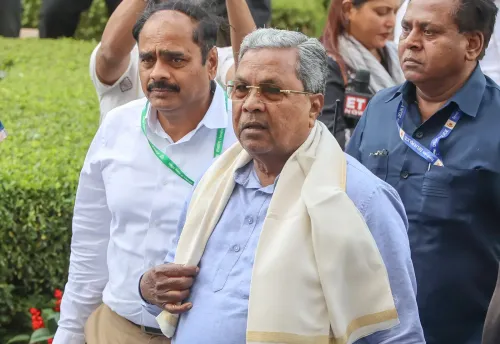
When reporters pressed Siddaramaiah on whether the state would offer any relief to residents burdened by rising fuel costs, he did not respond and walked away from the press interaction. The silence is being read as a firm indication that no tax reduction is forthcoming from the state in the near term.
Anti-Terrorism Day Pledge at Vidhana Soudha
Separately, Siddaramaiah administered the Anti-Terrorism Day pledge at the Vidhana Soudha conference hall in Bengaluru on the same day. Home Minister G. Parameshwara, Chief Secretary Shalini Rajneesh, and senior bureaucrats participated in the observance.
Administering the oath, Siddaramaiah said: 'We, the citizens of Bharat, having faith in the great tradition of non-violence and tolerance for which our country is known, pledge to oppose all forms of terrorism and violence with determination and strength. We solemnly resolve to promote peace, social harmony and mutual understanding among all sections of society, and to fight against divisive and destructive forces that threaten human values and lives with our full capacity.'
The Broader Political Context
The fuel pricing standoff between the Centre and state governments is a recurring flashpoint in Indian federal politics. States levy value-added tax (VAT) on top of central excise duties, meaning both tiers share responsibility for the final pump price. Opposition-ruled states, including Karnataka, have frequently argued that the Centre's excise hikes leave them little political room to cut their own levies without significant revenue loss. This is not the first time Siddaramaiah has used the Manmohan-era benchmark to challenge the current dispensation on fuel pricing.
With no relief signal from either the Centre or the state, consumers in Karnataka are unlikely to see any reduction at the pump in the immediate future.
Point of View
And the Chief Minister's silence on citizen relief confirms that state revenue interests outweigh voter pain on this issue. The Manmohan-era price comparison is a well-worn political tool that sidesteps the structural reality: VAT is ad valorem, so as base prices rise, state revenues automatically swell without a single legislative act. Karnataka has benefited from that passive revenue gain. Calling out the Centre while pocketing the windfall is a contradiction mainstream coverage rarely surfaces.
NationPress
7 Oct 2026
Frequently Asked Questions
Why did Karnataka CM Siddaramaiah refuse to cut fuel taxes?
Siddaramaiah indicated on 21 May that Karnataka has no plans to reduce taxes on petrol and diesel, arguing that the Centre's fuel price hikes are the primary cause of high pump prices. He challenged reporters to direct their questions at the Union government instead.
How do current fuel prices compare to the Manmohan Singh era, according to Siddaramaiah?
Siddaramaiah cited diesel at ₹48 per litre, petrol at ₹70 per litre, and an LPG cylinder at ₹414 during the Manmohan Singh government's tenure, contrasting these with significantly higher current prices. He attributed the increase to the period after Prime Minister Narendra Modi assumed office.
Will Karnataka residents get any relief from rising fuel prices?
No relief has been announced. When directly asked whether the state government would provide any assistance to citizens affected by the fuel price hike, Siddaramaiah did not respond and walked away from the press interaction.
What is Anti-Terrorism Day and how did Karnataka observe it?
Anti-Terrorism Day is observed on 21 May every year in India to reaffirm the country's commitment to combating terrorism. Karnataka CM Siddaramaiah administered the pledge at Vidhana Soudha in Bengaluru, with Home Minister G. Parameshwara and Chief Secretary Shalini Rajneesh among those present.
Who is responsible for high fuel prices in India — the Centre or states?
Both tiers of government contribute to the final pump price. The Centre levies excise duty, while states charge VAT on top of that. Opposition-ruled states like Karnataka argue that central excise hikes reduce the political space for state-level cuts without significant revenue loss.