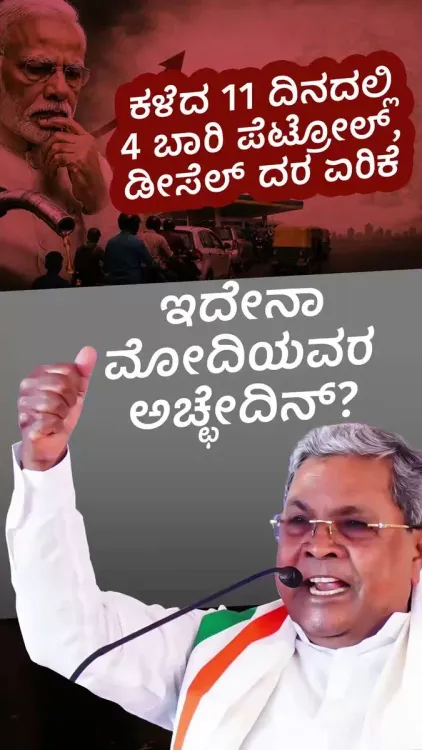
CM Siddaramaiah Slams Centre Over Fuel Price Hikes
Synopsis
Karnataka Chief Minister Siddaramaiah, speaking at a KPCC press conference, accused the Modi government of hiking petrol, diesel and LPG prices four times in 11 days, citing Bengaluru petrol at Rs 110.93 per litre and a historical comparison with May 2014 prices under PM Manmohan Singh.
Key Takeaways
Karnataka CM Siddaramaiah addressed a KPCC press conference on 25 May 2026 to condemn consecutive central government fuel price hikes.
Petrol in Bengaluru is priced at Rs 110.93 per litre and diesel at Rs 98.89 per litre , a cumulative rise of Rs 7.52 per litre in the current cycle.
Fuel prices have been revised upward four times in 11 days , which Siddaramaiah called unprecedented in India's history.
A domestic cooking gas cylinder now costs Rs 915 , compared to Rs 412 in May 2014 — more than double.
In May 2014 , petrol was priced at Rs 71.41 per litre and diesel at Rs 56.71 per litre under PM Manmohan Singh .
Siddaramaiah argued that consumers have not benefited from periods when crude oil traded between $65 and $75 per barrel , while bearing the full cost of increases.
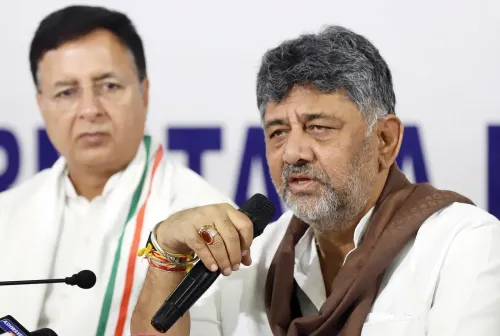
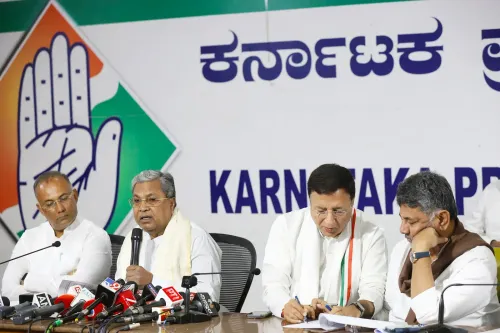
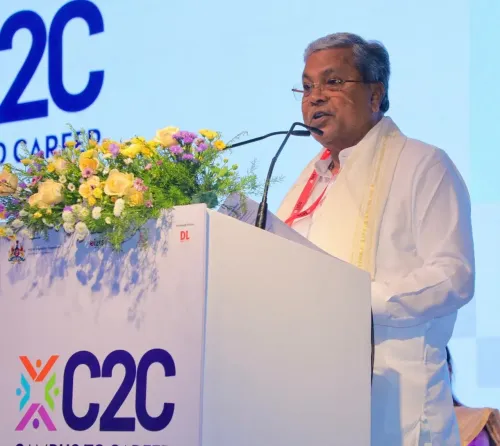
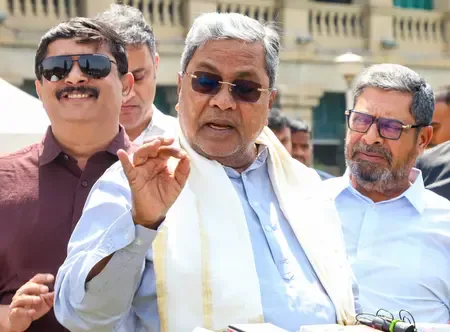
Karnataka Chief Minister Siddaramaiah on Monday, 25 May 2026, launched a sharp attack on the BJP-led central government over what he described as four consecutive fuel price increases in 11 days, calling the hikes an act of 'looting' ordinary citizens. Speaking at a press conference organised by the Karnataka Pradesh Congress Committee (KPCC) office in Bengaluru, he cited specific retail prices and a historical comparison with the Manmohan Singh era to argue that the burden on common people and farmers had become unsustainable.
Context
Siddaramaiah stated in his post — the remarks from a KPCC press conference — that petrol and diesel prices in Bengaluru have reached Rs 110.93 per litre and Rs 98.89 per litre respectively, reflecting a cumulative increase of Rs 7.52 per litre across the recent revision cycle. He said such daily consecutive hikes were 'unprecedented in the country's history' (ದೇಶದ ಇತಿಹಾಸದಲ್ಲಿ ಹೀಗೆ ಪ್ರತಿ ದಿನ ಏರಿಕೆಯಾಗಿರಲಿಲ್ಲ). The Chief Minister also noted that domestic cooking gas cylinder prices had risen to Rs 915, more than double the Rs 412 recorded in May 2014.
Targeting Prime Minister Narendra Modi directly, Siddaramaiah said the BJP had come to power promising a 'Gujarat model' of governance and 'good days' (ಒಳ್ಳೆಯ ದಿನಗಳು), but had instead delivered repeated fuel price shocks. He described the hikes as proof that the government was 'looting the country and ordinary people' (ದೇಶವನ್ನು ಲೂಟಿ ಮಾಡುತ್ತಿರುವುದು ರುಜುವಾತಾಗುತ್ತಿದೆ).
Policy Backdrop
India's retail fuel prices are determined by a combination of international crude oil benchmarks, central excise duties, state VAT, and dealer margins. Since 2017, oil marketing companies have been empowered to revise prices on a daily basis, a mechanism designed to align domestic prices with global movements. Critics, however, argue that the pass-through has been asymmetric — consumers bear the burden of rising crude costs but do not fully benefit when crude falls.
Siddaramaiah made precisely this argument, noting that even with crude oil trading below $100 per barrel and having been as low as $65–$75 per barrel in recent periods, retail prices have continued to climb. He contrasted current prices with those prevailing in May 2014 — petrol at Rs 71.41 per litre and diesel at Rs 56.71 per litre — when Manmohan Singh was Prime Minister, to argue that the central government's excise policy has been the primary driver of the increase rather than global crude alone.
The central government's excise duties on petrol and diesel have been a significant source of revenue, and successive adjustments since 2014 have drawn sustained criticism from opposition parties and state governments that rely on their own VAT receipts but have limited control over the base price.
Stakeholders and Impact
The price increases have the most direct impact on middle-class households, daily commuters, transport operators, and farmers who depend on diesel for irrigation pumps and farm machinery. Higher diesel costs feed through to freight charges, raising the price of essential commodities across the supply chain. Siddaramaiah specifically invoked farmers and common citizens (ರೈತರಿಗೆ, ಜನಸಾಮಾನ್ಯರಿಗೆ) as the groups most exposed to what he called the 'heat of price rise.'
The KPCC press conference signals that the Karnataka Congress government intends to keep fuel pricing at the centre of its political messaging against the BJP-led Centre. Opposition-ruled states have historically used such platforms to demand excise duty cuts or restoration of LPG subsidies, and Karnataka's prominent voice adds weight to that chorus at the national level.
What's Next
With the monsoon session of Parliament approaching, opposition parties are expected to raise fuel pricing and central excise policy as key agenda items. Any announcement by the central government on excise duty rationalisation or LPG subsidy restoration would directly address the political pressure that press conferences like this one are designed to generate. Siddaramaiah's intervention, framed around specific price data and historical benchmarks, is likely to be replicated by Congress leaders in other states as part of a coordinated national campaign on cost-of-living concerns.
Point of View
The Congress is attempting to make an abstract excise-policy debate viscerally personal for voters. The LPG price comparison — more than doubling from Rs 412 to Rs 915 since 2014 — is the sharpest rhetorical arrow, because cooking gas is a daily household reality for the urban middle class that the BJP has historically courted. With state elections on the horizon and cost-of-living anxiety running high, this line of attack is likely to be amplified across Congress-ruled states as part of a coordinated pre-session pressure campaign on the Centre.
NationPress
11 Oct 2026
Frequently Asked Questions
What is the current petrol price in Bengaluru in 2026?
According to Karnataka Chief Minister Siddaramaiah, petrol in Bengaluru is priced at Rs 110.93 per litre following four consecutive price hikes over 11 days.
How many times has fuel price been hiked in India recently?
Siddaramaiah stated that petrol, diesel and LPG prices have been hiked four times in 11 days , which he described as unprecedented in India's history.
What was the petrol price in India when Manmohan Singh was PM?
In May 2014 , when Manmohan Singh was Prime Minister, petrol was priced at Rs 71.41 per litre and diesel at Rs 56.71 per litre , according to Siddaramaiah's statement.
Why is Siddaramaiah criticising Modi over fuel prices?
Siddaramaiah argues that despite crude oil remaining below $100 per barrel , the central government has repeatedly raised retail fuel prices through excise duties, passing no benefit of lower crude costs to consumers, farmers or the middle class.
How much has the LPG cylinder price increased since 2014?
According to Siddaramaiah, a domestic LPG cylinder cost Rs 412 in May 2014 and now costs Rs 915 , an increase of more than double.