Kumki elephants cut human fatalities 70% in Andhra Pradesh: Pawan Kalyan
Synopsis
Andhra Pradesh's bet on trained Kumki elephants is paying off — 15 operations, a 70% drop in human deaths, and a state now building its own annual training pipeline. Combined with the tech-driven HANUMAN project, the state is quietly constructing one of India's most operationally credible human-wildlife conflict frameworks.
Key Takeaways
Kumki elephant deployments have reduced human fatalities in Andhra Pradesh's forest fringe areas by 70 per cent , according to Deputy CM Pawan Kalyan .
Four Kumki elephants sourced from Karnataka have participated in 15 operations against rogue wild elephants.
Andhra Pradesh is now training its own Kumki elephants, targeting two per year ; one, named Jayanth , is already deployed in Parvathipuram Manyam .
The HANUMAN project , launched in March 2026 , has rescued over 200 wild animals and relocated more than 30 , using 93 response vehicles and 7 wildlife ambulances .
Elephant herds of 132–142 animals had previously devastated crops and caused casualties in Chittoor and Parvathipuram Manyam districts.
Nationally, elephant conservation centres have grown from 26 to 33 since 2014 .
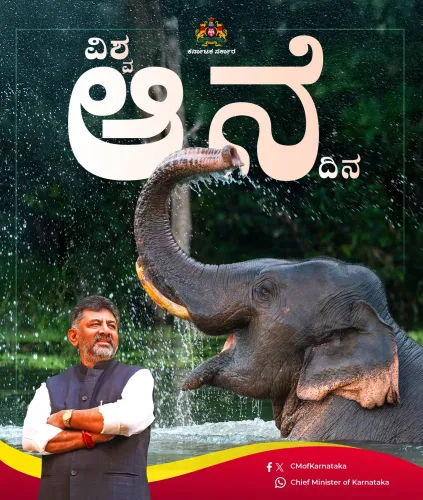
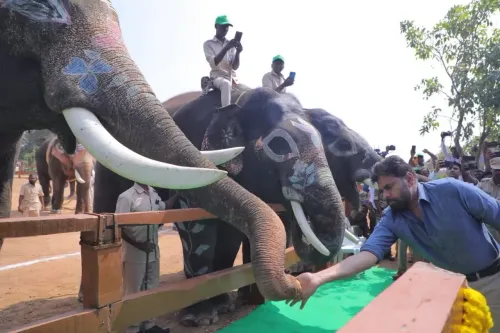
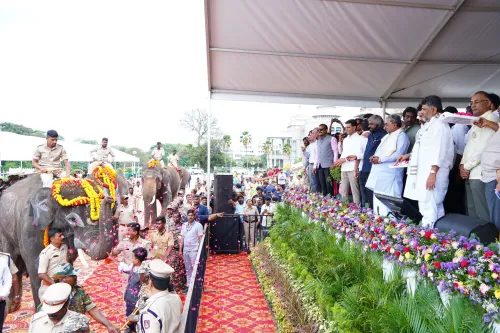
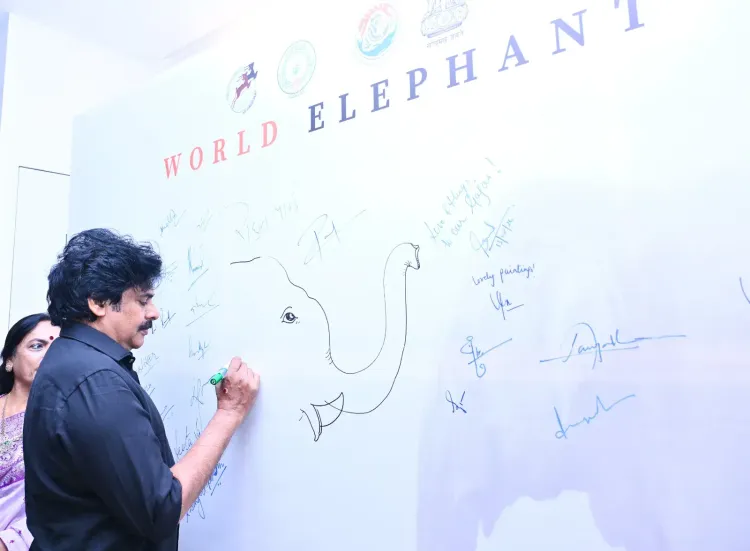
Andhra Pradesh Deputy Chief Minister and Minister for Environment and Forests Pawan Kalyan on Thursday, 13 August announced that the deployment of trained 'Kumki' elephants to manage wild elephant conflicts has led to a 70 per cent reduction in human fatalities in forest fringe areas of the state. The declaration came during national-level World Elephant Day celebrations held in Visakhapatnam.
How Kumki Elephants Are Changing the Ground Reality
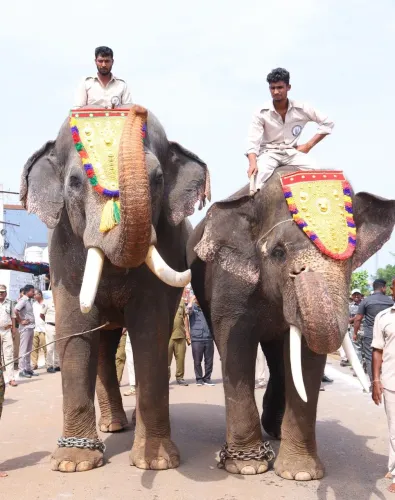
With assistance from the Karnataka government, four Kumki elephants were brought to Andhra Pradesh and specially trained to manage rogue wild elephants. According to Pawan Kalyan, these animals have already participated in 15 operations to contain rogue elephant activity, yielding measurable results across agency areas — a term for scheduled tribal regions in the state.
'This is not merely cooperation between two states; it is a collaborative effort for the welfare of people, nature, and wildlife. Kumki elephants have already assisted in 15 operations to curb the havoc caused by rogue elephants. This has led to a 70 per cent reduction in human fatalities in forest fringe areas, as well as a decrease in crop damage,' Pawan Kalyan said.
The Scale of the Problem They Are Solving
Pawan Kalyan described the severity of the crisis that preceded these interventions. Herds of approximately 132 to 142 elephants had been raiding crops and attacking people in the Palamaner area of Chittoor district and in Parvathipuram Manyam district. The destruction caused widespread panic in communities dependent on forest-edge agriculture.
He said that after assuming the Forest and Environment portfolios, resolving elephant-related threats to local communities became his primary focus.
Andhra Pradesh Now Training Its Own Kumki Elephants
The state has moved beyond reliance on Karnataka's support. Andhra Pradesh has initiated its own Kumki elephant training programme. One trained elephant, Jayanth, is already stationed in the Parvathipuram Manyam region. The state plans to train two Kumki elephants annually, building a self-sustaining conflict-management capacity over time.
HANUMAN Project: Technology Meets Wildlife Management
Pawan Kalyan also highlighted the HANUMAN project, launched in March 2026, as a comprehensive human-wildlife conflict management system that combines technology with rapid response capabilities. The initiative has deployed 93 response vehicles and 7 wildlife ambulances. To date, more than 200 wild animals have been rescued and over 30 successfully relocated.
'Our ultimate goal is to create an environment where farmers in forest fringe areas can cultivate their lands without fear,' he said, adding that conservation requires community participation and cannot rest on government action alone.
National Context and Conservation Milestones
Union Minister of State for Environment, Forest and Climate Change Kirti Vardhan Singh and senior officials also addressed the event. Pawan Kalyan noted that since 2014, the number of elephant conservation centres in the country has grown from 26 to 33, reflecting the Centre's stated priority on elephant conservation.
With the HANUMAN project scaling up and Kumki training institutionalised, Andhra Pradesh's model of combining trained elephants with technology-backed rapid response could offer a replicable template for other elephant-conflict-prone states.
Point of View
It would make Andhra Pradesh's Kumki programme one of the most effective human-wildlife conflict interventions in India. The missing piece is third-party data: the figures cited come entirely from the government's own account, with no independent wildlife body or academic study referenced. The HANUMAN project's rescue numbers are similarly self-reported. That does not make them wrong, but it does mean the model's replicability hinges on transparent, auditable outcomes — something the state has yet to demonstrate publicly.
NationPress
28 Sept 2026
Frequently Asked Questions
What are Kumki elephants and how are they used in Andhra Pradesh?
Kumki elephants are trained captive elephants used to control and herd wild or rogue elephants, reducing human-wildlife conflict. Andhra Pradesh sourced four such elephants from Karnataka and has deployed them in 15 operations across forest fringe areas, resulting in a reported 70 per cent drop in human fatalities.
Why did Andhra Pradesh face such severe elephant conflicts?
Herds of 132 to 142 wild elephants were raiding crops and attacking people in the Palamaner area of Chittoor district and Parvathipuram Manyam district. The scale and frequency of these incursions caused widespread panic and significant agricultural losses in communities living along forest edges.
What is the HANUMAN project launched by Andhra Pradesh?
The HANUMAN project, launched in March 2026, is a technology-driven human-wildlife conflict management system. It has deployed 93 response vehicles and 7 wildlife ambulances, rescued over 200 wild animals, and successfully relocated more than 30, with community participation at its core.
Is Andhra Pradesh training its own Kumki elephants?
Yes. The state has begun its own Kumki elephant training programme, aiming to train two elephants annually. One trained elephant, Jayanth, is already operational in the Parvathipuram Manyam region, reducing dependence on Karnataka for future deployments.
How many elephant conservation centres exist in India now?
According to Deputy CM Pawan Kalyan, the number of elephant conservation centres in India has grown from 26 to 33 since 2014, reflecting the Central government's stated priority on elephant conservation.