Is Lashkar-e-Tayiba Plotting Local Attacks After Op Sindoor?
Synopsis
Intelligence agencies reveal that Lashkar-e-Tayiba is planning a series of attacks in India using local modules. This strategic shift follows the repercussions of Operation Sindoor, indicating a desperate attempt to retaliate and disrupt national security.
Key Takeaways
Lashkar-e-Tayiba is establishing local modules for attacks.
The strategy change comes after Operation Sindoor .
Target states include Haryana, Bihar, Uttar Pradesh, and Rajasthan.
Funding efforts will occur through local charities.
Intelligence agencies are monitoring ammonium nitrate movement.
New Delhi, Feb 21 (NationPress) The Lashkar-e-Tayiba is gearing up for a wave of attacks within India, according to warnings from intelligence agencies. The militant group is strategizing to utilize local modules for these assaults.
This alert follows reports that Lashkar-e-Tayiba is actively forming domestic modules across the country. Their focus is on states like Haryana, Bihar, Uttar Pradesh, and Rajasthan for establishing these localized units.
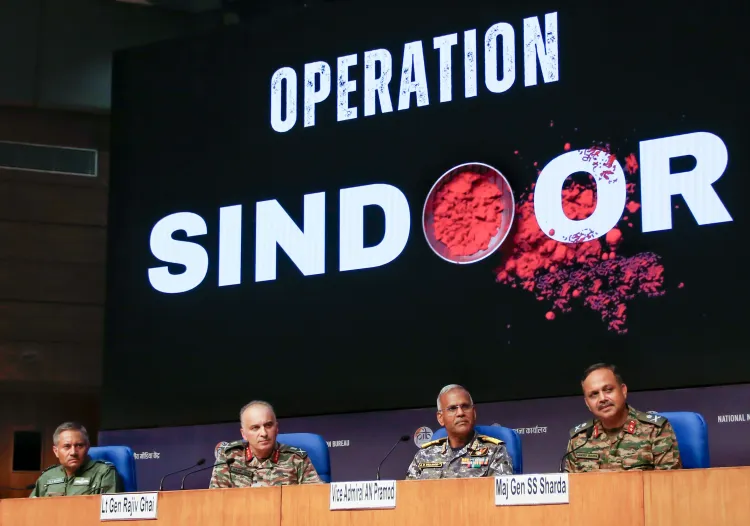
This tactical shift is a direct response to Operation Sindoor, executed by Indian armed forces.
Both Lashkar-e-Tayiba and Jaish-e-Mohammad suffered severe losses during the operation, impacting their manpower and resources significantly.
An official from the Intelligence Bureau stated that Lashkar-e-Tayiba is keen to make a notable statement, with Delhi marked as their primary target.
Striking the national capital would send a potent message to the Indian government. This planned attack serves not only as a propaganda tool but also as a means to express retaliation for Operation Sindoor, the official elaborated.
The forthcoming attack is anticipated to mirror the operation executed by the Jaish-e-Mohammad affiliated Faridabad module.
While a detonation occurred near the Red Fort, its impact was aligned with the module's expectations.
The Faridabad module had stockpiled a substantial amount of ammonium nitrate and was preparing for multiple strikes throughout North India.
However, following the module's disruption, the suicide bomber, Umar Nabi, panicked and detonated the explosive within his vehicle near the Red Fort, as investigations revealed.
Lashkar-e-Tayiba aims to replicate similar frameworks across North India, albeit on a much larger scale compared to the Faridabad setup. The new modules are designed to execute a series of coordinated assaults, according to an agency official.
These modules will rely solely on local recruits and will not involve any Pakistani operatives within India.
Although command will be exercised by Lashkar-e-Tayiba from Pakistan, fundraising will occur domestically.
Intelligence agencies are vigilantly monitoring various charitable organizations that Lashkar-e-Tayiba may exploit for financial support.
The group has previously engaged in such funding activities in North India and is attempting to renew these efforts, the official noted.
Agencies are also observing the movement of ammonium nitrate closely. When the Faridabad module was dismantled, authorities seized a staggering 2,900 kilograms of ammonium nitrate.
This figure highlighted the magnitude of the Faridabad module's attack plans within the nation, the official added.
While the operational hub for the new Lashkar-e-Tayiba modules in North India will be situated in Pakistan, their direct involvement will be minimal.
Communication will be facilitated through sympathizers in Jammu and Kashmir. Authorities are also considering the potential role of over-ground workers in the region in establishing this new module.
Another official remarked that both Jaish-e-Mohammad and Lashkar-e-Tayiba are eager to activate homegrown modules rapidly.
They are determined to launch a significant attack on India. Their plans for infiltration from launch pads in Pakistan-occupied Kashmir are failing due to enhanced security measures.
Since Operation Sindoor, approximately 100 to 150 infiltration attempts have been made, all of which have failed. This reflects the urgency to establish homegrown modules and launch a substantial strike against India.
Point of View
It is essential to remain vigilant about threats posed by groups such as Lashkar-e-Tayiba. This recent shift in their strategy underscores the persistent challenges to national security. It is crucial for authorities to bolster their defenses and prevent any potential attacks.
NationPress
28 Sept 2026
Frequently Asked Questions
What is Lashkar-e-Tayiba planning?
Lashkar-e-Tayiba is preparing to launch a series of attacks in India by establishing local modules.
What triggered this new strategy?
The change in strategy follows the significant losses incurred during Operation Sindoor conducted by Indian armed forces.
Which regions are being targeted?
The group is focusing on states like Haryana, Bihar, Uttar Pradesh, and Rajasthan for setting up these modules.
How are they funding these activities?
The fundraising will occur within India through local charities while command will still be exercised from Pakistan.
What are the implications of these attacks?
If successful, these attacks could significantly disrupt national security and instill fear within the populace.