South Korea's Lee to Lead Cabinet Meeting Amid Rising Middle East Crisis
Synopsis
South Korean President Lee Jae Myung will conduct an urgent Cabinet meeting to strategize responses to the escalating crisis in the Middle East. This meeting comes in the wake of US-Israeli airstrikes on Iran, raising concerns over regional stability. The Prime Minister stresses the protection of South Koreans abroad as the highest priority.
Key Takeaways
President Lee Jae Myung will preside over a Cabinet meeting to address the Middle East crisis.
US-Israeli airstrikes on Iran have escalated regional tensions.
Protection of South Koreans abroad is a top priority for the government.
Approximately 21,000 South Koreans are currently in 13 Middle Eastern countries.
Evacuation plans are being prepared for citizens in affected regions.
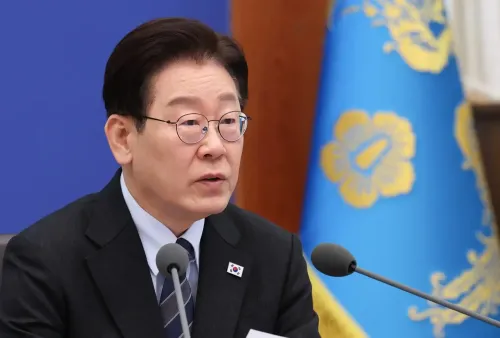
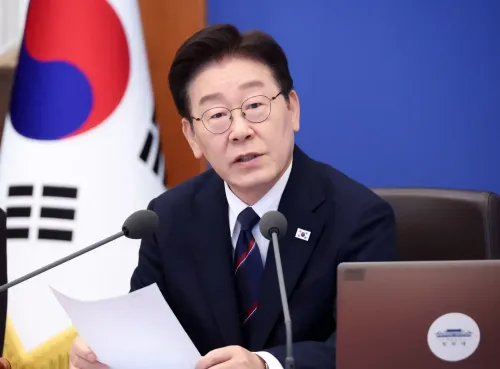
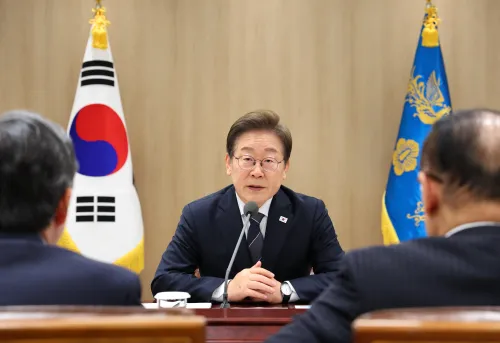
Seoul, March 4 (NationPress) - President Lee Jae Myung of South Korea will lead an extraordinary Cabinet meeting this week to address the escalating tensions in the Middle East shortly after his return from a trip to Southeast Asia, as announced by Cheong Wa Dae on Wednesday.
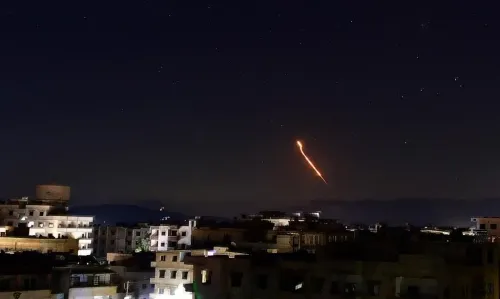
The meeting, scheduled for Thursday, will include senior officials from the finance and foreign ministries. This comes in light of the recent US-Israeli airstrikes on Iran, which have incited military reactions from various countries in the region, raising fears of a broader regional conflict.
During this crucial meeting, President Lee is anticipated to receive updates on the ongoing crisis in Iran and deliberate on potential impacts and appropriate response strategies.
Lee is expected to return late Wednesday from his visits to Singapore and the Philippines, as reported by Yonhap news agency.
On Tuesday, Prime Minister Kim Min-seok emphasized the importance of maintaining full readiness among ministries, including evacuation plans, stating that safeguarding South Koreans in the Middle East is the government's highest priority.
Kim convened a weekly Cabinet meeting amid the escalating conflict in the Middle East, sparked by the US-Israel strikes on Iran on Saturday, which are rapidly affecting neighboring countries with Iran and Israel retaliating.
"At this moment, the protection of our citizens abroad is paramount," Kim stated during the meeting he led in place of Lee Jae Myung, who is engaged in summit discussions in Singapore and the Philippines.
"We must ensure comprehensive preparations for various response measures and evacuation for our nationals in the impacted regions, given the expanding nature of the conflict beyond Iran and Israel's respective actions into counterattacks on surrounding nations."
According to the Foreign Ministry, around 4,000 short-term visitors, including tourists, and approximately 17,000 long-term residents, including expatriates, are currently situated in 13 Middle Eastern countries, with about 2,000 individuals stranded in Dubai alone. This number likely encompasses travelers utilizing Dubai as a transit point to Europe or Africa.
Point of View
The ongoing situation in the Middle East poses significant challenges for South Korea. With President Lee Jae Myung prioritizing the safety of citizens abroad, the government's proactive response reflects an urgent commitment to international stability and national security amidst growing regional tensions.
NationPress
19 Sept 2026
Frequently Asked Questions
What is the purpose of the extraordinary Cabinet meeting?
The meeting aims to discuss response measures to the escalating crisis in the Middle East, particularly following the US-Israeli airstrikes on Iran.
Who will attend the Cabinet meeting?
Top officials from the finance and foreign ministries will be present at the meeting.
What is the current situation for South Koreans in the Middle East?
Approximately 21,000 South Koreans, including 4,000 short-term visitors and 17,000 long-term residents, are in the Middle East, with many in need of evacuation plans.
What did Prime Minister Kim Min-seok emphasize during the Cabinet meeting?
He highlighted the need for full contingency readiness and the government's top priority of protecting South Koreans in the region.
What are the risks associated with the current Middle East tensions?
There are concerns about the potential for a wider regional conflict, given the military responses from various countries following the strikes on Iran.