Will Trump Grant South Korea Fuel for Nuclear-Powered Submarines?
Synopsis
In a pivotal summit in Gyeongju, President Lee Jae Myung urged Trump to allow South Korea to secure nuclear submarine fuel, promising increased defense spending. This request marks a significant shift in military strategy, aiming to bolster national security while alleviating US burdens. Will this lead to a new era of defense collaboration?
Key Takeaways
President Lee urges Trump to allow nuclear submarine fuel access.
Lee vows to increase defense spending for military enhancement.
Current nuclear pact limits uranium enrichment and reprocessing.
South Korea seeks modernization of the US-South Korea alliance .
MASGA project aims to bolster US shipbuilding industry.
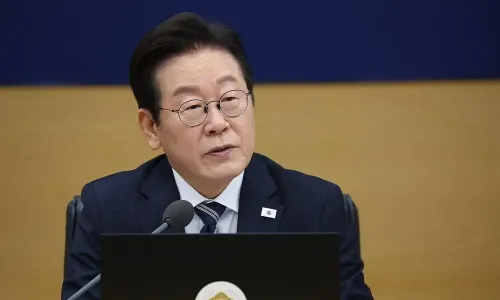
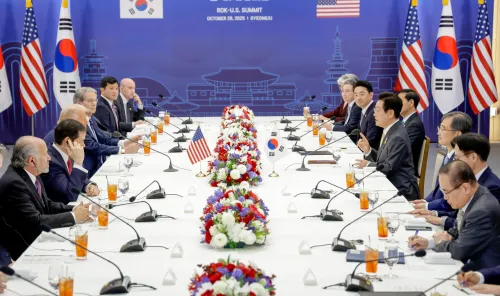
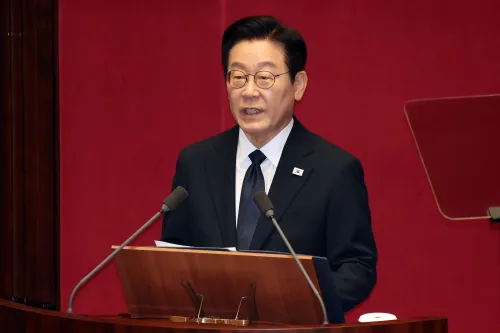
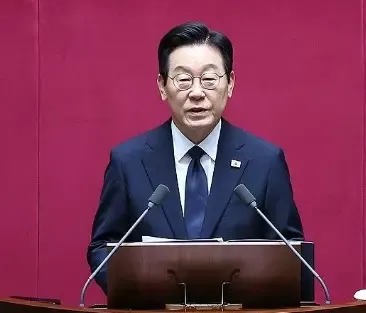
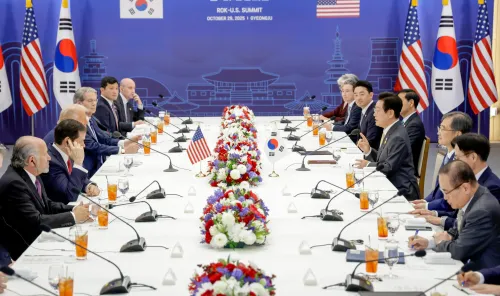
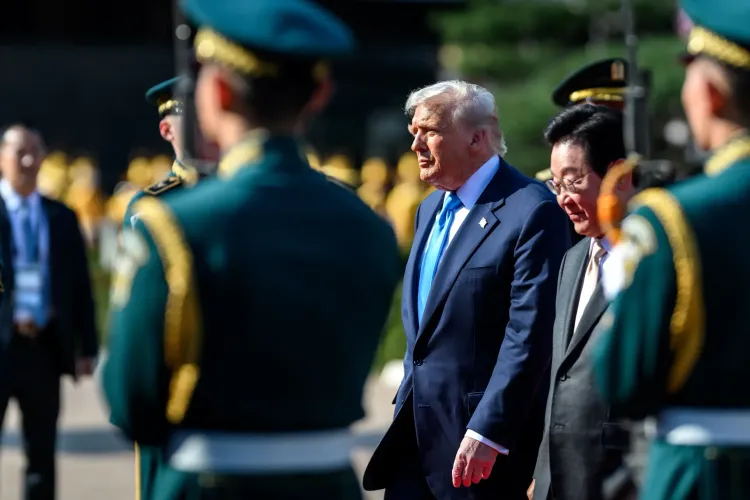
Gyeongju (South Korea), Oct 29 (NationPress) President Lee Jae Myung on Wednesday urged US President Donald Trump to permit South Korea to obtain fuel for nuclear-powered submarines and committed to enhancing defence expenditures to strengthen the nation's military capabilities.
Lee expressed his views during their summit in the southeastern city of Gyeongju, as Seoul seeks to amend its bilateral nuclear energy agreement with Washington for increased flexibility in reprocessing spent nuclear fuel and enriching uranium.
"I hope you will make a decision to allow us to have supply for nuclear-powered submarines," Lee stated, requesting Trump to direct his administration to expedite discussions on spent nuclear fuel reprocessing.
This is the first instance where Lee has publicly emphasized the necessity for South Korea to explore nuclear-powered submarines, as reported by Yonhap news agency.
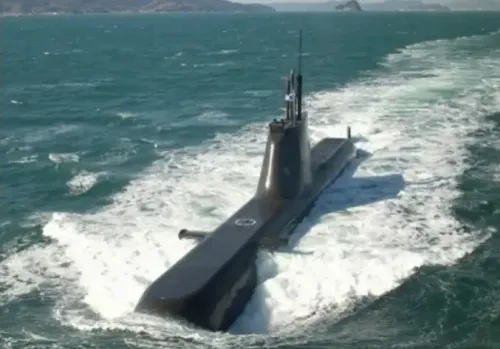
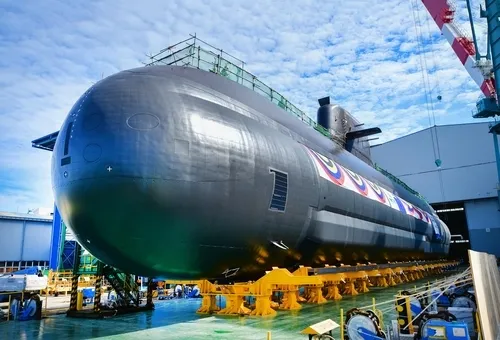
He noted that diesel-powered submarines possess limited underwater navigation capabilities, which hampers the South Korean military’s ability to monitor North Korean or Chinese submarines. He clarified that his request is not aimed at developing nuclear-armed submarines.
"If fuel supply is permitted, we can construct several submarines equipped with conventional weapons using our own technology to safeguard the waters surrounding the Korean Peninsula, ultimately alleviating the burden on US forces," he mentioned.
Lee also requested Trump to prompt his administration to progress discussions on revising the bilateral nuclear agreement concerning spent nuclear fuel reprocessing and uranium enrichment.
Currently, South Korea can only enrich uranium below 20 percent with US approval and is prohibited from reprocessing spent nuclear fuel.
He further vowed to enhance the alliance into a "future-oriented comprehensive strategic alliance" through modernization, asserting that his government will augment the defence budget as part of these efforts.
"The Republic of Korea will increase defence spending and develop the defence industry to significantly bolster its self-defence capabilities," Lee remarked, referring to the country’s official name. "We will ensure a rise in our defence expenditures to help lessen the US' defence burden."
Lee also reiterated South Korea's commitment to support Trump's initiatives aimed at revitalizing the US manufacturing sector through increased investments and purchases from the US.
"We will actively enhance cooperation in shipbuilding, which will benefit both economies and greatly contribute to making the alliance more practical and robust," he stated.
South Korea has introduced an initiative, the Make American Shipbuilding Great Again (MASGA) project, to aid in the reconstruction of the US shipbuilding industry, as part of its $350 billion investment pledge associated with a trade agreement reached in July.
Their second summit, following their White House discussions in August, was closely monitored for indications of whether the two leaders could achieve progress in the ongoing trade negotiations. However, they did not directly address the tariff issue during their opening statements, as reported by Yonhap news agency.
Earlier at the APEC CEO Summit, Trump expressed that a trade deal with South Korea would be finalized "very soon," although officials from both sides have downplayed the chances of an agreement this week.
While speculation had arisen over the possibility of Trump meeting North Korean leader Kim Jong-un during his Asia trip, both leaders confirmed that such a meeting would not occur, with Trump stating, "We really weren't able to work out timing."
Lee remarked that the anticipated meeting did not come to fruition because Kim has not "fully embraced the sincerity" of the US president.
Nevertheless, he noted that Trump's willingness to meet "at any time" has already brought a "sense of warmth and peace" to the Korean Peninsula.
"This will serve as another seed that can ignite a significant wave of peace on the Korean Peninsula," he said, adding that the government will persist in supporting Trump's peace efforts.
In the evening, Lee hosted a special dinner with Trump and leaders from seven nations: Vietnam, Australia, New Zealand, Canada, Thailand, and Singapore, aiming to fortify its role as a crucial US ally and as an "agenda setter" in regional collaboration, according to the presidential office.
During the discussions, the two leaders examined a broad agenda, encompassing economic ties, alliance modernization, peace on the Korean Peninsula, regional security matters, and cooperation in the shipbuilding sector, as detailed by National Security Advisor Wi Sung-lac.
Lee explained that South Korea imports the majority of its nuclear fuel from Russia and faces an urgent challenge in managing spent nuclear fuel from its reactors, according to Wi. Trump acknowledged the need to explore broader opportunities in strategic areas based on South Korea's advanced nuclear capabilities, he stated.
While the current bilateral nuclear agreement solely addresses the "peaceful use of nuclear energy," Lee's plea for US approval to secure fuel for nuclear-powered submarines—viewed for military purposes—will necessitate adjustments to the agreement in follow-up negotiations, Wi noted.
Lee reaffirmed his commitment to denuclearization on the Korean Peninsula through his three-stage roadmap involving the cessation, reduction, and dismantlement of North Korea's nuclear program. Trump voiced concerns regarding the escalating threat posed by North Korea's nuclear capabilities and pledged to provide necessary support to foster peace and stability on the peninsula, he stated.
On shipbuilding collaboration, the two leaders concurred to establish a consultative body involving the National Security Councils of both nations.
Trump also expressed interest in inviting Lee to the White House, and Lee conveyed his gratitude for the invitation, stating he would visit at a mutually agreeable time, Wi said.
Point of View
It is evident that South Korea is taking vital steps towards enhancing its military capabilities. President Lee's requests signal a shift in defense strategy that necessitates careful consideration and collaboration with the US. This approach aims to strengthen the alliance while addressing regional security challenges.
NationPress
19 Sept 2026
Frequently Asked Questions
What did President Lee request from Trump?
President Lee requested that Trump allow South Korea to secure fuel for nuclear-powered submarines and sought to revise the bilateral nuclear energy agreement for greater flexibility.
Why does South Korea want nuclear-powered submarines?
South Korea aims to enhance its underwater navigation capabilities and military strength, particularly to monitor North Korean and Chinese submarines.
What is the current status of South Korea's nuclear capabilities?
South Korea is currently permitted to enrich uranium below 20 percent only with US consent and is prohibited from reprocessing spent nuclear fuel.
How does this affect US-South Korea relations?
Lee's requests could signify a deepening of military collaboration and modernization of the alliance, aiming to reduce the US defense burden.
What is the MASGA initiative?
The Make American Shipbuilding Great Again (MASGA) project is South Korea's initiative to support the US shipbuilding industry as part of its broader investment pledge.