JP Nadda launches SEHAT to bridge agriculture and public health
Synopsis
India's two most powerful research councils — ICMR and ICAR — have formally joined forces under SEHAT, a programme that treats agriculture not just as food production but as a public health intervention. With five priority pillars spanning biofortification, occupational health, NCD prevention, and One Health surveillance, it is the most structurally ambitious agriculture-nutrition convergence India has attempted.
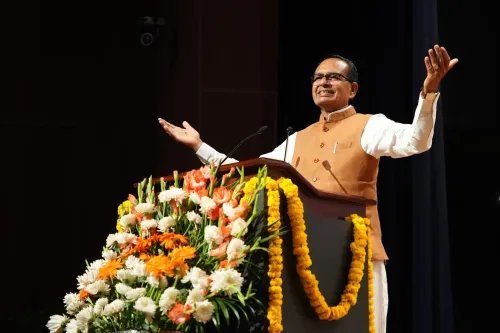
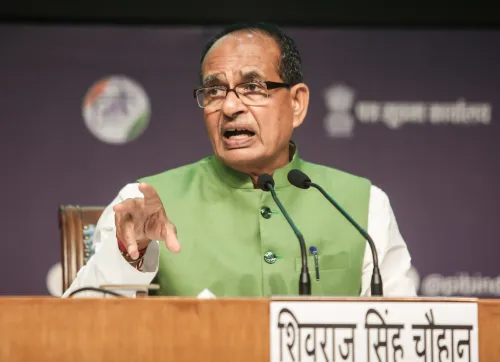
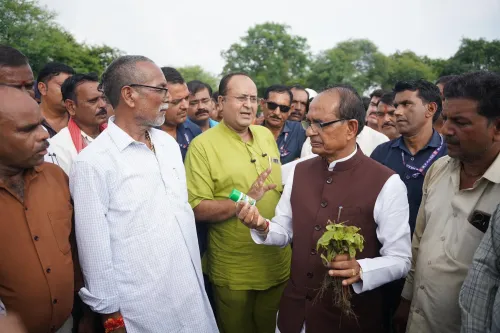
Union Agriculture Minister Shivraj Singh Chouhan emphasised the intrinsic link between agriculture and health, stating that the foundation of a healthy nation lies in a well-nourished population. He stressed the need to promote organic and sustainable agricultural practices as a pathway to improving citizen health, and described SEHAT as a cornerstone in aligning food production with population health needs.
Broader Context and What Comes Next
The launch reflects a stated policy shift under the Narendra Modi government from reactive, curative healthcare toward a proactive, preventive, and holistic model. Notably, this convergence between ICMR and ICAR addresses a long-standing structural gap — India's agriculture and health research ecosystems have historically operated in silos, even as diet-related diseases have climbed steadily. According to health officials, NCDs now account for a significant share of India's disease burden, making food-system interventions a public health imperative. The SEHAT programme is expected to generate evidence-based guidelines that feed into both agricultural procurement policy and national nutrition schemes. How quickly its research outputs translate into field-level impact will be the critical measure of its success.
Key Takeaways
Nadda launched SEHAT on 11 May 2025 in New Delhi , a joint initiative of ICMR and ICAR .
SEHAT stands for Science Excellence for Health through Agricultural Transformation .
The programme targets five pillars: biofortified crops , integrated farming, occupational health , NCD prevention, and One Health preparedness .
India faces a dual burden of undernutrition and overnutrition , compounded by rising non-communicable diseases, according to ICMR DG Rajiv Bahl .
Agriculture Minister Shivraj Singh Chouhan called SEHAT a cornerstone for aligning food production with population health needs.
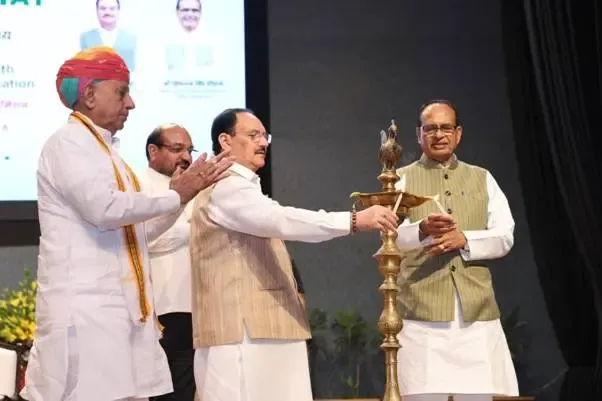
Union Health & Family Welfare Minister J.P. Nadda on Monday, 11 May unveiled SEHAT — Science Excellence for Health through Agricultural Transformation, a national programme designed to convert agricultural advancements into measurable health outcomes for citizens. The initiative is a joint undertaking of the Indian Council of Medical Research (ICMR) and the Indian Council of Agricultural Research (ICAR), marking a formal convergence of India's two premier research bodies across health and agriculture.
What SEHAT Is and Why It Was Launched
SEHAT is structured around five priority areas of national significance, targeting the twin burden of undernutrition and overnutrition that India currently faces. Secretary, Department of Health Research (DHR) and Director General, ICMR, Rajiv Bahl noted that the country is simultaneously grappling with malnutrition, obesity-linked disorders, and a rapid rise in non-communicable diseases (NCDs) — a complex public health challenge that cannot be addressed by healthcare systems alone.
Bahl underscored that agriculture must evolve beyond food production to become a key driver of nutrition and health outcomes, framing SEHAT as a structural policy response rather than a standalone scheme.
Five Priority Pillars of the Mission
The programme targets five focus areas. First, the development and evaluation of biofortified and nutrient-dense crop varieties to directly address malnutrition. Second, strengthening integrated farming systems to promote dietary diversification, improve farm incomes, and build resilience. Third, addressing occupational health risks among agricultural workers through evidence-based interventions. Fourth, advancing agriculture-enabled strategies for prevention and management of non-communicable diseases through functional foods and nutritionally superior crop varieties. Fifth, strengthening One Health preparedness through integrated surveillance, diagnostics, and research at the human–animal–environment interface.
What the Ministers Said
Nadda described SEHAT as a
Point of View
Occupational health protocols for farmers, One Health surveillance networks — or remain a framework document. India has a pattern of well-designed convergence programmes that lose momentum at implementation. SEHAT's five pillars are the right priorities; the test will be whether they attract sustained funding, independent evaluation, and cross-ministry enforcement beyond the launch event.
NationPress
23 Sept 2026
Frequently Asked Questions
What is the SEHAT programme launched by J.P. Nadda?
SEHAT — Science Excellence for Health through Agricultural Transformation — is a national programme jointly launched by ICMR and ICAR on 11 May 2025, designed to translate agricultural advancements into public health outcomes. It focuses on five priority areas including biofortified crops, integrated farming, occupational health, NCD prevention, and One Health preparedness.
Which organisations are behind the SEHAT initiative?
SEHAT is a joint initiative of the Indian Council of Medical Research (ICMR) and the Indian Council of Agricultural Research (ICAR), bringing together India's premier health and agricultural research bodies for the first time under a unified programme.
Why was SEHAT considered necessary?
India faces a dual burden of undernutrition and overnutrition alongside a rising prevalence of non-communicable diseases, according to ICMR Director General Rajiv Bahl. SEHAT was launched to align food and agriculture systems directly with public health objectives rather than treating them as separate policy domains.
What are the five priority areas of the SEHAT mission?
The five pillars are: development of biofortified and nutrient-dense crop varieties; strengthening integrated farming systems; addressing occupational health risks among farm workers; advancing agriculture-based NCD prevention through functional foods; and building One Health preparedness through integrated surveillance at the human–animal–environment interface.
How does SEHAT fit into India's broader health policy direction?
SEHAT reflects the government's stated shift from a reactive, curative healthcare model to a proactive and preventive approach. It is positioned as a structural policy response to the growing diet-disease burden, with research outputs expected to inform both agricultural procurement and national nutrition schemes.