Shivraj Singh Chouhan leads Sankalp pledge on Modi's Saptadhara vision for agriculture
Synopsis
Agriculture Minister Shivraj Singh Chouhan convened a mass pledge event in New Delhi to operationalise PM Modi's Saptadhara framework, with a doubled Lakhpati Didi target of six crore rural women and a push to link Indian farmers directly to global markets through processing, branding, and coordinated exports.
Key Takeaways
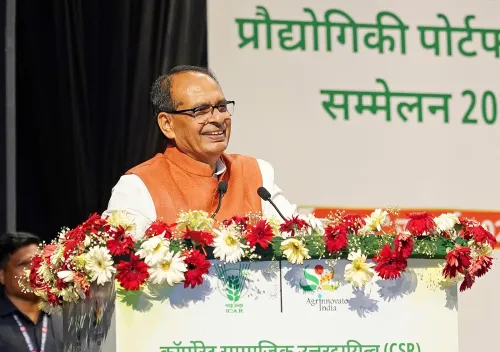
Shivraj Singh Chouhan organised the 'Sankalp' programme on 18 August at C.
Subramaniam Auditorium, Pusa, New Delhi .
Agriculture and food processing were identified as a vital stream of PM Modi's 'Shakti ki Saptadhara' roadmap for Viksit Bharat .
The original Lakhpati Didi target of three crore rural women has been achieved; PM Modi has set a new target of six crore .
Chouhan called for state- and district-level agricultural roadmaps and a unified platform for farmers, processors, and exporters.
ICAR , KVKs , and state governments were directed to accelerate technology transfer to farmers.
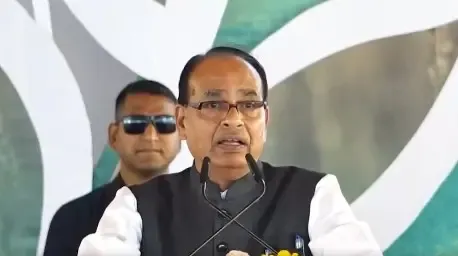
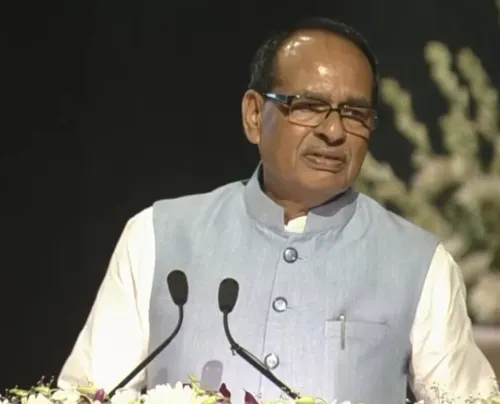
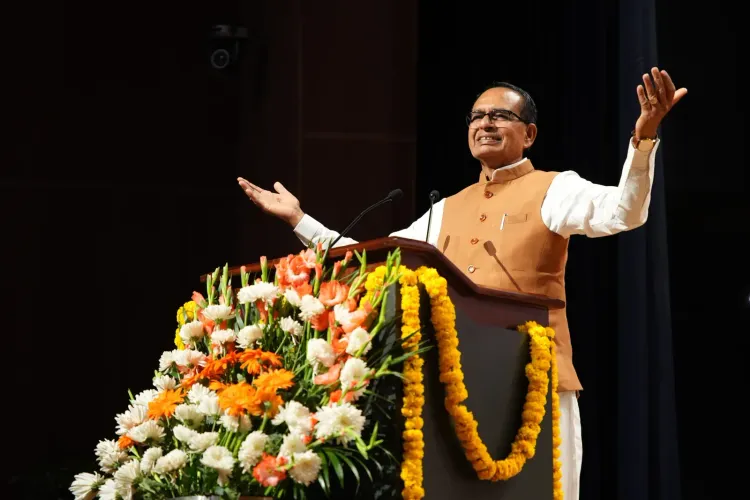
Union Agriculture and Farmers' Welfare Minister Shivraj Singh Chouhan on Tuesday, 18 August convened a 'Sankalp' (pledge) programme at the C. Subramaniam Auditorium in Pusa, New Delhi, bringing together farmers, scientists, exporters, and rural women to commit to translating Prime Minister Narendra Modi's 'Shakti ki Saptadhara' (Seven Streams of Strength) framework into ground-level action. The event, titled 'New Direction for Agriculture and Rural Development through Shakti ki Saptadhara', drew officials, food processors, Farmer Producer Organisations (FPOs), and 'Lakhpati Didis' under one roof to chart a collective course for a 'Viksit Bharat'.
Agriculture as a Core Stream of Saptadhara
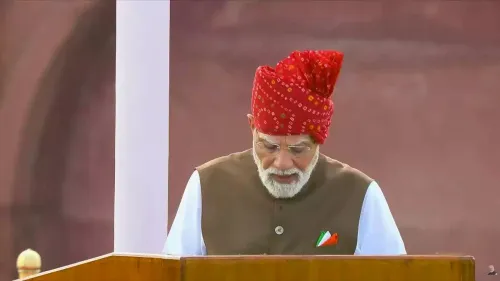
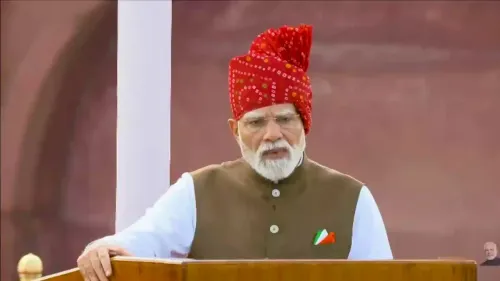
Addressing the gathering, Chouhan underlined that agriculture and food processing form a vital pillar of Prime Minister Modi's 'Saptadhara' roadmap — announced from the ramparts of the Red Fort on Independence Day. He stressed that the country must move beyond simply raising output and focus equally on quality, safety, and alignment with global standards so that Indian farm produce earns a strong identity in international markets.
'The country must focus not only on increasing agricultural production but also on ensuring quality, safety, and adherence to global standards so that Indian farmers' produce can establish a strong identity in the global market,' Chouhan said. He described the programme as 'not merely a formal event but a collective pledge by the entire family associated with agriculture and rural development.'
Connecting Farmers to Global Markets
A central theme of the event was integrating Indian agriculture with international trade. Chouhan noted that India's diverse farm output — spanning chillies, spices, fruits, flowers, traditional food products, and other commodities — carries significant export potential that remains underutilised. He called for improvements in food processing, packaging, branding, and export linkages to directly boost farmer incomes.
'Farmers, processors, and exporters are interconnected; therefore, there is a need to bring them all onto a single platform to work in a coordinated manner,' he said. He also called for state- and district-level agricultural roadmaps, tailored to local crop profiles and market demand, alongside scientific assessments of both domestic and international market requirements.
Lakhpati Didi Target Doubled to Six Crore
Chouhan highlighted that the original target of empowering three crore rural women as 'Lakhpati Didis' has already been met. Prime Minister Modi has now set a revised target of six crore 'Lakhpati Didis', which the minister described as potentially 'transformative' for the rural economy. Women in Self-Help Groups (SHGs) are being supported through skill development, financial assistance, market access, and entrepreneurship opportunities to build financial independence.
'Making rural women self-reliant is a crucial prerequisite for building a Viksit Bharat,' Chouhan said. He added that village development — covering housing, roads, water conservation, employment, and agriculture-based livelihoods — remains inseparable from the broader national development goal.
Institutional Coordination and Four Mantras for Success
Chouhan called on the Department of Agricultural Research and Education, the Indian Council of Agricultural Research (ICAR), Krishi Vigyan Kendras (KVKs), and state governments to work in concert to ensure that new agricultural technologies reach farmers effectively. He also outlined four guiding principles for those in public service: 'paanv mein chakkar' (staying active and field-connected), 'muh mein shakkar' (maintaining cordial relations), 'seene mein aag' (passion and determination), and 'mathe par barf' (composure in adversity).
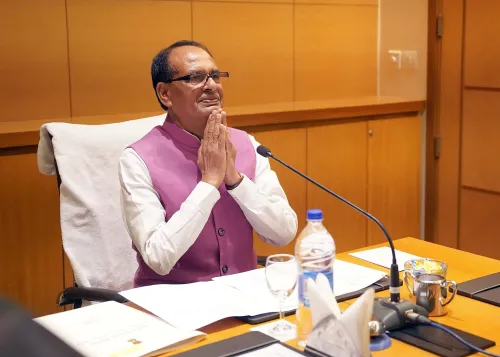
The minister administered a formal pledge to all those present, committing them to building a 'developed, prosperous, self-reliant and empowered India.' All stakeholders — farmers, scientists, officials, processors, exporters, FPOs, and SHGs — were called upon to work in a coordinated manner to fulfil the national resolve. The government is expected to follow up with state-level Sankalp events and district-specific agricultural roadmaps in the weeks ahead.
Point of View
Not just the count. The call to link farmers, processors, and exporters on a single platform has been a recurring policy ask for over a decade; the gap between aspiration and architecture remains wide. Until district-level roadmaps carry budget lines and accountability mechanisms, the 'Saptadhara' framing risks being another motivational overlay on a sector that needs structural reform.
NationPress
2 Oct 2026
Frequently Asked Questions
What is the 'Sankalp' programme organised by Shivraj Singh Chouhan?
The Sankalp programme is a pledge-based mobilisation event organised by Agriculture Minister Shivraj Singh Chouhan on 18 August at the C. Subramaniam Auditorium in Pusa, New Delhi. It brought together farmers, scientists, exporters, FPOs, and rural women to commit to advancing PM Modi's Saptadhara vision for agriculture and rural development.
What is PM Modi's 'Shakti ki Saptadhara' and how does agriculture fit in?
'Shakti ki Saptadhara' — or Seven Streams of Strength — is a development framework announced by Prime Minister Narendra Modi from the Red Fort on Independence Day, outlining pillars for achieving a Viksit Bharat. Agriculture and food processing are identified as one of its key streams, with a focus on production quality, global market access, and rural income growth.
What is the new Lakhpati Didi target announced at the event?
The original target of empowering three crore rural women as Lakhpati Didis has already been achieved, according to Chouhan. PM Modi has now set a revised target of six crore Lakhpati Didis, with continued support through skill development, financial assistance, and market access for SHG members.
How does the government plan to connect Indian farmers to global markets?
Chouhan called for improvements in food processing, packaging, branding, and export linkages, along with a unified platform for farmers, processors, and exporters. He also stressed the need for scientific market assessments and district-level agricultural roadmaps tailored to local crop profiles and demand.
Which institutions were asked to support technology transfer to farmers?
The Department of Agricultural Research and Education, the Indian Council of Agricultural Research (ICAR), Krishi Vigyan Kendras (KVKs), and state governments were all called upon to work in coordination to ensure new agricultural technologies and scientific innovations reach and are adopted by farmers across India.