Has the Lok Sabha Extended the Tenure of the 'One Nation, One Election' Committee?
Synopsis
The Lok Sabha's recent decision to extend the tenure of the parliamentary committee reviewing the 'One Nation, One Election' Bills is a major step in electoral reform. With significant discussions involving key legal experts, this initiative aims to synchronize future elections, raising critical constitutional debates.
Key Takeaways
Lok Sabha extends the tenure of the committee examining electoral reform.
Significant discussions with experts on the 'One Nation, One Election' Bills.
Concerns raised about potential constitutional implications.
Next committee meeting set for December 17.
Legislation aims to synchronize future elections for efficiency.
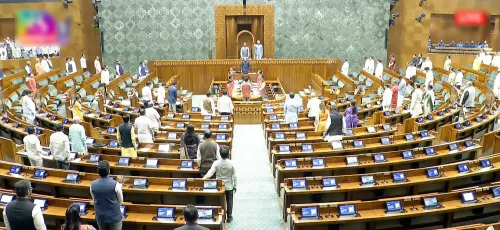
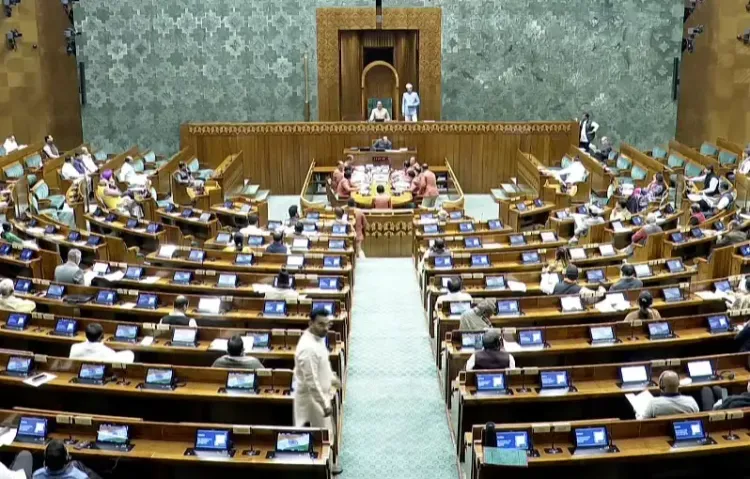
New Delhi, Dec 11 (NationPress) The Lok Sabha has granted an extension to the parliamentary committee responsible for reviewing the Bills advocating for simultaneous elections for the Lok Sabha and state Legislative Assemblies.
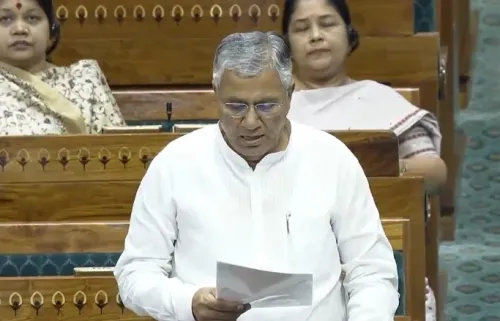
The Joint Parliamentary Committee (JPC) Chairman, P. P. Chaudhary, introduced a motion to prolong the tenure of the Joint Committee on the Constitution (129th Amendment) Bill, 2024, and the Union Territories Laws (Amendment) Bill, 2024, until the first day of the last week of the 2026 Budget Session, which was subsequently approved via a voice vote.
Since its inception last December, the committee has engaged in discussions with constitutional authorities, economists, and Law Commission Chairman Dinesh Maheshwari, among others.
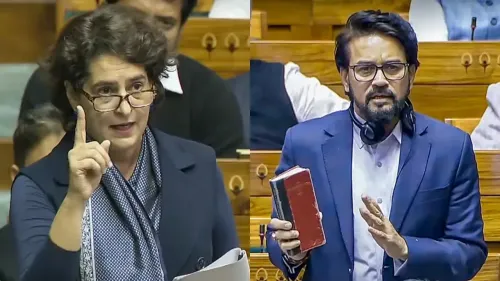
The panel reconvened on Wednesday under Chaudhary's leadership, with BJP MPs Sambit Patra and Anurag Thakur, Congress MPs Manish Tewari and Sukhdeo Bhagat, and SP MP Dharmendra Yadav present.
Senior advocate and Rajya Sabha MP Kapil Sibal provided his insights to the committee regarding the proposed 'One Nation, One Election' framework.
He reportedly opposed the idea of synchronized elections, arguing that this system could compromise the fundamental structure of the Constitution, diminish federal principles, and infringe upon state rights.
Details from the committee's proceedings remain confidential, so specifics about the discussions held during the meeting are not publicly accessible.
After the meeting, Chaudhary informed reporters that Sibal had “clarified various queries” from committee members regarding the One Nation One Election Bills.
He described the discussion as “very good and constructive,” confirming that the committee's next meeting is scheduled for December 17.
“We need to hear from all stakeholders since this pertains to One Nation One Election... it represents significant electoral reform... Every member is acting in the nation’s interest,”
he added.
The two Bills, presented by Union Law Minister Arjun Ram Meghwal in December 2024, were subsequently referred to the parliamentary committee.
They aim to synchronize Lok Sabha and Assembly elections by reducing the terms of state legislatures elected after a specific Lok Sabha, allowing their terms to conclude together.
Once the election cycles are aligned, future Lok Sabha and Assembly elections would occur simultaneously.
The 23rd Law Commission recently asserted that the proposed legislation does not contravene the Constitution's fundamental structure, including principles related to federalism and voter rights.
Point of View
Maintaining a balanced perspective is crucial. The extension of the parliamentary committee's review indicates a comprehensive approach to electoral reform. While the 'One Nation, One Election' initiative aims to streamline governance, concerns regarding constitutional implications must be addressed to ensure the preservation of federal principles and the rights of states.
NationPress
3 Oct 2026
Frequently Asked Questions
What is the 'One Nation, One Election' initiative?
The 'One Nation, One Election' initiative proposes to synchronize elections for the Lok Sabha and state Legislative Assemblies to streamline the electoral process in India.
Why was the tenure of the parliamentary committee extended?
The tenure of the parliamentary committee was extended to allow more time for thorough examination and discussions regarding the implications of the proposed Bills.
Who are the key figures involved in the committee discussions?
Key figures include JPC Chairman P. P. Chaudhary, senior advocate Kapil Sibal, and various members from different political parties.
What are the potential impacts of synchronizing elections?
Synchronizing elections could lead to cost savings and improved governance but raises concerns about federalism and state rights.
When is the next meeting of the parliamentary committee scheduled?
The next meeting of the parliamentary committee is scheduled for December 17.