Is the Lok Sabha Ready to Tackle the Air Pollution Crisis?
Synopsis
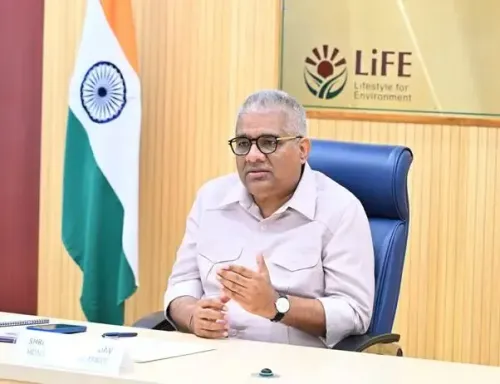
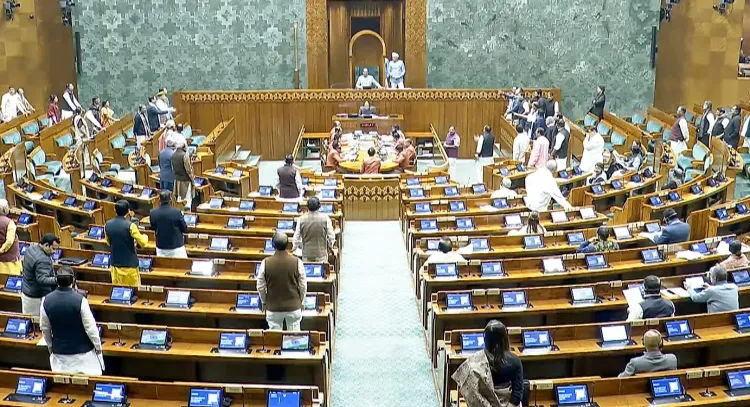
With air pollution reaching alarming levels in Delhi, the Lok Sabha is preparing for a significant discussion today. Union Environment Minister Bhupendra Yadav will respond to pressing questions from MPs, outlining the government's strategies to combat this pressing issue. Will this mark a turning point in the fight against pollution?
Key Takeaways
The Lok Sabha is discussing urgent measures against air pollution.
Union Environment Minister Yadav acknowledges the seriousness of the pollution crisis.
New regulations are being implemented to curb industrial and vehicular emissions.
Public awareness is critical in managing air quality.
Construction activities face stricter regulations to minimize dust pollution.
New Delhi, Dec 18 (NationPress) The Lok Sabha is set to engage in a comprehensive discussion today regarding the escalating air pollution crisis affecting Delhi and its neighboring areas. This comes in response to persistent concerns raised by Opposition members in Parliament about the declining air quality and the effectiveness of the current mitigation strategies.
Union Environment Minister Bhupendra Yadav is expected to address questions, objections, and suggestions at 5 p.m., indicating the government's willingness to respond to increasing criticism and to outline its plans for tackling dangerous pollution levels.
The air pollution issue has dominated parliamentary discussions, with numerous MPs questioning the Centre's readiness and long-term strategy for managing severe air pollution.
DMK Rajya Sabha member Dr Kanimozhi NVN Somu inquired about the government's funding for installing large-scale air purifiers in areas suffering from extreme pollution.
During the debate, Yadav acknowledged the gravity of the situation, admitting that air pollution is indeed “a significant challenge”.
He emphasized the necessity of public awareness and regulatory enforcement, urging citizens to remain informed about the Air Quality Index (AQI) and its health implications.
The minister noted that the government is focused on both raising awareness and enforcing regulations. Under the National Clean Air Programme (NCAP), initiatives aimed at improving air quality are currently being implemented in 130 cities across the country.
Yadav informed the Parliament that guidelines have been established to reduce harmful industrial emissions and to address enforcement shortcomings, stressing that urban local bodies play a vital role in ensuring compliance.
Concerning pollution from construction activities, the minister indicated that enhanced powers have been granted since April 2, 2025, under the construction and demolition (C&D) waste management regulations.
He mentioned that for projects exceeding 20,000 square meters, the use of anti-smog guns has been made compulsory.
Additionally, the Centre has advised the Delhi government to designate specific zones for the disposal of construction and demolition waste to avert unregulated dumping and dust pollution.
In line with the Delhi government's new measures to address air pollution, the 'No PUC, No Fuel' rule will be effective from Thursday.
Moreover, only BS-VI compliant vehicles registered outside Delhi will be permitted to enter the city, while construction material trucks will be prohibited. Construction activities will continue to be restricted under GRAP norms, with stringent actions promised against offenders.
The national capital continues to struggle with severe pollution, prompting the Delhi government to announce a wide-ranging set of emergency and long-term measures aimed at addressing vehicular emissions, dust, waste, and traffic congestion.
Point of View
I perceive the escalating air pollution crisis not just as a local issue but as a pressing national concern that warrants immediate and effective action. The Lok Sabha's engagement on this front highlights the necessity of a unified approach to address environmental challenges that affect millions across the country.
NationPress
20 Oct 2026
Frequently Asked Questions
What is causing the air pollution crisis in Delhi?
The air pollution crisis in Delhi is primarily caused by vehicular emissions, construction activities, industrial discharges, and dust pollution.
What measures is the government implementing to combat air pollution?
The government is implementing several measures, including the National Clean Air Programme, guidelines to reduce industrial emissions, and stricter regulations on construction activities.
How can citizens contribute to reducing air pollution?
Citizens can help reduce air pollution by staying informed about the Air Quality Index, using public transport, reducing vehicle usage, and supporting local initiatives aimed at improving air quality.
What is the 'No PUC, No Fuel' rule?
'No PUC, No Fuel' is a regulation that requires vehicles to have a valid Pollution Under Control certificate to obtain fuel, aimed at reducing vehicular emissions.
What can be expected from today's Lok Sabha discussion?
Today's Lok Sabha discussion will focus on air pollution solutions, with Union Minister Bhupendra Yadav responding to questions from MPs about the government’s plans and actions.