Why do less than 30 percent of children diagnosed with cancer survive in Pakistan?

Synopsis
Every year, Pakistan sees around 10,000 childhood cancer diagnoses, yet survival rates remain alarmingly low at under 30%. Health experts are calling for immediate action, highlighting the critical need for early detection and improved treatment facilities to save young lives.
Key Takeaways
Less than 30% of children with cancer in Pakistan survive.
Timely diagnosis and treatment significantly improve survival rates.
Healthcare access and awareness are crucial in combating childhood cancer.
Common childhood cancers include lymphoma and leukemia.
Collaborative efforts are needed from parents, teachers, and healthcare providers.
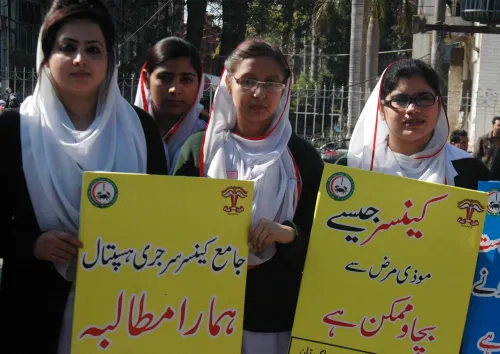
Islamabad, Feb 16 (NationPress) Approximately 10,000 children are diagnosed with cancer in Pakistan annually, yet less than 30 percent manage to survive due to factors such as delayed diagnosis, inadequate treatment facilities, and financial constraints, health experts revealed during an awareness session, according to local media reports on Monday.
During a "Health Wise" session focused on childhood cancer held on Sunday, which was collaboratively organized by the Indus Hospital and Health Network, experts pointed out that around 400,000 children and adolescents globally are diagnosed with cancer each year, with nearly 80 percent of these cases originating from low and middle-income countries, as reported by Pakistani daily The Express Tribune.
In developed nations, the survival rate for cancer patients ranges from 80-85 percent; however, these rates are significantly lower in developing countries due to delays in detection and insufficient access to specialized care.
Dr. Naeem Jabbar, a Consultant Pediatric Haematology-Oncology specialist, indicated that most childhood cancers can be effectively treated if timely intervention is provided.
"Unlike cancers in adults, the majority of childhood cancers lack a clearly defined cause and are not associated with lifestyle choices. With timely and appropriate treatment, cure rates can reach as high as 85 percent," he stated.
Dr. Jabbar emphasized that the low survival rate in Pakistan is primarily due to delays in recognizing symptoms, lack of supportive care, a shortage of trained professionals, limited access to specialized centers, and high abandonment rates for treatment. The most prevalent childhood cancers include lymphoma, brain and spinal tumors, bone tumors, leukemia, soft tissue sarcomas, neuroblastoma, Wilms tumor, and retinoblastoma, as reported by The Express Tribune.
Experts highlighted that cancer patients have treatment options including chemotherapy, surgery, and radiotherapy, which can be effective when initiated promptly.
Responding to media inquiries, Dr. Shumail Ashraf, a Consultant Pediatric Oncology expert and Executive Director of the Medical Services Directorate, noted that the Pediatric Haematology-Oncology Department in Karachi receives approximately 1,000 new cases each year. Since 2014, over 16,000 children have been treated, with around 1,300 currently undergoing treatment.
Experts reinforced the importance of early diagnosis in saving lives and urged parents, educators, healthcare professionals, and the media to work collaboratively to raise awareness, ensuring every child receives a fair opportunity for survival.
Point of View
I believe that this issue highlights a critical gap in healthcare accessibility in Pakistan. The health system must prioritize early diagnosis and treatment for childhood cancers, as these young lives deserve every opportunity for survival. We must advocate for improved healthcare infrastructure and raise public awareness to combat this pressing challenge.
NationPress
24 Sept 2026
Frequently Asked Questions
What is the survival rate for children with cancer in Pakistan?
Fewer than 30 percent of children diagnosed with cancer in Pakistan survive.
What are the main challenges faced by childhood cancer patients in Pakistan?
Challenges include delayed diagnosis, limited treatment facilities, financial difficulties, and a shortage of trained specialists.
How many children are diagnosed with cancer each year in Pakistan?
Approximately 10,000 children are diagnosed with cancer in Pakistan annually.
What types of cancers are most common among children in Pakistan?
Common childhood cancers include lymphoma, brain and spinal tumors, bone tumors, leukemia, soft tissue sarcomas, neuroblastoma, Wilms tumor, and retinoblastoma.
What treatment options are available for childhood cancer patients?
Available treatment options include chemotherapy, surgery, and radiotherapy.