Maharashtra Government Warns Farmers of Thunderstorms and Squalls from March 17-20
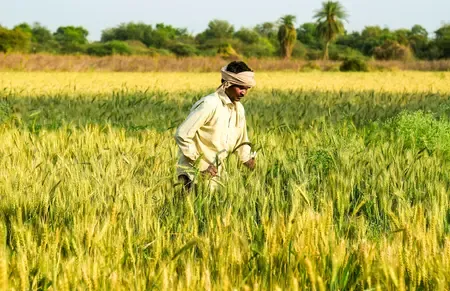
Synopsis
As Maharashtra braces for severe weather, the Agriculture Department has issued a crucial advisory to farmers. Expect thunderstorms and squalls from March 17-20, particularly impacting regions like Vidarbha and Marathwada. Farmers are urged to take immediate precautions to protect their crops.
Key Takeaways
Maharashtra faces severe weather from March 17-20.
Thunderstorms and squalls are likely in multiple regions.
Farmers must act quickly to protect their crops.
Stay updated with local weather forecasts.
Ensure proper storage and protection for harvested crops.
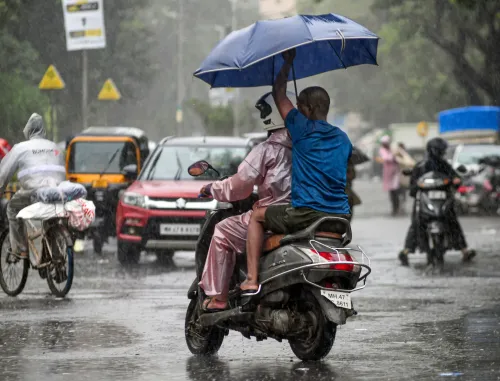
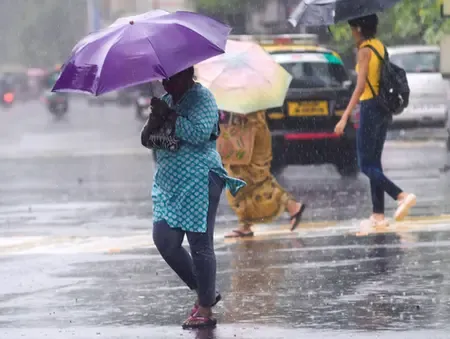
Mumbai, March 13 (NationPress) The Maharashtra State Agriculture Department has released an important advisory aimed at farmers and the general public, in light of a preliminary weather forecast indicating chaotic weather patterns across several regions of the state from March 17 to March 20. The Meteorological Department has warned that numerous areas may experience cloudy skies, particularly around noon. The regions anticipated to be most impacted include Vidarbha, Marathwada, Khandesh, and Central Maharashtra.
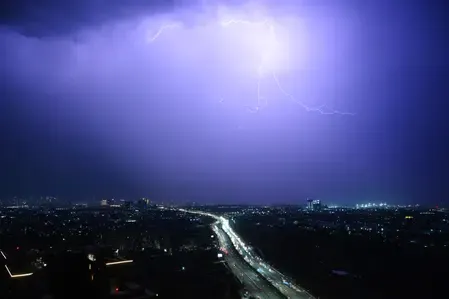
"These regions could face thunderstorms, lightning strikes, and strong winds, with a notable chance of hailstorms in specific areas. Current projections indicate that the severity of these weather events may reach its peak between March 18 and March 20," the advisory stated.
As the Rabi harvest is underway, the Agriculture Department has urged farmers to adopt immediate precautionary measures to safeguard their crops and minimize potential losses.
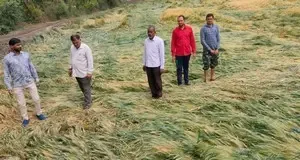
"Farmers should relocate harvested crops to secure storage or cover them with waterproof materials to protect against rain and wind. Agricultural activities should be planned after carefully monitoring local weather updates. Essential measures must be taken to shield standing crops from the expected hailstorms and squalls," the advisory recommended.
"In light of the forecast for lightning and strong winds, we urge all farmers to prioritize the protection of their produce and stay informed about updated weather reports," an official from the Agriculture Department commented.
This weather pattern is characteristic of the Pre-Monsoon transition period in Maharashtra. In mid-March, rising temperatures over the landmass often create localized atmospheric instability. When moisture-laden winds from the Bay of Bengal or the Arabian Sea collide with this dry heat, it leads to the development of convective clouds, resulting in the "afternoon thunderstorms" referenced in the report.
"For farmers, this is a critical time as crops such as wheat, harbara (gram), and various fruits are nearing harvest or are still in open fields," the official emphasized.
The official further advised farmers to promptly move harvested crops to a safe, covered storage facility or warehouse, use plastic sheets or tarpaulins to shield crops if indoor storage is not available, install hail protection nets over valuable orchards to reduce damage, ensure proper drainage in fields to prevent waterlogging after hail melts, and secure livestock in robust sheds while avoiding keeping animals under trees.
Point of View
It is crucial for farmers to heed the warnings and take necessary precautions to protect their livelihoods.
NationPress
1 Oct 2026
Frequently Asked Questions
What regions in Maharashtra are most affected by the weather advisory?
The regions most affected include Vidarbha, Marathwada, Khandesh, and Central Maharashtra.
What precautions should farmers take?
Farmers should move harvested crops to safe storage, cover them with waterproof materials, and monitor local weather updates closely.
When is the peak of the predicted weather events?
The intensity of these weather events is expected to peak between March 18 and March 20.