Maharashtra Cabinet approves ex-Agniveer direct police recruitment, no exam needed
Synopsis
Maharashtra has done what most states only promised — it has created a legally backed, exam-free absorption route for ex-Agniveers into police and uniformed services, with a 10% horizontal reservation. As the first batch nears discharge, this Cabinet decision directly confronts the post-service employment anxiety that triggered nationwide protests when the Agnipath scheme launched in 2022.
Key Takeaways
The Maharashtra Cabinet on 29 September approved direct recruitment of ex- Agniveers into state police and uniformed services — no competitive exam or fresh training required.
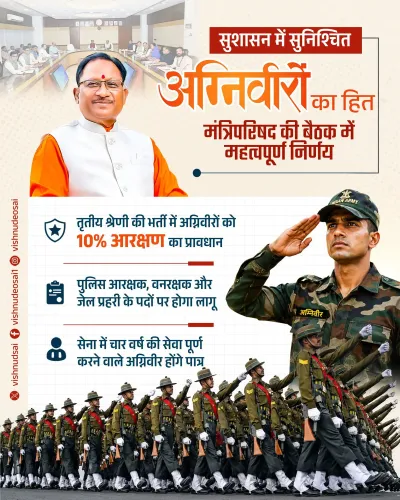
A 10 per cent horizontal reservation has been instituted for ex-Agniveers across Group-C uniformed posts , including police, fire services, and coastal security.
Ex- Indian Navy Agniveers will be directly absorbed into Maharashtra's coastal security wing , with post-sanction caps relaxed to accommodate all interested veterans.
Upper age limit relaxations will apply to retiring Agniveers seeking state government employment.
The Cabinet also revised drought assistance norms and approved a state-wide livestock fodder availability strategy.
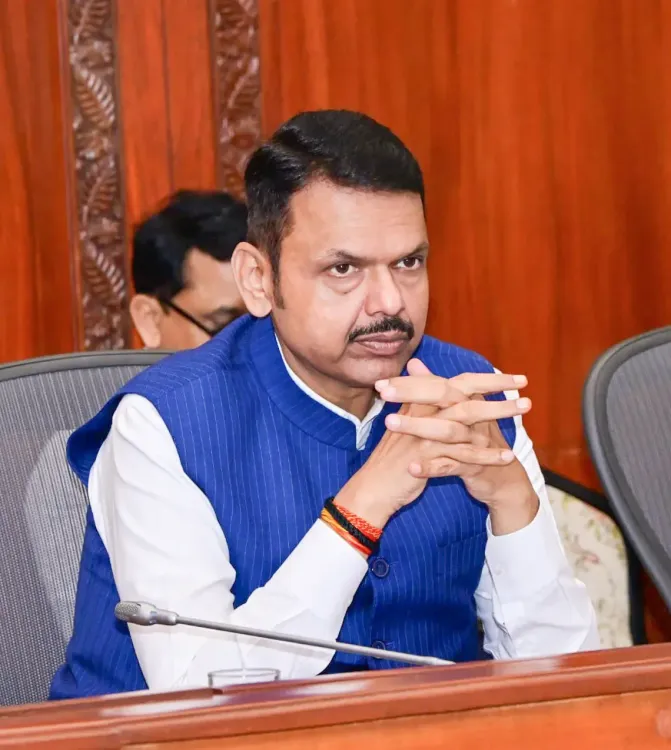
The Maharashtra Cabinet, chaired by Chief Minister Devendra Fadnavis, on Tuesday, 29 September approved a landmark policy granting direct recruitment to retired Agniveers into the state police force and allied uniformed services — bypassing competitive examinations and fresh training requirements entirely. The decision marks one of the most comprehensive post-service absorption frameworks for Agnipath scheme veterans adopted by any Indian state.
Key Policy Provisions
Under the newly approved framework, the state has instituted a 10 per cent horizontal reservation for ex-Agniveers across Group-C uniformed posts, spanning the police force, fire services, and coastal security wing. Upper age limit relaxations will also be applied to accommodate retiring Agniveers seeking state government employment, removing a structural barrier that had concerned veterans and their families.
Ex-Agniveers discharged from the Indian Navy will be directly integrated into Maharashtra's coastal security wing, with post-sanction caps relaxed as a special case to absorb all interested navy veterans. The absorption mandate extends across various state security cadres, including the Fire Department and correctional security forces.
What the Chief Minister Said
'The first batch of Agniveers will soon complete their four-year service tenure. Every Agniveer who wishes to transition into state government service will be absorbed directly into our police and uniformed services without exam or training barriers,' Fadnavis stated after the Cabinet meeting.
Why This Decision Matters
The Agnipath scheme, launched by the Centre in 2022, enrols young recruits for a fixed four-year military tenure, after which roughly 75 per cent are discharged without a pension. The scheme drew significant criticism at the time over post-service employment uncertainty, with protests erupting in several states. Maharashtra's policy directly addresses that gap by creating a structured civilian absorption pathway — a move that positions the state among the frontrunners in institutionalising post-Agnipath career continuity.
Notably, by utilising military training already completed during the Agnipath tenure, the state avoids duplicating training costs while strengthening its frontline security apparatus with battle-ready personnel. This is a dual-benefit proposition — fiscal efficiency for the state and career security for the veteran.
Other Cabinet Decisions
The Cabinet also approved a revision of drought assistance norms, directing sub-committees to assess agricultural impact at the circle (mandal) level to extend financial relief even to tehsils not strictly satisfying 'Trigger-2' meteorological thresholds. A state-wide strategy to ensure adequate, district-level feed and fodder availability for livestock was also cleared, reflecting the broader rural distress context in which the Cabinet met.
What Comes Next
With the first batch of Agniveers approaching the end of their four-year tenure, implementation timelines are expected to be tight. State departments will need to operationalise reservation rosters, finalise age-relaxation norms, and coordinate with the Ministry of Defence for discharge documentation. How swiftly Maharashtra converts Cabinet approval into actual inductions will determine whether this policy becomes a model for other states — or another well-intentioned announcement awaiting execution.
Point of View
Not symbolic — a 10% horizontal reservation backed by Cabinet approval is harder to walk back than a ministerial promise. Yet the real test lies in implementation: how quickly can state departments operationalise rosters, process discharge papers, and fill actual vacancies? The Agnipath scheme's post-service gap was always a foreseeable policy design flaw; states that move first to fill it gain both a security dividend and a political one. What Maharashtra must avoid is the fate of several Centre-level schemes where Cabinet clearance preceded years of administrative inertia.
NationPress
29 Sept 2026
Frequently Asked Questions
What has the Maharashtra Cabinet approved for ex-Agniveers?
The Maharashtra Cabinet has approved direct recruitment of retired Agniveers into the state police force and allied uniformed services without competitive examinations or fresh training. The policy also institutes a 10 per cent horizontal reservation for ex-Agniveers in Group-C uniformed posts.
Which services are covered under Maharashtra's Agniveer absorption policy?
The policy covers the Maharashtra Police, Fire Department, coastal security wing, and correctional security forces. Ex-Navy Agniveers will be specifically integrated into the coastal security wing, with post-sanction caps relaxed to absorb all interested veterans.
Why was this policy introduced?
The Agnipath scheme, launched in 2022, discharges roughly 75 per cent of recruits after a four-year tenure without a pension, raising concerns about post-service employment. Maharashtra's policy directly addresses this gap by creating a structured civilian absorption pathway for veterans.
Will ex-Agniveers need to sit for police recruitment exams?
No. Under the newly approved policy, ex-Agniveers will be inducted into state police and uniformed roles without appearing for recruitment examinations or repeating initial training modules already completed during their military tenure.
When will the first Agniveers be eligible for absorption into Maharashtra's services?
Chief Minister Devendra Fadnavis indicated that the first batch of Agniveers will soon complete their four-year service tenure, making them immediately eligible for absorption. Exact timelines will depend on how quickly state departments operationalise the reservation rosters and coordinate discharge documentation with the Ministry of Defence.