CM Fadnavis Absorbs First Navy Agniveer Batch Into Coastal Force
Synopsis
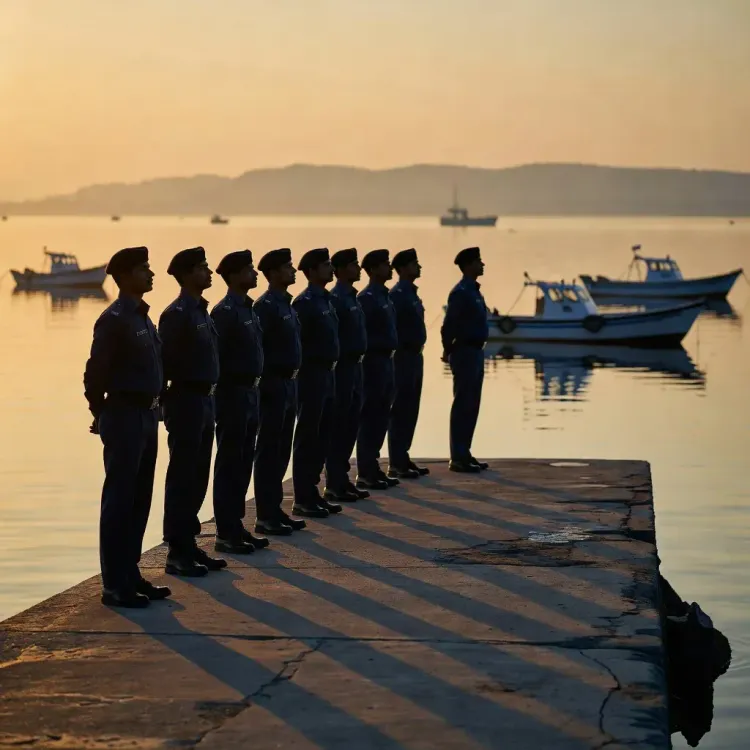
Maharashtra CM Devendra Fadnavis announced on 23 October 2026 that the state has recruited the first batch of Navy Agniveers — those who completed their Short Service Commission under the Agnipath scheme — into the Maharashtra Coastal Security Force, setting a state-level precedent for post-service absorption.
Key Takeaways
Maharashtra has recruited the first Navy batch of Agniveers who completed their Short Service Commission into the state's Coastal Security Force .
The announcement was made by CM Devendra Fadnavis from Nagpur on 23 October 2026 .
The Agnipath scheme was launched nationally in June 2022 to recruit youth into the armed forces on short four-year service terms.
Maharashtra's coastline stretches over 720 kilometres , making trained naval personnel a direct operational fit for coastal security roles.
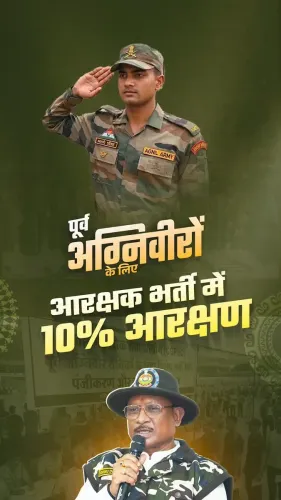
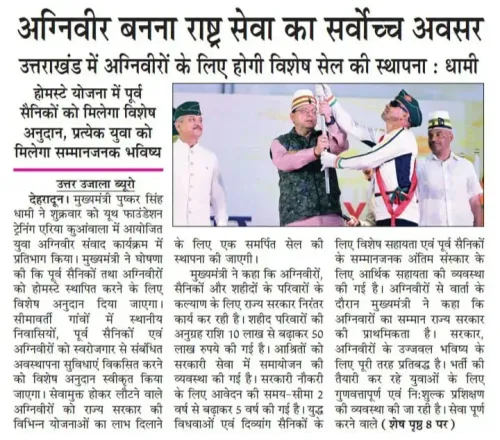
Several Indian states have explored post-service roles for Agniveers; Maharashtra becomes a concrete precedent with this formal recruitment.
Whether Army and Air Force Agniveer cohorts will be similarly absorbed into Maharashtra's security apparatus remains the key next question.
Maharashtra has just drawn a blueprint other states may scramble to copy. Maharashtra Chief Minister Devendra Fadnavis announced on 23 October 2026 that the state government has recruited the first Navy batch of Agniveers — those who completed their Short Service Commission — into the state's Coastal Security Force, with the announcement made from Nagpur.
Posting on X, CM Fadnavis stated: 'महाराष्ट्र सरकार ने शॉर्ट सर्विस कमीशन पूरा कर चुके अग्निवीरों की नौसेना की पहली बैच को तटीय सुरक्षा बल में भर्ती किया है।' ['The Maharashtra government has recruited the first Navy batch of Agniveers who have completed their Short Service Commission into the Coastal Security Force.']
From naval decks to Maharashtra's coastline
The Agnipath scheme, launched nationally in June 2022, was designed to recruit young Indians into the Army, Navy, and Air Force on short-term contracts — typically four years — with the expectation that post-service opportunities would be created to absorb them. Critics of the scheme had long questioned exactly what those opportunities would look like. Maharashtra has now answered that question, at least for its Navy cohort. By channelling trained naval personnel directly into the Coastal Security Force, the state is plugging a ready-made solution into a very real gap. Maharashtra has one of India's longest coastlines — stretching over 720 kilometres — and the memory of the 2008 Mumbai attacks, when gunmen arrived by sea, still shapes coastal security policy in the state. Agniveers who spent years on naval vessels bring exactly the maritime awareness that landlocked recruits cannot easily acquire.A state-level answer to a national employment question
Several Indian states have explored absorbing Agniveers into state police, home guards, or maritime security roles after their term ends. Maharashtra moving first on the Navy cohort — and making it official — sets a concrete precedent. The fit is logical: these recruits already hold security clearances, understand maritime protocols, and have been trained at national standards. Slotting them into coastal security minimises retraining costs and maximises operational readiness. For the Agniveers themselves, the move resolves what had been the scheme's most politically sensitive pressure point — the uncertainty of life after service. A confirmed state government posting transforms that uncertainty into a career pathway.What comes next for Army and Air Force veterans
The announcement covers only the first Navy batch. Whether Maharashtra extends similar frameworks to Army or Air Force Agniveers — and in what roles — remains the immediate question to watch. A formal central or state policy architecture governing such absorptions across all three services could convert this from a one-state initiative into a national template. CM Fadnavis's move from Nagpur today may well be the opening move in that larger conversation. Maharashtra has turned a political liability into a policy proof-of-concept — and every state with an Agnipath cohort ageing out of service will be watching closely.Point of View
The move serves a dual purpose: strengthening a coastline with genuine strategic vulnerability while neutralising a persistent opposition critique about Agniveer job prospects. The Navy-to-coastal pipeline is replicable precisely because the skill match is so clean, which means other maritime states face immediate pressure to replicate or explain why they haven't. The broader test is whether this state-level initiative catalyses a formal central framework or remains a patchwork of individual state decisions.
NationPress
23 Oct 2026
Frequently Asked Questions
What is the Agnipath scheme and how does it work?
The Agnipath scheme, launched in June 2022, recruits young Indians into the Army, Navy, and Air Force on short-term contracts of approximately four years, after which they are known as Agniveers and are expected to transition into civilian or government roles.
What has Maharashtra done with Navy Agniveers?
Maharashtra has recruited the first batch of Navy Agniveers who completed their Short Service Commission into the state's Coastal Security Force, as announced by CM Devendra Fadnavis on 23 October 2026 from Nagpur.
Why are Navy Agniveers suited for the Coastal Security Force?
Navy Agniveers bring maritime training, security clearances, and operational experience at sea, making them a direct fit for coastal security roles — particularly relevant given Maharashtra's coastline of over 720 kilometres.
Will Army and Air Force Agniveers also be absorbed by Maharashtra?
The current announcement covers only the first Navy batch. Whether Maharashtra extends similar recruitment to Army or Air Force Agniveers has not been confirmed and remains a key question to watch.
Which other states are absorbing Agniveers after their service term?
Several Indian states have explored absorbing Agniveers into state police, home guards, and maritime security roles after their term ends, though Maharashtra's formal recruitment into the Coastal Security Force establishes one of the clearest precedents so far.