MP Semiconductor Summit: 5 Firms Get Land Letters in Indore

Synopsis
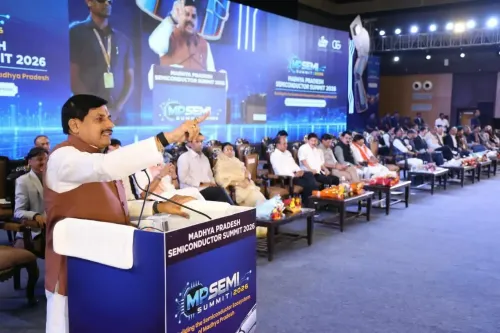
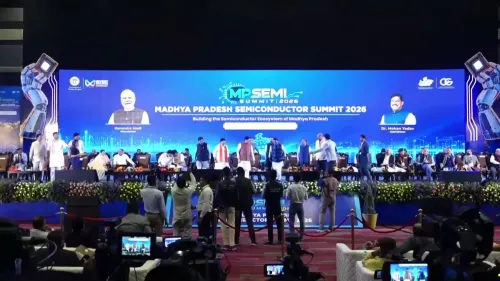
Madhya Pradesh held a semiconductor summit in Indore on October 23, 2026, with delegates from Taiwan and Japan. CM Dr. Mohan Yadav handed land allotment letters to five companies, signalling a concrete push to build a chip ecosystem and create high-tech jobs for state youth.
Key Takeaways
Five companies received formal land allotment letters at the Indore Semiconductor Summit on October 23, 2026 .
Delegates from Taiwan , Japan , and other countries participated in investment discussions with the Madhya Pradesh government.
Mohan Yadav said the push will create semiconductor and high-tech jobs for MP's youth within the state .
The summit aligns with the national India Semiconductor Mission launched in 2021 and the broader Make in India framework.
Indore is positioned as Madhya Pradesh's semiconductor hub, competing with southern Indian states for chip-sector FDI.
Specific company names, investment amounts, and job-creation timelines from the five allottees remain to be disclosed.
Five companies walked out of Indore on Friday, October 23, 2026, with formal land allotment letters in hand — a tangible signal that Madhya Pradesh's push to plant itself on the global semiconductor map is moving from promise to paperwork. The Chief Minister's Office of Madhya Pradesh announced the development after a semiconductor summit that drew delegates from Taiwan, Japan, and several other nations to the state's commercial capital.
What the Indore Summit Actually Delivered
Chief Minister Dr. Mohan Yadav described the day's conversations as 'sarthak charcha' — meaningful dialogue — on investment possibilities in the state. Beyond the talk, the summit produced one concrete outcome: land allotment letters to five companies, clearing the first bureaucratic hurdle for chip-sector units in Madhya Pradesh. The state government has not disclosed the names of the companies or the specific investment figures, but the allocation of land is widely seen as the critical first step in turning MOUs into factories.
Why Taiwan and Japan Are in the Room
Taiwan is home to the world's most advanced chip foundries and has been a central target of India's semiconductor diplomacy since the country launched the India Semiconductor Mission in 2021. Japan brings complementary depth — precision equipment, materials science, and a long record of technology transfer partnerships across Asia. Their presence at a state-level summit in Indore is itself a marker of how far sub-national competition for chip investment has travelled.
India's broader push under the Make in India and Atmanirbhar Bharat frameworks has turned several states into active pitchmen for chip manufacturing. Madhya Pradesh is now in that race, and Indore — already the state's economic engine and a growing technology address — is its nominated launchpad.
Jobs for MP Youth: The Political Core of the Pitch
Dr. Yadav's statement centred the summit's purpose firmly on employment: 'new job opportunities in semiconductor and other high-tech sectors will be created for youth within their own state.' The framing is deliberate. One of the persistent grievances in India's heartland states is that skilled young workers must migrate to Bengaluru, Hyderabad, or Pune to find technology jobs. A functioning semiconductor ecosystem in Madhya Pradesh would, in principle, reverse that drain.
The India Semiconductor Mission, backed by a ₹76,000 crore incentive package announced at the national level, provides the financial scaffolding that makes state-level land offers credible to foreign investors. Madhya Pradesh's land allotments slot into that national framework.
From Letters to Factories: The Long Road Ahead
Land allotment letters are a beginning, not a finish line. Semiconductor fabrication plants require consistent power supply, ultra-pure water, specialised logistics, and a trained workforce pipeline — infrastructure investments that take years to build and test. The actual investment commitments from the five companies, their timelines, and the jobs they generate will be the real scorecards for this summit.
What Indore demonstrated on Friday, however, is that the conversation has a new geography. India's chip ambitions are no longer confined to its southern tech corridors — they are moving to the banks of the Narmada.
Point of View
CM Dr. Mohan Yadav is building credibility with foreign investors who need to see bureaucratic momentum, not just ministerial enthusiasm. The jobs-for-local-youth framing also serves a dual purpose — it answers a genuine socioeconomic need while creating a political narrative around industrial transformation ahead of the state's electoral cycle. Whether the allotments translate into operational fabs will depend entirely on the infrastructure and workforce pipeline Madhya Pradesh can build over the next three to five years.
NationPress
23 Oct 2026
Frequently Asked Questions
What happened at the Madhya Pradesh Semiconductor Summit in Indore?
The MP Semiconductor Summit held in Indore on October 23, 2026 brought together delegates from Taiwan, Japan, and other countries to discuss investment opportunities. Five companies were handed formal land allotment letters by the state government, marking a concrete step toward building a chip manufacturing ecosystem in the state.
Which countries sent representatives to the Indore semiconductor summit?
Delegates from Taiwan and Japan were among the international representatives who attended the summit. Both countries are major players in the global semiconductor industry — Taiwan for advanced chip fabrication and Japan for precision equipment and materials.
What is the India Semiconductor Mission and how does it relate to MP?
The India Semiconductor Mission was launched by the central government in 2021 to build a domestic chip ecosystem and attract global manufacturing investments, backed by a large incentive package. Madhya Pradesh's land allotments and summit outreach align with this national framework, allowing the state to offer investors a credible pathway within the broader policy structure.
How will the semiconductor summit create jobs for MP youth?
CM Dr. Mohan Yadav stated that the state government's efforts through the summit will create new employment opportunities in semiconductor and high-tech sectors within Madhya Pradesh itself, reducing the need for skilled youth to migrate to other states for technology jobs.
Which five companies got land allotments at the MP Semiconductor Summit?
The names of the five companies that received land allotment letters at the Indore summit have not been officially disclosed. Specific investment figures and timelines also remain to be announced by the Madhya Pradesh government.