Did Security Forces Just Raze a Major Maoist Monument in Chhattisgarh?
Synopsis
In a bold move against Naxalite influence, security forces in Chhattisgarh have demolished a massive Maoist monument, marking a significant step in the ongoing 'Maad Bachao' campaign aimed at eradicating Left-Wing Extremism.
Key Takeaways
Decisive demolition of a Maoist monument in Chhattisgarh's Farsgaon village.
Part of the 'Maad Bachao' campaign to combat Naxalite presence.
Utilization of heavy machinery to dismantle symbols of terror.
Increased cooperation from local communities in sharing intelligence.
Efforts to promote governance, education, and healthcare in affected areas.
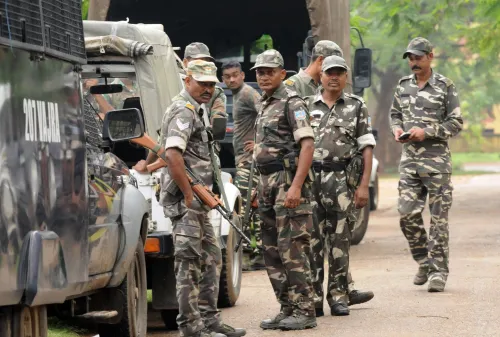
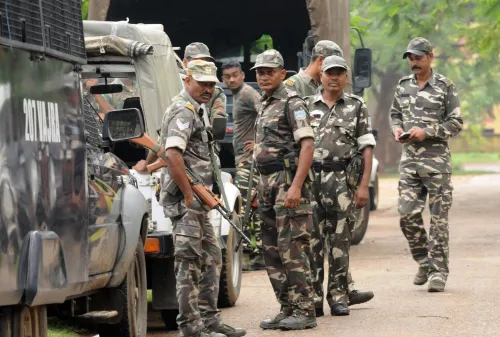
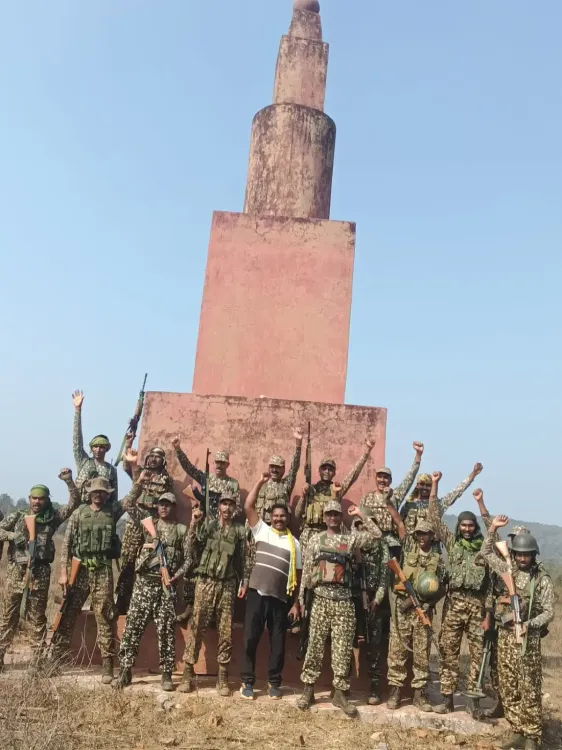
Raipur/Narayanpur, Jan 7 (NationPress) In a decisive strike against Naxalite presence in Chhattisgarh's insurgency-affected Bastar region, the Narayanpur Police, alongside the Indo-Tibetan Border Police (ITBP), successfully demolished a large monument constructed by Maoists in Farsgaon village, situated within the Kutul area, a long-time hub of illegal Naxalite operations.
The action was part of the ongoing 'Maad Bachao (Save Maad)' anti-Naxal initiative, a collaborative effort between the Government of India and the Chhattisgarh administration, aimed at eliminating Left-Wing Extremism and achieving a Naxal-free, empowered Bastar.
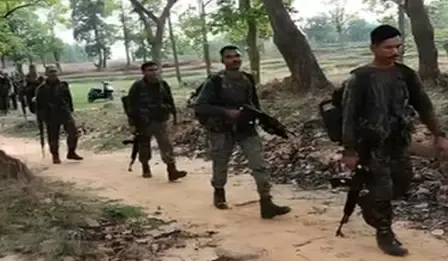
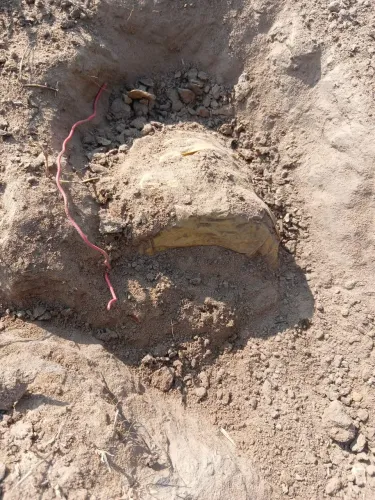
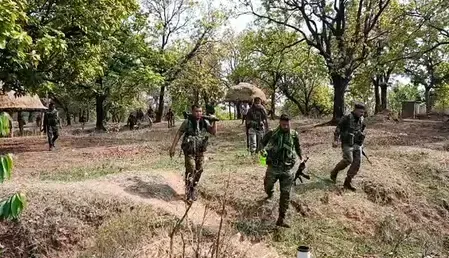
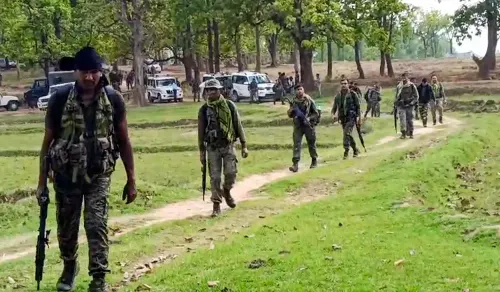
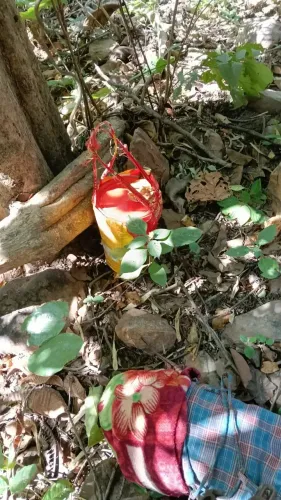
Authorities reported that a joint team conducted an extensive patrol in Kutul, Farsgaon, and adjacent areas for operational dominance and anti-Naxal measures. During their reconnaissance, the security forces stumbled upon the massive Naxalite monument located in Farsgaon village, under the jurisdiction of the Kohkameta police station and the Kutul Police Assistance Centre.
Utilizing heavy machinery such as a jumbo excavator, the forces swiftly dismantled the structure, which symbolized a blatant challenge to the insurgents' aspirations to assert ideological supremacy and honor their fallen members in remote villages.
This monument, similar to others across the region, frequently acted as a propaganda instrument designed to glorify deceased militants and instill fear among local residents.
The demolition aligns with heightened efforts to reclaim Abujhmad, a dense forest area historically dominated by Naxal elements.
Simultaneously, authorities are establishing new security camps throughout the region, accelerating the construction of roads and bridges, and implementing public welfare initiatives to connect interior villages long isolated by fear and violence.
These developmental efforts, coupled with security operations, have fostered increased cooperation from local communities, who are now more willing to share intelligence and reject Maoist extortion and recruitment.
The 'Maad Bachao' initiative has seen significant advancements in recent months, marked by successful arms recoveries, surrenders, and expanded camps that fortify the security framework.
Authorities emphasized that such actions dismantle the symbols of terror, paving the way for governance, education, healthcare, and economic opportunities in previously unreachable areas.
This latest operation highlights the state’s determination to dismantle the Naxalite hold on Narayanpur and surrounding districts, fostering peace and integration for tribal communities.
Point of View
The recent demolition of the Maoist monument in Chhattisgarh represents a pivotal step in combating Left-Wing Extremism. It reflects the government's commitment to restoring peace and stability in insurgency-affected regions, ensuring that development and security go hand in hand.
NationPress
14 Sept 2026
Frequently Asked Questions
What was the significance of the demolished Maoist monument?
The monument served as a propaganda tool for the Maoists, glorifying their fallen militants and intimidating local communities.
What is the 'Maad Bachao' campaign?
The 'Maad Bachao' campaign is an initiative aimed at eradicating Left-Wing Extremism in Chhattisgarh, promoting development and security.
How are local communities responding to these operations?
Local communities are increasingly cooperating with security forces, sharing intelligence and rejecting Maoist extortion.
What other measures are being taken to improve security in the region?
Authorities are establishing new security camps, accelerating infrastructure development, and implementing welfare schemes.
What are the broader implications of this operation?
This operation aims to dismantle the Naxalite grip on the region, fostering peace and integration for tribal communities.