Bengaluru man, 20, held for bomb threat to CM Shivakumar's home
Synopsis
A bomb threat against Karnataka CM D.K. Shivakumar's home and the Vidhana Soudha was routed through an unsuspecting autorickshaw driver's phone via a Namma Yatri booking. Police have now arrested a 20-year-old man, who preliminary findings reportedly suggest is mentally unstable and abandoned by his family.
Key Takeaways
Bengaluru police arrested Karthik , 20 , for allegedly threatening to bomb CM D.K.
Shivakumar's Sadashivanagar residence and the Vidhana Soudha .
The threat was made on 5 November at around 1 pm through a Namma Yatri booking and an autorickshaw driver's phone.
Driver Bhagavantaraya of Malleswaram filed the complaint on 7 November .
An FIR was registered under Sections 351(4) and 353(1)(b) of the BNS ; the accused is in judicial custody.
Preliminary findings reportedly indicate the accused is mentally unstable; police are verifying all aspects of the case.
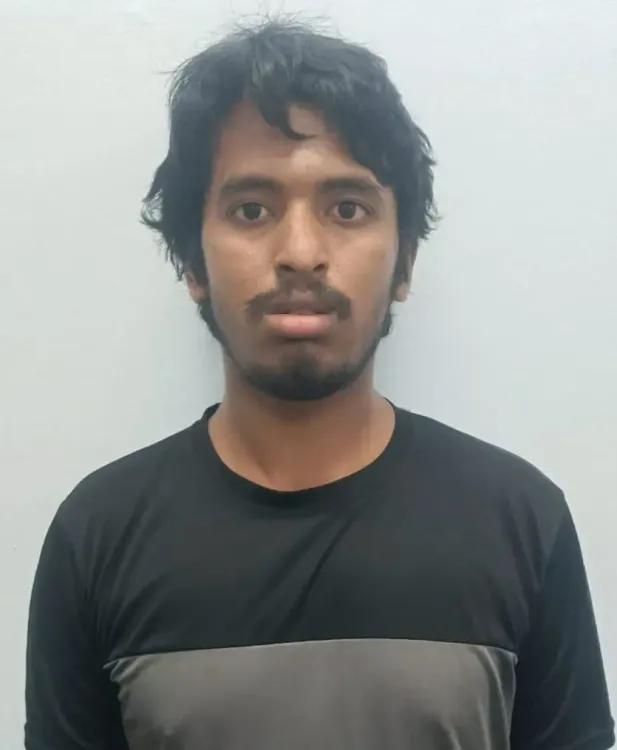
The Bengaluru police have arrested a 20-year-old man for allegedly threatening to plant bombs at Karnataka Chief Minister D.K. Shivakumar's private residence in Sadashivanagar and at the Vidhana Soudha, police said on Friday, 27 November 2026. The accused, identified as Karthik, a Bengaluru resident, has been sent to judicial custody.
Sadashivanagar police traced and arrested him following an investigation into the threat, which was reportedly made on 5 November. Preliminary findings reportedly indicate that the accused is mentally unstable and has been abandoned by his family.
How the Threat Unfolded
According to the complaint, an autorickshaw driver named Bhagavantaraya, who lives in DNR Layout of Malleswaram, received a ride booking at around 1 pm on 5 November through the Namma Yatri aggregator app. The booking was in the name of Karthik.
When the driver reached the pickup point and called the customer, the caller reportedly claimed he was inside the Chief Minister's residence. He asked the driver to hand his mobile phone to any police personnel stationed near the entrance, promising to share the exact address.
When police personnel spoke to the caller on the driver's phone, the accused allegedly claimed he had planted bombs at the Chief Minister's residence and the Vidhana Soudha, the seat of the state legislature.
Driver Questioned, Complaint Filed
Following the threat, police inspected the autorickshaw and questioned the driver. Bhagavantaraya told officers he did not know the caller and had arrived only in response to the booking, and he showed them the booking-related message as proof.
Police then advised him to file a formal complaint. The driver, who had gone to visit an ailing relative that day, lodged the complaint on 7 November.
Charges Under the BNS
Police registered an FIR under Section 351(4) of the Bharatiya Nyaya Sanhita (BNS), which deals with criminal intimidation through anonymous communication or while concealing one's identity or address. The FIR also invokes Section 353(1)(b), which covers statements conducing to public mischief, including false information or rumours circulated through electronic or digital means with the intent to cause public alarm or disturb public tranquillity.
Notably, the case highlights how ride-hailing platforms can be misused to route hoax threats through unsuspecting third parties — in this instance, a driver who had no link to the caller and only learnt of the threat when police took his phone.
What Happens Next
Despite the preliminary assessment of the accused's mental condition, police said that, given the seriousness of the threat, they are verifying all aspects of the case. Further investigation is underway to establish the circumstances behind the threat and to verify the accused's claims.
The outcome of that verification will determine whether the case proceeds as a straightforward hoax prosecution or prompts a wider review of security protocols around high-profile residences in the state capital.
Point of View
And briefly a suspect. Aggregator platforms collect identity data at booking, yet the case still took weeks to close, which raises questions about how quickly such data is acted upon in security incidents. If the accused is indeed mentally unstable and abandoned, the case also exposes a quieter failure in mental-health support that the criminal justice system is being left to absorb. Security agencies cannot ignore any threat against a chief minister, but treating this purely as a policing matter would miss half the story.
NationPress
27 Nov 2026
Frequently Asked Questions
Who was arrested for the bomb threat to CM Shivakumar's residence?
A 20-year-old Bengaluru resident identified as Karthik was arrested by Sadashivanagar police. He has been sent to judicial custody.
How was the bomb threat made?
The accused allegedly booked an autorickshaw through the Namma Yatri app on 5 November and asked the driver to hand his phone to police near the CM's residence. He then reportedly told the police personnel that bombs had been planted at the CM's home and the Vidhana Soudha.
What charges has the accused been booked under?
Police registered an FIR under Sections 351(4) and 353(1)(b) of the Bharatiya Nyaya Sanhita. These cover anonymous criminal intimidation and statements conducing to public mischief.
Is the accused mentally unstable?
Preliminary investigations reportedly indicate that the accused is mentally unstable and has been abandoned by his family. Police say they are still verifying all aspects of the case given the seriousness of the threat.
Was the autorickshaw driver involved in the threat?
No, the driver, Bhagavantaraya, told police he did not know the caller and had only responded to the booking. He showed the booking message to police and later filed the complaint on 7 November.