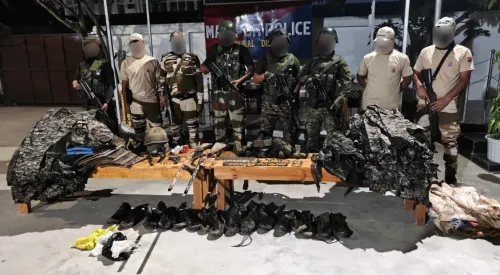
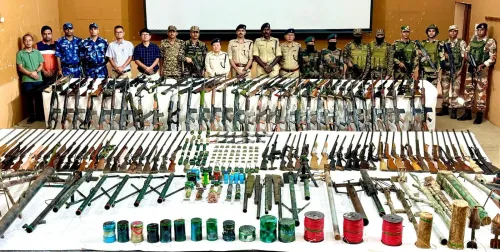
Manipur recovers 1,200+ firearms in 5 months, including 600 looted from armouries
Synopsis
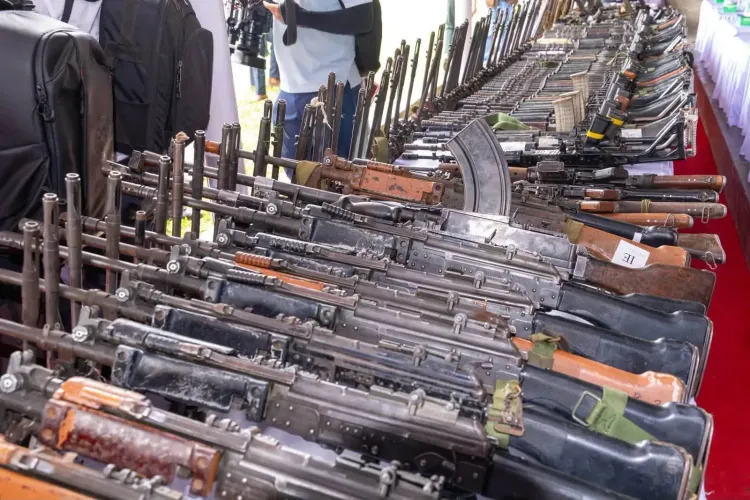
More than 1,200 firearms — half of them looted from state armouries during Manipur's ethnic conflict — have been recovered in just five months. That number, combined with 46 militant surrenders and a Chief Minister making unprecedented visits to conflict districts, signals a genuine shift in Manipur's security calculus, even as the underlying ethnic fault lines remain unresolved.
Key Takeaways
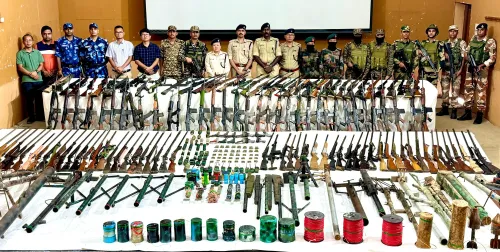
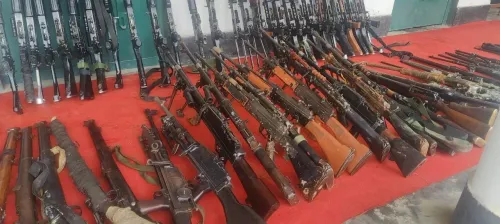
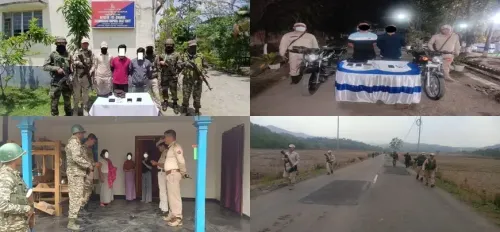
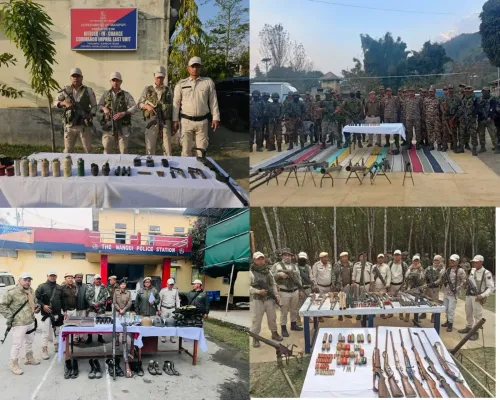
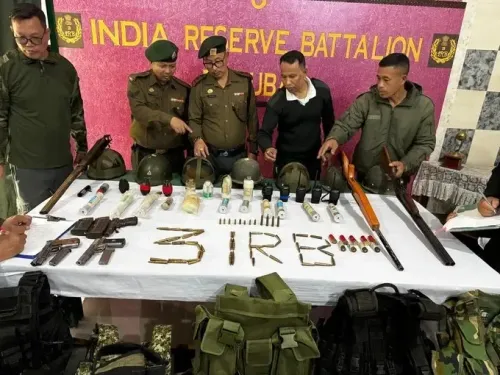
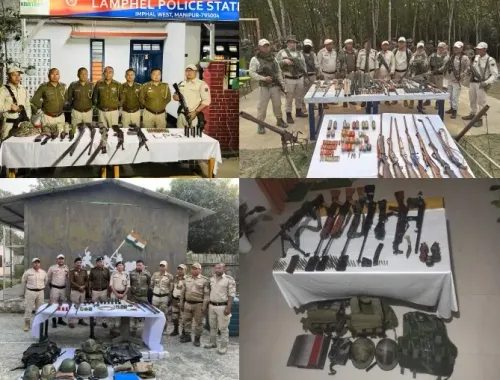
Over 1,200 firearms recovered in Manipur in the past five months , including around 600 looted from government armouries during ethnic violence.
72 narcotics cases registered and 117 drug peddlers arrested in the same period under the NDPS Act, 1985 .
46 Kangleipak Communist Party (KCP) militants surrendered in July and rejoined the mainstream.
Chief Minister Yumnam Khemchand Singh made the first CM-level visit to Churachandpur since ethnic violence erupted on 3 May 2023 .
Jiribam became the first district where Meitei, Kuki, Paite , and Hmar communities shared a joint peace meal.
All National Highways in Kangpokpi reopened for free movement; Imphal–Dimapur inter-state bus service resumed.
Security forces in Manipur have recovered over 1,200 firearms in the past five months, including approximately 600 weapons looted from government armouries during the ethnic violence that erupted on 3 May 2023, officials said on Wednesday, 12 August. The recoveries mark a significant milestone in the state's ongoing counter-insurgency operations amid a sustained push to restore normalcy.
Security Operations on the Ground
A senior official said that a joint security apparatus comprising the Indian Army, Assam Rifles, Central Armed Police Forces (CAPFs), and Manipur Police has been conducting extensive counter-insurgency and search operations across fringe, mixed-population, and other vulnerable areas of the state. Area domination exercises have also been intensified as part of the broader effort.
In a parallel crackdown, anti-narcotics operations have yielded 72 cases registered under the Narcotic Drugs and Psychotropic Substances Act, 1985, the arrest of 117 drug peddlers, and the seizure of large quantities of drugs and psychotropic substances — all within the same five-month period.
Chief Minister's Peace Outreach
Since assuming office on 4 February, Chief Minister Yumnam Khemchand Singh has undertaken what officials describe as an unprecedented peace outreach programme spanning both valley and hill regions. 'The Chief Minister's efforts have been grounded in a fundamental conviction that sustainable peace can be attained solely through sustained dialogue, the cultivation of mutual trust and a shared commitment to reconciliation,' the official said.
Khemchand Singh's visit to Churachandpur — inhabited predominantly by Kuki-Zo tribals — was described as the first by a sitting Chief Minister to the district since the ethnic violence broke out. He attended the funeral of former MLA Vungzagin Valte, a veteran tribal leader, calling it a personal gesture of respect and a 'great honour.' Officials maintained the visit was a significant step towards healing communal wounds.
In Ukhrul district, Khemchand Singh visited villages including Thawal Kuki and Sharkaphung to address the trust deficit between the Kuki and Tangkhul Naga communities, appealing to both sides to choose reconciliation.
Breakthrough in Jiribam and Kangpokpi
Jiribam district, which borders southern Assam, became the first district in Manipur where members of the Meitei, Kuki, Paite, and Hmar communities sat together, agreed to work towards peace, and shared a joint meal — a development officials called historic after three years of unrest. The Chief Minister visited Jiribam twice, on 11 February and 4 April.
During a recent visit to Kangpokpi, the Chief Minister, Deputy Chief Minister, and the local MLA jointly declared the immediate reopening of all National Highways for free movement of all communities, along with the resumption of the Imphal–Dimapur (Nagaland) inter-state bus service. Khemchand Singh stated that the development of Manipur would remain incomplete without the development of Kangpokpi.
Militant Surrender and Dialogue
Security forces facilitated the surrender of 46 Kangleipak Communist Party (KCP) militants in July, who laid down their arms and chose to rejoin the mainstream. In March, the Chief Minister held a crucial meeting with the Kuki-Zo Council in Guwahati, described by officials as a significant breakthrough in dialogue. In July, Khemchand Singh also visited Senapati district to meet leaders of civil society organisations, seeking their support for restoring peace and normalcy.
With arms recovery accelerating and community dialogues yielding tangible results, the coming months will test whether Manipur's multi-track approach — security operations combined with political outreach — can translate into a durable settlement after more than two years of conflict.
Point of View
200 firearms is operationally significant, but the harder metric is what happens to the estimated thousands of weapons still unaccounted for after the armoury lootings of May 2023. The Chief Minister's district visits are politically courageous — a CM in Churachandpur after two years of absence is not a small gesture — but symbolic outreach and security pressure alone cannot resolve a conflict rooted in competing demands over land, autonomy, and identity. The KCP surrenders are a modest gain; the bigger armed actors remain outside the dialogue tent. Manipur's peace process is real but fragile, and the gap between optics and a negotiated political settlement remains wide.
NationPress
27 Sept 2026
Frequently Asked Questions
How many firearms have been recovered in Manipur in 2025?
Over 1,200 firearms have been recovered in Manipur in the past five months, according to officials. Of these, around 600 were weapons looted from government armouries during the ethnic violence that began on 3 May 2023.
Which security forces are conducting operations in Manipur?
A joint force comprising the Indian Army, Assam Rifles, Central Armed Police Forces (CAPFs), and Manipur Police is conducting counter-insurgency, search, and area domination operations across fringe and mixed-population areas of the state.
What is Chief Minister Khemchand Singh's peace initiative in Manipur?
Since taking office on 4 February, Chief Minister Yumnam Khemchand Singh has undertaken a sustained peace outreach programme visiting conflict-affected districts including Churachandpur, Ukhrul, Jiribam, Kangpokpi, and Senapati to build trust among ethnic communities. His visit to Churachandpur was the first by a sitting CM since the ethnic violence erupted.
What happened with KCP militants in Manipur in July 2025?
46 Kangleipak Communist Party (KCP) militants surrendered in July 2025, laying down their arms and choosing to rejoin the mainstream, according to officials. The surrenders were facilitated through sustained efforts by central and state security forces.
Which district in Manipur achieved a peace breakthrough in 2025?
Jiribam district made history by becoming the first in Manipur where members of the Meitei, Kuki, Paite, and Hmar communities sat together and shared a joint meal as part of peace efforts. The Chief Minister visited Jiribam twice, on 11 February and 4 April.