Manipur violence caused ₹1,200 crore GST loss since 2023, says CM Singh
Synopsis
Manipur's three-year ethnic conflict has drained ₹1,200 crore in GST revenue, Chief Minister Yumnam Khemchand Singh revealed at a public event in Senapati district — putting a precise economic price tag on a crisis that has long been framed in human terms. With the Imphal-Guwahati highway partially restored and new medical college and road-building pledges on the table, the state government is attempting to signal a pivot from conflict management to development, even as community identity fault lines remain deep.
Key Takeaways
Manipur CM Yumnam Khemchand Singh disclosed a ₹1,200 crore GST revenue loss caused by ethnic violence between 2023 and 2026 .
Violence erupted on 3 May 2023 and has since disrupted trade, blocked highways, and hurt daily-wage earners and students.
Free movement has been restored on National Highway-2 connecting Imphal to Guwahati via Dimapur , aided by communities of Maram, Tadubi and Mao .
The state government has earmarked ₹10 crore per Assembly constituency for Inter-Village Road construction.
A new medical college is to be set up in Senapati district , complementing an earlier one established in Churachandpur .
Singh urged Meitei, Naga and Kuki communities to identify first as Indians , then as Manipuris , as a foundation for reconciliation.
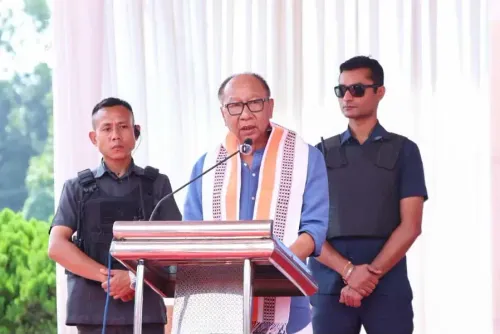
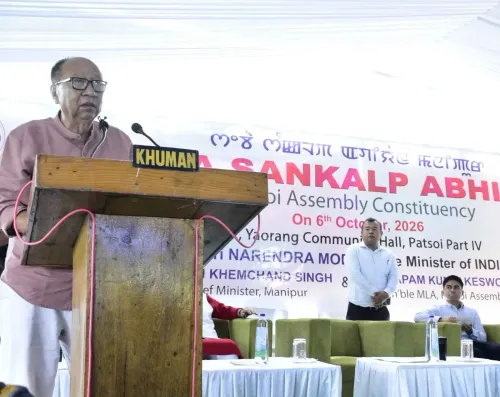
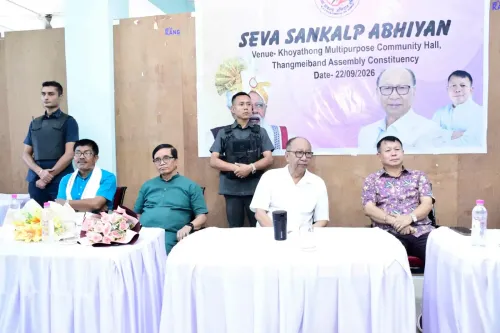
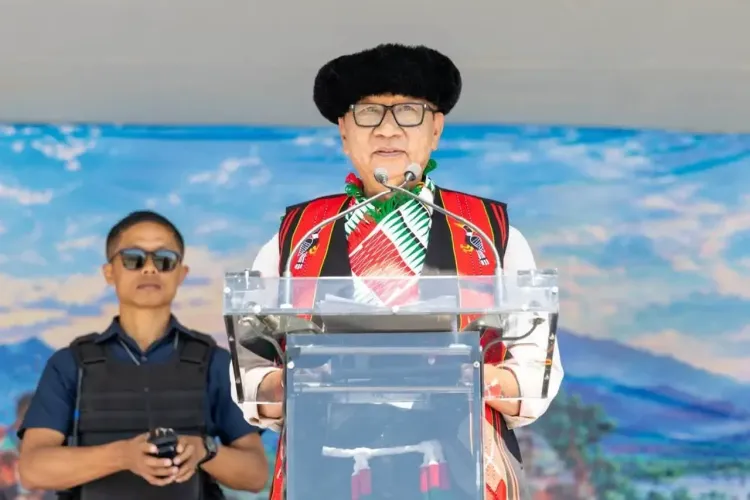
Manipur Chief Minister Yumnam Khemchand Singh on Thursday, 15 October 2026, disclosed that the ethnic violence that erupted on 3 May 2023 had inflicted an estimated ₹1,200 crore loss in Goods and Services Tax (GST) revenue on the state between 2023 and 2026. The Chief Minister made the revelation while addressing the 'Seva Sankalp Abhiyan' at the Tadubi local ground in the Naga-dominated Senapati district, underlining how prolonged civil unrest had choked economic activity and shrunk government finances.
Scale of Economic Damage
Singh stated that the unrest had adversely affected economic activities and government revenue across the state for over three years. He noted that bandhs and blockades had particularly hurt daily-wage earners and students, compounding the human cost of a conflict that has already displaced tens of thousands. The ₹1,200 crore GST shortfall, according to the Chief Minister, reflects disrupted trade, shuttered businesses, and curtailed movement along key supply routes.
This comes amid a broader pattern: Manipur's economy, already one of the more fragile among northeastern states due to its dependence on highway connectivity, has been disproportionately exposed to the blockade economy — where organised shutdowns are used as political leverage, choking commerce in the process.
Highway Restoration and Economic Revival
Singh lauded the communities of Maram, Tadubi and Mao in Senapati district for their cooperation in restoring free movement of passenger buses and vehicles along National Highway-2, which connects Imphal to Guwahati via Dimapur in Nagaland. He said the resumption of unhindered vehicular movement had begun to revive the state's economy and improve regional connectivity. Former Senapati Autonomous District Council (ADC) Chairman A. Kapani also acknowledged the Chief Minister's role in facilitating free movement along the highway.
Call for Unity and Shared Identity
Expressing concern that members of the Meitei, Naga and Kuki communities were increasingly reluctant to identify themselves as Manipuris, Singh urged citizens to first identify as Indians and then as Manipuris. He stressed that differences among communities could be resolved through dialogue and mutual understanding, invoking the example of the Manipuri-Burmese War, in which all 36 communities of Manipur had reportedly united to repel the Burmese Army. He cited Singapore — home to four distinct communities — as a model of collective development.
Development Initiatives for Hill Districts
On the development front, Singh said the state government had earmarked an estimated ₹10 crore per Assembly constituency in the budget for the construction of Inter-Village Roads (IVRs). He also announced that a new medical college would be established in Senapati district, following the earlier establishment of one in Churachandpur district during the previous government's tenure — a move aimed at ensuring equitable development across Manipur's hill districts.
National Context and Viksit Bharat Vision
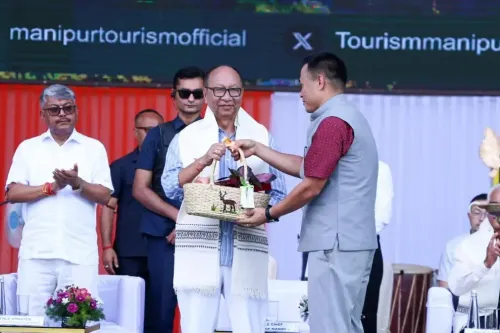
Singh referenced Prime Minister Narendra Modi's vision of 'Viksit Bharat 2047', which aims to build a developed India by the country's 100th year of independence. He said the Seva Sankalp Abhiyan was being organised nationwide to mark 25 years of Prime Minister Modi's public service. The Chief Minister also claimed that India had risen from the world's 11th-largest economy before Modi assumed office to become the world's fourth-largest economy, attributing this progress to the Prime Minister's leadership. During the programme, Singh distributed benefits under various government schemes to eligible beneficiaries from the district.
With the highway now partially functional and reconciliation efforts under way, the pace of economic recovery in Manipur will depend heavily on whether political dialogue can translate into a durable ceasefire on the ground.
Point of View
200 crore number on Manipur's violence is significant precisely because governments rarely quantify the fiscal cost of internal conflict — it forces accountability beyond the human toll. Yet the figure raises as many questions as it answers: is it based on audited revenue data or a rough projection, and what does it exclude, such as foregone investment, collapsed tourism, or the multiplier effect of supply-chain disruption? Singh's pivot to development pledges — roads, medical colleges, highway restoration — follows a familiar Northeast script of post-conflict patronage politics. The harder test is whether identity-based grievances among the Meitei, Naga and Kuki communities can be addressed through dialogue, or whether infrastructure spending is being used to paper over a political settlement that has still not arrived.
NationPress
15 Oct 2026
Frequently Asked Questions
How much GST revenue has Manipur lost due to ethnic violence?
Manipur Chief Minister Yumnam Khemchand Singh stated that the state lost an estimated ₹1,200 crore in GST revenue between 2023 and 2026 as a direct consequence of the ethnic violence that began on 3 May 2023. The prolonged unrest disrupted trade and economic activity, severely affecting government finances.
When did the Manipur ethnic violence begin?
The ethnic violence in Manipur erupted on 3 May 2023 and has continued to affect the state for over three years. The conflict has involved the Meitei, Naga, and Kuki communities and has displaced large numbers of residents.
Has the Imphal-Guwahati highway been restored?
Yes, free movement of passenger buses and vehicles has been restored on National Highway-2, connecting Imphal to Guwahati via Dimapur in Nagaland. Chief Minister Singh credited communities in Maram, Tadubi, and Mao in Senapati district for their cooperation in enabling this restoration.
What development projects did the Manipur CM announce?
Chief Minister Singh announced an allocation of ₹10 crore per Assembly constituency for Inter-Village Road construction and the establishment of a new medical college in Senapati district. A medical college was previously set up in Churachandpur district during the previous government's tenure.
What did the Manipur CM say about community identity and reconciliation?
Singh expressed concern that members of the Meitei, Naga, and Kuki communities were increasingly reluctant to identify as Manipuris. He called on all 36 communities of the state to identify first as Indians and then as Manipuris, emphasising dialogue and mutual understanding as the path to lasting peace.