Manipur CM calls 36 communities to unite for peace and Viksit Manipur
Synopsis
Manipur's Chief Minister put a stark number to the state's ethnic conflict — over ₹1,200 crore in lost GST revenue since May 2023 — while calling all 36 communities to step beyond valley politics and physically engage with hill areas. The message at Kangla Fort was blunt: peace built only in the valley accounts for just 8% of the state's geography.
Key Takeaways
Manipur CM Yumnam Khemchand Singh appealed to all 36 communities , including Meitei , Kuki-Zo , and Naga , to unite for peace at Kangla Fort, Imphal on 7 October 2026 .
Ethnic violence since May 2023 has cost the state an estimated ₹1,200 crore in GST revenue between 2023 and 2026 .
Bandhs and blockades have imposed a daily economic loss of ₹20–25 crore on the state.
The valley constitutes only 8% of Manipur's geographical area; the CM stressed outreach to hill communities for lasting peace.
Key development milestones cited: rail link to Khongsang , National Sports University , Churachandpur Medical College , and potable water access rising from 6% to 80% in remote areas.
Of a 240-km border fencing project worth ₹3,223 crore , 55 km completed and piers for 80 km ready.
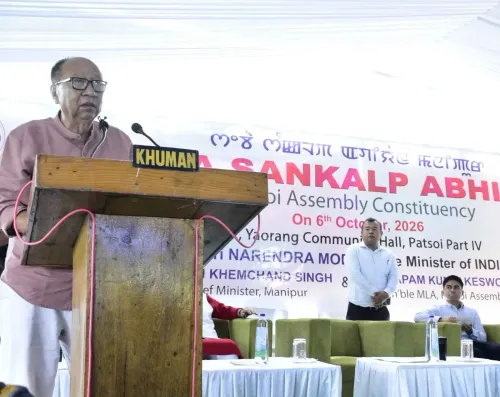
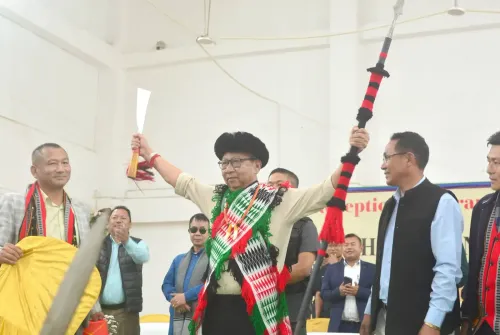
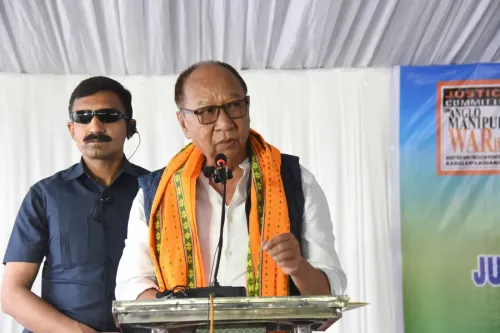
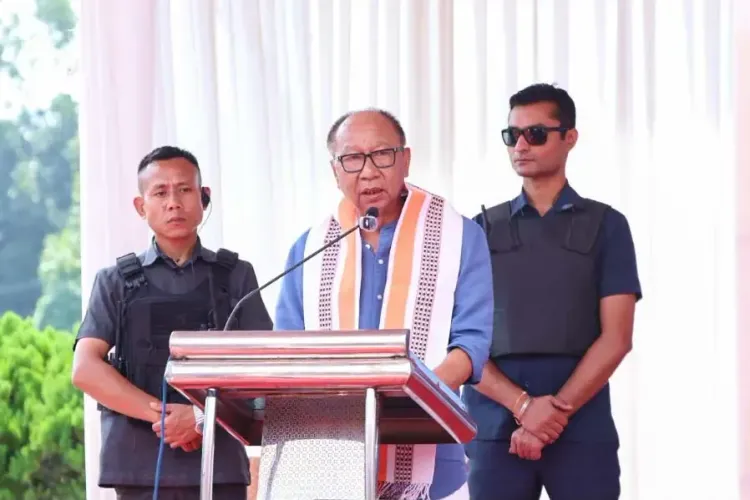
Manipur Chief Minister Yumnam Khemchand Singh on 7 October 2026 made a fervent appeal to all 36 communities of the state — including the Meitei, Kuki-Zo, and Naga — to set aside differences, restore lasting peace, and collectively work toward building a 'Viksit Manipur' (Developed Manipur) in line with the national vision of 'Viksit Bharat' (Developed India). The appeal came during the 'Seva Jyoti Yatra', a foot march held at the historic Kangla Fort in Imphal, organised as part of the Seva Sankalp Abhiyan — an initiative commemorating 25 continuous years of public service by Prime Minister Narendra Modi.
Peace Cannot Be Built from the Valley Alone
Chief Minister Khemchand Singh underscored a critical geographic reality: the valley districts, where unity and peace calls are most vocal, account for only eight per cent of Manipur's total geographical area. He stressed that meaningful and lasting peace demands a practical outreach — physically reaching out to the communities living in the hills.
Drawing on historical precedent, he noted that the erstwhile kings of Manipur regularly visited hill areas of the state, and urged a similar spirit of engagement in the present day. He called upon citizens to resolve differences through dialogue rather than agitations, which he said disrupt the state's normal functioning.
Ethnic Violence's Heavy Economic Toll
The Chief Minister did not shy away from acknowledging the deep economic wounds inflicted by the ethnic violence that erupted in Manipur in May 2023. He cited an estimated loss of more than ₹1,200 crore in GST revenue for the state during the period 2023–2026 — a direct consequence of the prolonged hostilities.
Beyond revenue losses, Khemchand Singh noted that bandhs and blockades had imposed a daily economic cost of approximately ₹20 to ₹25 crore on the state. This is the starkest quantification yet of the conflict's financial fallout from a sitting state official.
Development Milestones Under Central Leadership
The Chief Minister highlighted a series of infrastructure and social development achievements in Manipur, attributing them to the Union government's support. Key among them:
Railway connectivity has reached Khongsang in Tamenglong district, improving supply chains for essential commodities to remote parts of the state. The National Sports University (NSU) — the first and only institution of its kind in India — has been established in Manipur. Churachandpur Medical College has come up in the hill district of Churachandpur. Access to potable water in remote areas has surged from six per cent to nearly 80 per cent.
On border security, Khemchand Singh noted that out of the ongoing 240-km border fencing project — estimated at ₹3,223 crore — fencing of 55 km has already been completed, and piers for an additional 80 km have been erected and are ready for fencing.
India's Economic Rise Cited as Inspiration
Describing India's global economic trajectory, the Chief Minister stated that before Prime Minister Modi assumed office, India ranked 11th among the world's largest economies. India has since risen to 4th position, he said, citing this as motivation for Manipur to aim higher on its own development path.
He referenced the 'Viksit Bharat 2047' vision — the national goal of building a strong, developed India by the time the country marks 100 years of independence — urging the state's citizens to align their collective efforts with this larger national ambition.
Rajya Sabha MP Echoes the Call
Rajya Sabha Member of Parliament Adhikarimayum Sharda Devi also addressed the gathering, praising the Union government's welfare schemes and their reach at the grassroots level. She emphasised the importance of women's participation in nation-building and highlighted several central initiatives promoting women-led development. She described India as progressing rapidly under what she called visionary national leadership.
With Manipur's wounds from the 2023 ethnic conflict still healing, the Chief Minister's appeal signals a deliberate push to shift the state's narrative from confrontation to collective rebuilding — and to channel community energies toward measurable development goals in the years ahead.
Point of View
200 crore GST loss figure is the most concrete economic reckoning of Manipur's ethnic conflict yet — and its political weight should not be underestimated. But quantifying the damage and resolving it are different tasks. The CM's call to 'visit the hills' echoes historical practice, yet the logistics of trust-building across a militarised and divided landscape remain unaddressed. Development metrics — railway lines, medical colleges, water access — are genuine wins, but they sit uneasily alongside an ongoing conflict that has displaced tens of thousands. The harder question mainstream coverage sidesteps is whether the Centre's infrastructure investment, however real, is a substitute for a political settlement between communities, or a complement to one.
NationPress
7 Oct 2026
Frequently Asked Questions
What did Manipur CM Yumnam Khemchand Singh say at Kangla Fort?
Chief Minister Yumnam Khemchand Singh called upon all 36 communities of Manipur — including the Meitei, Kuki-Zo, and Naga — to unite for peace and contribute to the vision of a 'Viksit Manipur'. Speaking at the Seva Jyoti Yatra at Kangla Fort on 7 October 2026, he stressed that lasting peace requires outreach to hill communities, not just efforts confined to the valley.
How much economic damage has the Manipur ethnic violence caused?
According to Chief Minister Khemchand Singh, Manipur's ethnic hostilities have resulted in an estimated loss of over ₹1,200 crore in GST revenue between 2023 and 2026. Additionally, bandhs and blockades have cost the state approximately ₹20 to ₹25 crore per day.
Why did the CM say peace cannot be achieved only in the valley?
The Chief Minister pointed out that the valley districts account for just 8% of Manipur's total geographical area, meaning any peace initiative limited to valley communities would be geographically and demographically incomplete. He urged citizens and leaders to physically reach out to hill areas, drawing a parallel with the practice of Manipur's erstwhile kings.
What development projects did the CM highlight in Manipur?
Khemchand Singh cited railway connectivity reaching Khongsang in Tamenglong district, the establishment of the National Sports University (the only one in India), Churachandpur Medical College, and potable water access rising from 6% to nearly 80% in remote areas. He also noted that 55 km of a 240-km border fencing project worth ₹3,223 crore has been completed.
What is the Seva Sankalp Abhiyan and why was the Seva Jyoti Yatra organised?
The Seva Sankalp Abhiyan is an initiative commemorating 25 continuous years of public service by Prime Minister Narendra Modi. The Seva Jyoti Yatra — a foot march held at Kangla Fort in Imphal — was organised as part of this campaign to reinforce the themes of service, unity, and national development.