Manipur tourism collapses after ethnic violence, CM flags drastic drop in arrivals
Synopsis
Manipur's Chief Minister publicly put numbers to a painful reality on World Tourism Day: ethnic violence since 2023 has gutted tourist arrivals, leaving the state far behind Mizoram's 8 lakh and Sikkim's 17 lakh annual visitors. The admission that government alone cannot restore peace — at a formal state event — signals both urgency and accountability.
Key Takeaways
Manipur received approximately 1.75 lakh tourists per year before the 2023 ethnic violence ; arrivals have since dropped drastically.
Neighbouring Mizoram now draws over 8 lakh tourists annually, reversing its earlier lag behind Manipur.
Sikkim , with a stable law and order situation, attracts more than 17 lakh tourists per year.
Chief Minister Yumnam Khemchand Singh said the government alone cannot bring peace — it requires all stakeholders.
Governor Ajay Kumar Bhalla launched the MTIF Portal ; the CM relaunched the Explore Manipur – Re-Imagining Tourism Portal on 27 September 2026 .
An ISL match is scheduled in Manipur for the first time on 24 November , with NorthEast United Football Club hosting.
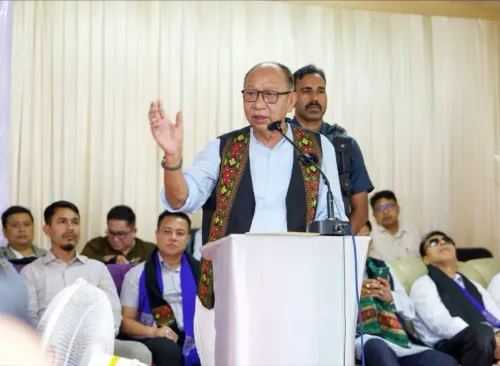
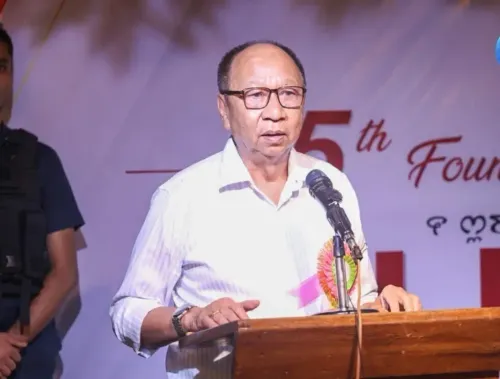
Tourist arrivals in Manipur have fallen drastically following the 2023 ethnic violence that gripped the northeastern state, Chief Minister Yumnam Khemchand Singh said on Sunday, 27 September 2026, while addressing the World Tourism Day observance at Sangai Ethnic Park in Moirang Khunou, Bishnupur district. The remarks came as the state government made a pointed acknowledgement that the ongoing ethnic hostilities have directly cost Manipur its tourism economy and the revenue that comes with it.
The Numbers That Tell the Story
Before the ethnic violence erupted in 2023, Manipur received approximately 1.75 lakh tourists annually — a figure that then surpassed the inflow into neighbouring Mizoram. The situation has since reversed sharply. Mizoram now draws over 8 lakh tourists per year, generating significantly higher state revenue, while Manipur's own numbers have declined steeply. Chief Minister Khemchand Singh pointed to Sikkim as another telling contrast: the small hill state, which maintains a stable law and order situation, now attracts more than 17 lakh tourists annually. 'Tourists would not visit Manipur in the absence of a peaceful environment,' he said.
Government Acknowledges Peace Cannot Be Imposed Alone
In a notable admission, the Chief Minister stated that the government alone cannot restore peace in the state. He stressed that the revival of Manipur's tourism sector requires the collective effort of all stakeholders — communities, civil society, and elected representatives alike. He also underscored that mere beautification of tourist spots is insufficient; the overall tourism infrastructure and itinerary must be brought to a standard acceptable to foreign tourists if the state is to compete with its northeastern peers.
Tourism Minister Khuraijam Loken Singh reinforced the economic stakes, warning that any disruption to revenue-generating state initiatives slows the broader development process. He further called for unity among the 36 communities residing in Manipur, arguing that without it, neither peace nor development is possible.
Launches, Portals, and a Push for Digital Tourism
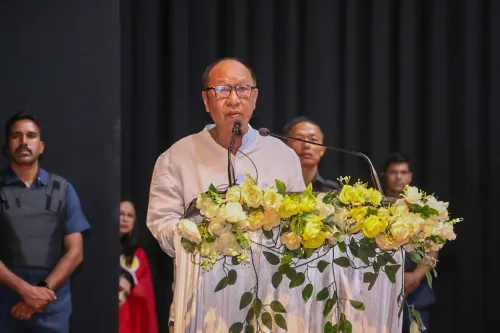
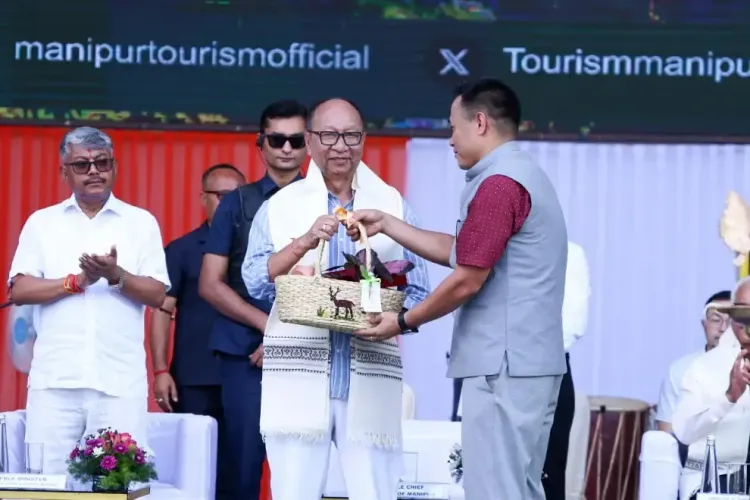
The World Tourism Day 2026 event was held on the theme 'Digital Agenda and Artificial Intelligence to Redesign Tourism' and was jointly attended by Governor Ajay Kumar Bhalla and Chief Minister Khemchand Singh. Governor Bhalla officially launched the Manipur Tech Innovation Foundation (MTIF) Portal, while the Chief Minister relaunched the revamped Explore Manipur – Re-Imagining Tourism Portal. The Governor also presented awards for the Re-Imagining Manipur Hackathon, and the Chief Minister felicitated participants of a bike rally held earlier in the day.
Governor Bhalla noted that the real strength of Manipur tourism lies not in its landscapes alone but in its people and communities. 'The real tourism lies in our distinctive way of life and separate tradition for welcoming guests,' he said, adding that the government is actively promoting homestays to ensure tourism revenue reaches the grassroots. Thanga Assembly Constituency MLA Tongbram Robindro Singh called for community-centred tourism and urged support for young entrepreneurs building locally rooted tourism solutions.
ISL Comes to Manipur: A Sign of Intent
In what was seen as a confidence-building signal, the state government announced during the event that NorthEast United Football Club will bring the Indian Super League (ISL) to Manipur for the first time. An ISL match is scheduled to be held in the state on 24 November. Deputy Chief Minister Losii Dikho, Home Minister Konthoujam Govindas Singh, the Chief Secretary, the Director General of Police, senior officials, and local residents attended the programme.
What Comes Next
The government's public reckoning with the tourism cost of ethnic conflict marks a shift in tone — from managing the narrative to openly quantifying the damage. Whether the digital portals, ISL match, and homestay promotion can meaningfully reverse the trend depends on a precondition the state has yet to fully achieve: sustained peace on the ground. The road to recovery, as the Chief Minister himself acknowledged, runs through collective reconciliation first.
Point of View
While honest, also deflects structural accountability: the state has been under conflict since May 2023 with no credible resolution roadmap. Relaunching a tourism portal and hosting an ISL match are useful optics, but they cannot substitute for the political will to broker a lasting ceasefire. The Mizoram and Sikkim comparisons the CM himself invoked expose how steep the cost of prolonged instability really is — not in body counts, but in foregone livelihoods and revenue every single month.
NationPress
28 Sept 2026
Frequently Asked Questions
How has ethnic violence affected tourism in Manipur?
Tourist arrivals in Manipur have declined drastically since the 2023 ethnic violence, falling well below the pre-conflict figure of approximately 1.75 lakh visitors per year. The state now lags far behind Mizoram (over 8 lakh tourists) and Sikkim (over 17 lakh tourists) annually, according to Chief Minister Yumnam Khemchand Singh.
What did Manipur CM Yumnam Khemchand Singh say on World Tourism Day 2026?
Speaking at Sangai Ethnic Park in Bishnupur district on 27 September 2026, the Chief Minister said tourists will not visit Manipur without a peaceful environment and acknowledged that restoring peace requires collective efforts from all stakeholders, not just the government.
What new tourism initiatives were launched at the World Tourism Day event?
Governor Ajay Kumar Bhalla launched the Manipur Tech Innovation Foundation (MTIF) Portal, while Chief Minister Khemchand Singh relaunched the revamped Explore Manipur – Re-Imagining Tourism Portal. Hackathon and bike rally awards were also presented at the event.
Is the Indian Super League coming to Manipur for the first time?
Yes. The state government announced that NorthEast United Football Club will bring an Indian Super League (ISL) match to Manipur for the first time, scheduled for 24 November. The announcement was made during the World Tourism Day programme on 27 September 2026.
Why does Manipur struggle to attract tourists compared to Mizoram and Sikkim?
Chief Minister Khemchand Singh directly attributed the gap to the ongoing ethnic hostilities in Manipur, contrasting it with the stable law and order situations in Mizoram and Sikkim that have helped those states grow their visitor numbers significantly. He also noted that tourism infrastructure and itinerary quality need improvement to attract foreign tourists.