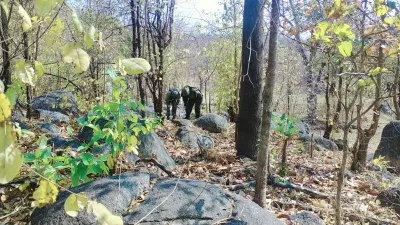
Maoists ambush CoBRA patrol in Jharkhand's West Singhbhum forests
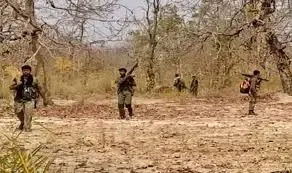
Synopsis
A pre-dawn Maoist ambush on a CoBRA 209 Battalion patrol in Jharkhand's West Singhbhum forests has triggered a high alert across the Kolhan region. With a squad reportedly led by commander Misir Besra attempting to reassert control in the Saranda-Kolhan belt, Wednesday's encounter signals a potentially dangerous resurgence of insurgent activity in one of India's most sensitive forest corridors.
Key Takeaways
Maoists ambushed a CoBRA 209 Battalion patrol at 4:30 am on 29 April 2025 in Rutughutu forests , West Singhbhum , Jharkhand.
Intermittent exchange of fire continued through the morning; no casualty figures confirmed by officials at time of reporting.
A high alert has been declared across the Kolhan region ; security forces have cordoned off the affected area.
SP Amit Renu confirmed extensive search operations are underway across the forested terrain.
A squad reportedly led by Maoist commander Misir Besra is believed to be attempting to strengthen its presence in the Goelkera-Saranda-Kolhan corridor.
Security agencies had received prior intelligence inputs warning of increased Maoist activity in the area.
An armed encounter broke out between Maoists and security forces in the dense forest areas of West Singhbhum district, Jharkhand, on Wednesday, 29 April, after Maoist insurgents ambushed a CoBRA 209 Battalion patrol at around 4:30 am IST. The exchange of fire took place in the Tonto police station area, inside the forests of Rutughutu, and intermittent firing has continued since morning, officials said.
How the Ambush Unfolded
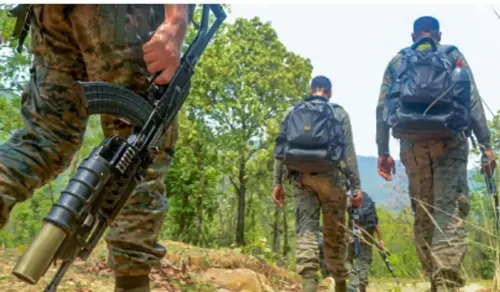
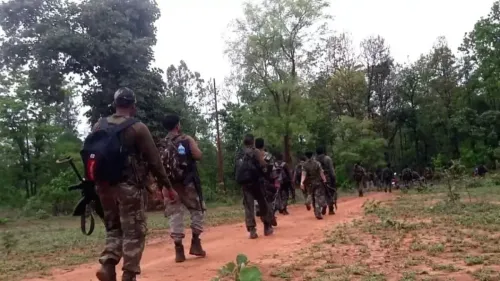
Security forces had been conducting an intensive search operation for the past two days in the Boroi and Toonbeda areas under the limits of Goelkera police station. According to officials, Maoists who were lying in wait opened fire on the moving patrol team as it advanced through the dense terrain. Security personnel retaliated promptly, triggering an intermittent exchange of fire that persisted through the morning hours.
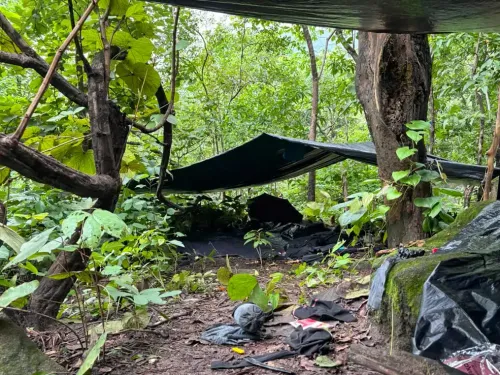
The ambush-style attack is consistent with a pattern of guerrilla tactics employed by Maoist cadres in the thickly forested Saranda and Kolhan belt — terrain that has historically provided cover for insurgent movement and regrouping.
Security Response and High Alert
West Singhbhum Superintendent of Police Amit Renu confirmed that extensive search operations are underway across the forested areas and that the situation is being closely monitored. A high alert has been declared across sensitive forest zones of the Kolhan region, and security forces have cordoned off the entire affected area. Additional personnel have been placed on standby as police and paramilitary units conduct area-domination operations to flush out the insurgents from the difficult terrain.
Background: Renewed Maoist Activity in the Region
Concerns about a resurgence of Maoist activity in the Goelkera region had already been raised in recent weeks, following the killing of a former Maoist in the area. According to sources, a squad reportedly led by Maoist commander Misir Besra has been attempting to consolidate its presence in the bordering forest regions. Security agencies had received prior intelligence inputs suggesting a possible uptick in insurgent activity along the Saranda-Kolhan forest corridor, which straddles the border with Odisha and Chhattisgarh.
This comes amid a broader national push to neutralise Left Wing Extremism (LWE) in the so-called Red Corridor. Central security forces, including specialised jungle-warfare units like CoBRA (Commando Battalion for Resolute Action), have been deployed in increasing numbers across Jharkhand's Maoist-affected districts in recent months.
What Happens Next
Search and cordon operations are ongoing as of Wednesday morning, with no casualty figures confirmed by officials at the time of reporting. Security arrangements across West Singhbhum have been intensified, and further details are expected as the operation progresses. The encounter underscores the continuing security challenge in Jharkhand's forested hinterland, where Maoist cadres have repeatedly attempted to reassert influence despite sustained counter-insurgency pressure.
Point of View
Odisha, and Chhattisgarh, and the reported attempt by Misir Besra's squad to consolidate there suggests a deliberate push to reclaim lost ground. The killing of a former Maoist in the area shortly before this encounter raises the uncomfortable possibility that internal Maoist dynamics — not just counter-insurgency pressure — are reshaping the conflict. With CoBRA units already deployed and intelligence inputs having flagged the threat in advance, the more pointed question is whether the operational response matched the warning.
NationPress
16 Sept 2026
Frequently Asked Questions
Where did the Maoist encounter take place on 29 April 2025?
The encounter took place in the Rutughutu forest area under the Tonto police station limits in West Singhbhum district, Jharkhand. Security forces had been conducting a two-day search operation in the Boroi and Toonbeda areas under Goelkera police station when the ambush occurred.
Which security unit was targeted in the Jharkhand Maoist ambush?
Personnel of the CoBRA 209 Battalion — a specialised jungle-warfare unit of the Central Reserve Police Force — were targeted while on patrol. The Maoists reportedly lay in wait and opened fire on the moving patrol team at around 4:30 am on Wednesday.
Have any casualties been reported in the West Singhbhum encounter?
No casualty figures had been officially confirmed at the time of reporting. Security forces have cordoned off the area and search operations are ongoing, with officials continuing to monitor the situation closely.
Who is Maoist commander Misir Besra?
Misir Besra is reportedly a Maoist commander whose squad is believed to be attempting to strengthen its presence in the Goelkera-Saranda-Kolhan forest corridor in West Singhbhum. Security agencies had received prior intelligence inputs about his squad's activities in the region.
Why is the Saranda-Kolhan forest region considered sensitive?
The Saranda-Kolhan belt in West Singhbhum is part of India's so-called Red Corridor, bordering Odisha and Chhattisgarh. Its dense forest cover has historically provided Maoist cadres with cover for movement, regrouping, and launching ambushes, making it one of the most challenging terrains for counter-insurgency operations.