Measles Kills 71 Children in Pakistan in Just 4 Months of 2026
Synopsis
Pakistan recorded 71 child deaths from measles and 4,541 cases in just the first four months of 2026, with Sindh the worst-hit province. Simultaneously, polio persists, vaccine hesitancy undermines immunisation, and security forces escorting vaccination teams are being killed — exposing a multi-layered public health emergency.
Key Takeaways
71 children have died from measles in Pakistan in the first four months of 2026 , according to official statistics reported by Dawn .
Sindh is the worst-affected province with 40 measles deaths , followed by Punjab and Khyber Pakhtunkhwa with 12 each and Balochistan with 4.
A total of 4,541 measles cases have been confirmed across Pakistan, with Khyber Pakhtunkhwa leading with 1,712 infections .
One polio case was detected in Sindh's Sujawal in 2026; Pakistan recorded 74 polio cases in 2024 and 31 in 2025 .
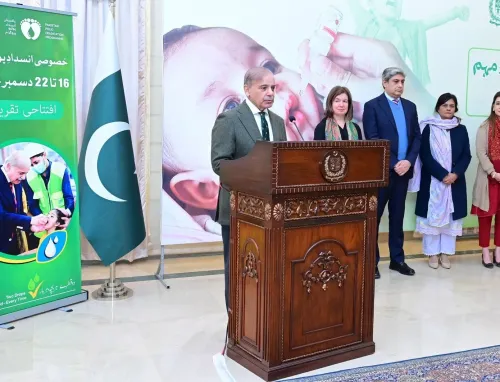
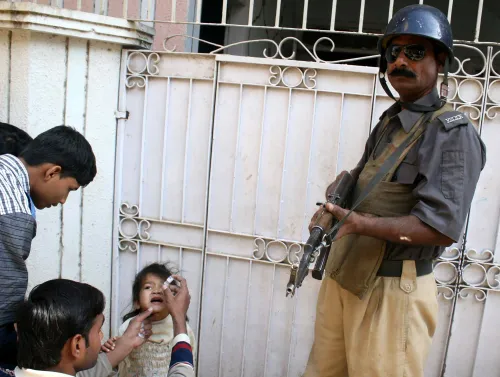
A police constable was killed on April 13, 2026 in Hangu, Khyber Pakhtunkhwa while escorting a polio vaccination team — the latest in a series of deadly attacks on health workers.
Vaccine hesitancy has been identified by the Pakistan Paediatric Association as the most critical barrier to routine immunisation in Pakistan.
Islamabad, April 26, 2026: Measles has claimed the lives of 71 children across Pakistan in the first four months of 2026, with Sindh emerging as the worst-hit province recording 40 deaths, according to official statistics cited by Pakistan's leading daily Dawn. The alarming toll underscores a deepening public health emergency in a country already battling vaccine hesitancy and endemic polio.
Province-Wise Measles Death Toll
Of the 71 measles fatalities recorded between January and April 2026, Sindh topped the grim list with 40 deaths. Punjab and Khyber Pakhtunkhwa (KPK) each reported 12 deaths, while Balochistan recorded four fatalities during the same period.
In terms of confirmed cases, a total of 4,541 measles infections were reported across the country. Khyber Pakhtunkhwa led with 1,712 cases, followed by Punjab with 1,198 and Sindh with 1,183. Other regions reported smaller numbers: Islamabad recorded 55 cases, Pakistan-occupied Kashmir reported 151, Pakistan-occupied Gilgit-Baltistan had 45, and Balochistan registered just 17 cases — though its death rate relative to case count raises serious concerns about healthcare access in the province.
Vaccine Hesitancy: The Root Crisis
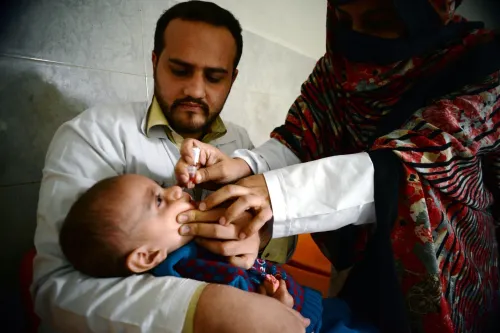
Khalid Shafi, a representative of the Pakistan Paediatric Association, identified vaccine hesitancy as the single most critical challenge undermining routine immunisation efforts. "While the government continues its efforts, there are multiple challenges with respect to routine immunisation. The most important one is vaccine hesitancy," he stated, urging authorities to craft targeted awareness campaigns to encourage parents to vaccinate their children.
This crisis does not exist in isolation. Pakistan has long struggled with misinformation-driven resistance to vaccines — a problem that has allowed preventable diseases like measles to persist and resurge. Health experts warn that without aggressive community outreach, the death toll will continue to rise through the remainder of 2026.
Polio Remains a Persistent Threat
Beyond measles, polio continues to haunt Pakistan's public health landscape. In 2026, one polio case was detected in Sindh's Sujawal district. This follows 74 polio cases recorded in 2024 and 31 cases in 2025, indicating a declining but still dangerous trend. Sindh alone registered nine polio cases in 2025, with nearly 80 per cent of environmental samples testing positive for the virus at the time.
However, the Sindh Chief Minister recently noted measurable progress, stating that environmental positivity rates had dropped to 24 per cent — a significant improvement, though still far above safe thresholds. Pakistan and Afghanistan remain the only two nations in the world where Wild Poliovirus is still endemic, making eradication a matter of global public health urgency.
Violence Against Polio Workers Continues
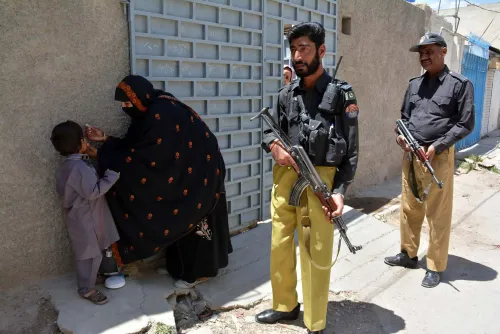
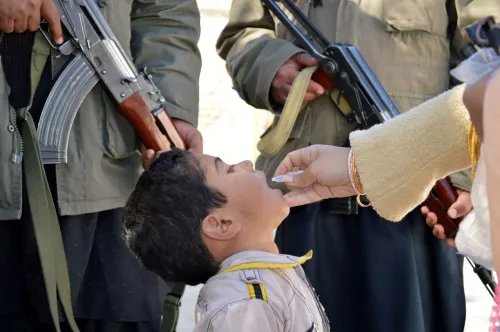
Vaccination campaigns in Pakistan face not just logistical and social barriers but lethal violence. On April 13, 2026, a police constable was killed and four others were injured when unidentified gunmen opened fire on a law enforcement party escorting polio vaccination teams in Hangu district, Khyber Pakhtunkhwa. The attack occurred in Thall tehsil on the very first day of a vaccination drive scheduled from April 13 to 19.
The Hangu District Police confirmed the assault in an official statement, adding that a search operation was launched to apprehend the attackers. This is not an isolated incident — in February 2026, a police personnel was similarly killed in Chaman district, Balochistan, when armed assailants targeted a police vaccination escort team.
Attacks on polio workers and their security escorts have become a recurring pattern, particularly in Khyber Pakhtunkhwa and Balochistan, where militant groups have historically spread conspiracy theories about vaccination campaigns. This violence directly disrupts immunisation coverage and keeps Pakistan trapped in a cycle of preventable disease outbreaks.
Broader Implications and What Comes Next
The convergence of a measles surge, persistent polio transmission, vaccine hesitancy, and targeted violence against health workers paints a deeply troubling picture of Pakistan's public health infrastructure. With 4,541 measles cases in just four months, the annualised projection suggests the country could face one of its worst measles years in recent memory if emergency interventions are not scaled up immediately.
International health bodies including the WHO and UNICEF have repeatedly flagged Pakistan's immunisation gaps. As Pakistan approaches the mid-year mark of 2026, pressure will mount on federal and provincial health ministries to launch emergency measles vaccination campaigns, particularly in Sindh and Khyber Pakhtunkhwa. The sustainability of polio eradication efforts will also hinge on whether security conditions for vaccination teams can be meaningfully improved in conflict-affected districts.
Point of View
Misinformation, and state inability to secure its own vaccination workers. The stark irony is that Pakistan receives billions in international health aid, yet 71 children died from a vaccine-preventable disease in just four months. When polio vaccinators need armed escorts and those escorts are being assassinated, it signals that parts of the Pakistani state have effectively ceded public health space to militant influence. India and the global community must watch this closely — a disease reservoir this close to the border, with such poor immunisation coverage, is a regional health security concern, not just a Pakistani one.
NationPress
24 Sept 2026
Frequently Asked Questions
How many children have died from measles in Pakistan in 2026?
As of April 2026, 71 children have died from measles in Pakistan in the first four months of the year. Sindh recorded the highest toll with 40 deaths , followed by Punjab and Khyber Pakhtunkhwa with 12 each.
Which province in Pakistan has the most measles cases in 2026?
Khyber Pakhtunkhwa has reported the highest number of measles cases in Pakistan in 2026, with 1,712 confirmed infections . However, Sindh has the highest death toll at 40 children , suggesting more severe outcomes in that province.
Is polio still a problem in Pakistan in 2026?
Yes, polio remains endemic in Pakistan in 2026, with one case already detected in Sindh's Sujawal district . Pakistan and Afghanistan are the only two countries in the world where Wild Poliovirus has not been eradicated.
Why are polio vaccination campaigns being attacked in Pakistan?
Polio vaccination teams and their police escorts have been repeatedly targeted by militant groups, particularly in Khyber Pakhtunkhwa and Balochistan . On April 13, 2026 , a police constable was killed in Hangu district while providing security for vaccinators.
What is causing the measles outbreak in Pakistan in 2026?
Health officials cite vaccine hesitancy as the primary driver of the measles outbreak in Pakistan in 2026. The Pakistan Paediatric Association has called for urgent public awareness campaigns to counter misinformation and improve routine immunisation coverage.