CM Himanta Wishes Assam a Shubh Deepawali 2026
Synopsis
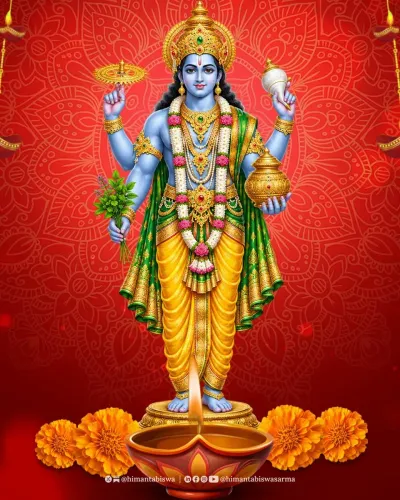
Assam Chief Minister Himanta Biswa Sarma marked Diwali 2026 with a Hindi message invoking Lord Ram's return to Ayodhya as a symbol of light over darkness, calling on citizens to pledge 'development, faith, and prosperity' for every home this Deepotsav.
Key Takeaways
CM Himanta Biswa Sarma posted a Diwali 2026 greeting on 8 November 2026 .
The message invoked the legend of Lord Ram's return to Ayodhya as the origin of Diwali's lamp-lighting tradition.
Sarma called for a collective resolve around ' Vikas, Vishwas aur Samridhi ' — development, faith, and prosperity.
The greeting follows a pattern among BJP leaders of blending Ramayana symbolism with governance vocabulary during Diwali.
As NEDA convenor , Sarma's festival messaging reaches audiences across multiple northeastern states.
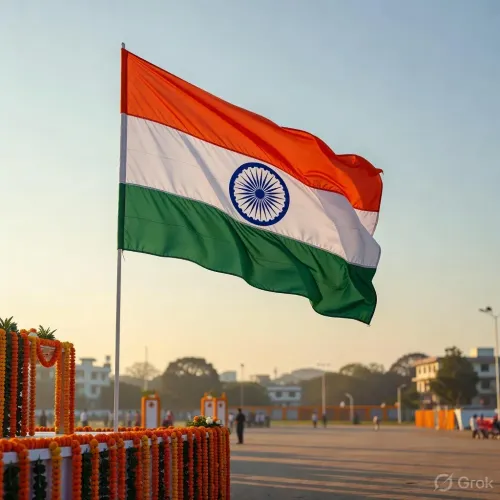
As millions of lamps flicker to life across India, Assam Chief Minister Himanta Biswa Sarma marked Diwali 2026 with a message anchored in the oldest story of light — Lord Ram's return to Ayodhya — and a pledge to illuminate 'every home, every courtyard, every life' with development and prosperity.
Posting on Sunday, 8 November 2026, CM Sarma wrote in Hindi: 'अंधकार कितना भी गहरा हो, एक दीपक उसे मिटाने का सामर्थ्य रखता है' — 'No matter how deep the darkness, a single lamp has the power to erase it.' He invoked the lamps lit to welcome Lord Shri Ram back to Ayodhya as the living proof of that truth, then called on citizens to take a collective resolve — on this Deepotsav — to usher in new light through 'Vikas, Vishwas aur Samridhi' (development, faith, and prosperity).
The Ramayana thread that runs through every Diwali greeting
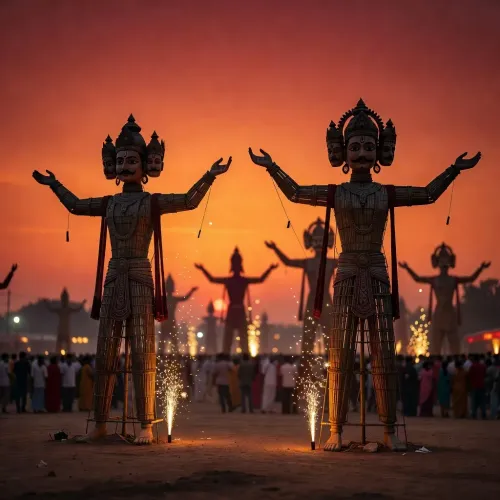
The imagery is deliberate and deeply rooted. The festival of Diwali draws its central legend from the Ramayana: the people of Ayodhya lit rows of earthen lamps to guide their king home after fourteen years of exile — a moment that became Hinduism's defining symbol of light defeating darkness. For BJP leaders in particular, the Ayodhya reference carries added resonance following the consecration of the Ram Mandir in January 2024, which made the city's cultural weight even more pronounced in national discourse.
CM Sarma's message follows a pattern common among BJP chief ministers during the Diwali season: weaving Ramayana symbolism with explicit development vocabulary — 'Vikas' (development) and 'Samridhi' (prosperity) — to frame the festival as both a cultural homecoming and a governance aspiration.
What the message means for Assam's festive moment
For Assam's residents, the greeting lands during a Diwali season that the state, like much of northeastern India, celebrates with rangoli, diyas, and community gatherings. Sarma, who also serves as convenor of the North-East Democratic Alliance (NEDA), routinely uses festival occasions to speak simultaneously to Assam's majority and to the broader northeastern constituency he shepherds politically. The language of light — universal, non-partisan in register — threads neatly through that dual audience.
The kicker is in the resolve itself: not just to celebrate, but to convert the symbolism into something tangible — every lamp a small wager that darkness, political or otherwise, is never the final word.
Point of View
Diwali greetings have evolved into a subtle but consistent political language — fusing Ramayana iconography with development rhetoric to reinforce the party's cultural-nationalist and governance credentials simultaneously. CM Sarma's invocation of Ayodhya is particularly layered after the 2024 Ram Mandir consecration, which elevated the city's symbolic weight in BJP communication. His dual role as Assam CM and NEDA convenor means such messages function as both state-level and regional outreach. The 'light as development' metaphor keeps the tone aspirational rather than combative — a tonal choice that suits a festival season.
NationPress
8 Nov 2026
Frequently Asked Questions
What did Himanta Biswa Sarma post for Diwali 2026?
Assam CM Himanta Biswa Sarma posted a Hindi Diwali greeting on 8 November 2026, invoking Lord Ram's return to Ayodhya as the symbol of light defeating darkness, and called on citizens to resolve to bring development, faith, and prosperity to every home.
Why do BJP leaders reference Ayodhya in Diwali messages?
Diwali's central legend is tied to Lord Ram's homecoming to Ayodhya after fourteen years of exile. For BJP leaders, this reference combines deep Hindu cultural resonance with the political significance of Ayodhya, heightened after the Ram Mandir consecration in January 2024.
What does 'Vikas, Vishwas aur Samridhi' mean?
The phrase is Hindi for 'development, faith, and prosperity' — a trio of aspirational terms CM Sarma used to define the kind of light he said should illuminate every home and life on this Deepotsav.
When is Diwali 2026?
Diwali in 2026 falls on 8 November, the same date CM Sarma posted his greeting.
What is NEDA and what is Sarma's role?
The North-East Democratic Alliance (NEDA) is a BJP-led alliance of parties across India's northeastern states. Himanta Biswa Sarma serves as its convenor, giving him a political platform that extends beyond Assam across the entire northeast region.