Delhi AQI hits 384 on Diwali; 11 stations record 'severe' pollution
Synopsis
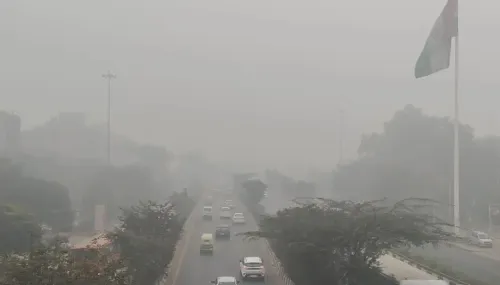
Delhi's air turned 'severe' at 11 monitoring stations by 6 am on Diwali 2026, with Punjabi Bagh topping the city at AQI 450. The overall city reading of 384 underscores how little progress has been made in breaking the annual post-Diwali pollution cycle, even as court orders and GRAP restrictions remain on the books.
Key Takeaways
Delhi recorded an overall AQI of 384 on the morning of 8 November 2026 — classified as 'very poor.' 11 of 23 CPCB monitoring stations crossed AQI 400 , entering the 'severe' category by the 6 am update.
Punjabi Bagh logged the highest reading at AQI 450 , followed by RK Puram (449) and IIT Delhi (446) .
The remaining 12 stations recorded readings between 301 and 400 , all in the 'very poor' range.
An AQI above 400 poses health risks even for healthy individuals; vulnerable groups are advised to stay indoors.
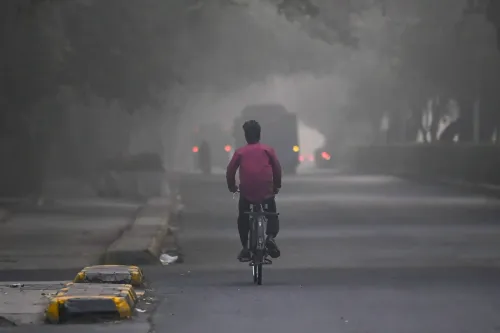
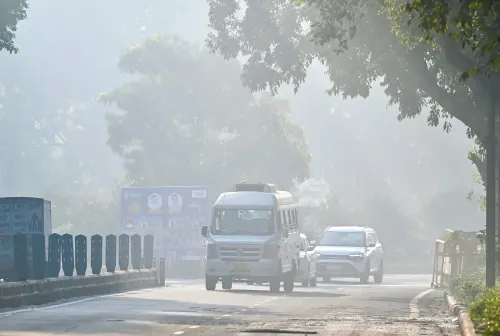
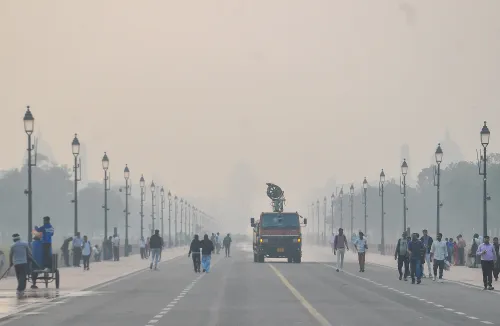
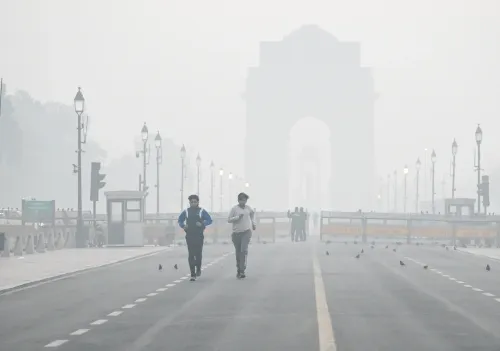
Delhi woke up to hazardous air on Diwali, 8 November 2026, recording an overall Air Quality Index (AQI) of 384 — firmly in the 'very poor' category — as data from the Central Pollution Control Board (CPCB) showed 11 of 23 monitoring stations crossing the 400-mark into the 'severe' zone by the 6 am update. The readings paint a grim picture of the national capital's air on one of the year's most festival-heavy nights.
Worst-Hit Stations
Punjabi Bagh logged the highest AQI in the city at 450, followed closely by RK Puram at 449 and IIT Delhi at 446. Dwarka recorded 444, while CRRI Mathura Road and Chandni Chowk both registered 425 and 423 respectively. North Campus, Delhi University also recorded 423, with Siri Fort at 423, Pusa at 415, Burari Crossing at 411, and NSUT Jaffarpur at 409 rounding out the stations in the 'severe' bracket.
'Very Poor' Across the Rest of the City
The remaining 12 stations all registered readings between 301 and 400, placing them in the 'very poor' category. Narela recorded 399, ITO posted 396, and Mandir Marg stood at 393. Uttam Nagar registered 373, Burari 370, and both Talkatora Garden and Aya Nagar recorded 369. Vasundhara Enclave reported 356, Tikri Kalan and Badarpur both registered 349, Karala stood at 337, Lodhi Road at 333, and Anand Vihar at 328.
Context: A Recurring Festival Pattern
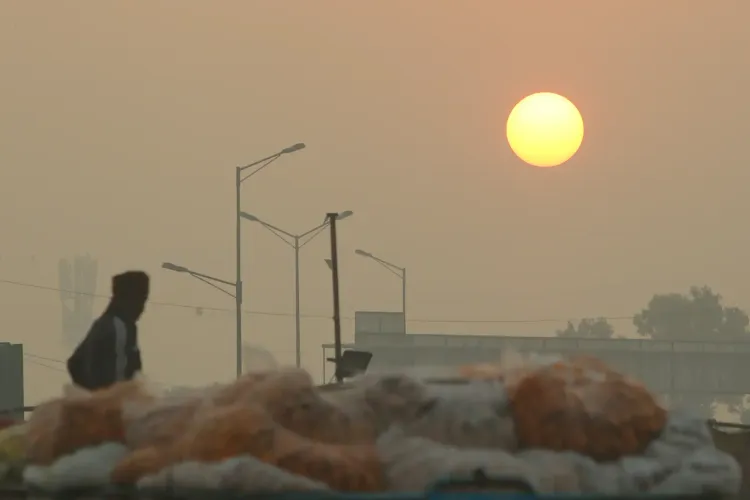
The spike follows a well-documented annual pattern in which Delhi's AQI surges around Diwali, driven by a combination of firecracker emissions, calm overnight winds, and low temperatures that trap pollutants close to the ground. Despite repeated Supreme Court directives limiting firecrackers and the Graded Response Action Plan (GRAP) restrictions already in place ahead of the festival, the city's air deteriorated sharply overnight. This is consistent with trends from previous years, where post-Diwali mornings have repeatedly recorded some of the highest AQI readings of the winter season.
Health Impact and What Residents Should Know
An AQI above 400 is classified as 'severe' by the CPCB, meaning even healthy individuals are likely to be affected by prolonged outdoor exposure. Vulnerable groups — including children, the elderly, and those with respiratory or cardiovascular conditions — are advised to remain indoors and use air purifiers where available. Authorities have urged residents to avoid outdoor exercise and to wear N95 masks if stepping outside. The pollution levels are expected to evolve through the day depending on wind speed and temperature patterns.
Point of View
But enforcement on the ground remains patchy, and the annual spike keeps arriving on cue. What is missing is a credible post-mortem that asks whether restrictions actually reduced emission loads this year compared to last, rather than simply cataloguing the resulting AQI readings. Until monitoring is paired with actionable enforcement accountability, the data will continue to function as a record of failure rather than a tool for prevention.
NationPress
8 Nov 2026
Frequently Asked Questions
What was Delhi's AQI on Diwali morning 2026?
Delhi recorded an overall AQI of 384 on the morning of 8 November 2026, according to CPCB data, placing it in the 'very poor' category. Eleven of 23 monitoring stations crossed 400, entering the 'severe' zone.
Which area had the worst air quality in Delhi on Diwali?
Punjabi Bagh recorded the highest AQI in the city at 450, followed by RK Puram at 449 and IIT Delhi at 446, according to the 6 am CPCB update on 8 November 2026.
What does an AQI of 400 or above mean for health?
An AQI above 400 is classified as 'severe' by the Central Pollution Control Board, meaning prolonged outdoor exposure is likely to affect even healthy individuals. Vulnerable groups — including children, the elderly, and those with respiratory conditions — are advised to stay indoors.
How many Delhi monitoring stations recorded 'severe' pollution on Diwali?
Eleven of the 23 CPCB monitoring stations in Delhi recorded AQI levels above 400, placing them in the 'severe' category, as of the 6 am update on 8 November 2026. The remaining 12 stations were in the 'very poor' range.
Why does Delhi's air quality worsen every Diwali?
The Diwali spike is driven by a combination of firecracker emissions, calm overnight winds, and low winter temperatures that trap pollutants near ground level. This occurs annually despite Supreme Court directives limiting firecrackers and GRAP restrictions being in place ahead of the festival.