MeitY revises DVA norms for 6 IT hardware products to boost local manufacturing
Synopsis
MeitY has overhauled how domestic value addition is measured for six key IT hardware categories — from laptops to servers — introducing a granular, Bill of Materials-based framework that rewards actual manufacturing processes, R&D, and Indian-owned IPR. The revised norms, effective six months after Gazette publication, raise the bar on what qualifies as 'Made in India' in government procurement.
Key Takeaways
MeitY revised DVA calculation norms for six IT hardware categories on 20 November 2026 under the Public Procurement (Preference to Make in India) Order, 2017 .
Covered products: desktop PCs , all-in-one PCs , laptop PCs , thin clients , servers , computer monitors , and interactive flat panel displays (IFPDs) .
A process-oriented, Bill of Materials (BoM)-based mechanism replaces the earlier DVA computation approach, recognising SMT assembly, PCB sourcing, RAM/SSD packaging, and final testing as eligible activities.
Additional DVA weightage assigned to in-house R&D conducted in India and creation of Intellectual Property Rights (IPR) .
Revised framework takes effect six months after publication in the Official Gazette and supersedes earlier MeitY notifications for these products.
A standardised self-certification format and third-party verification mechanism introduced to ensure transparency in DVA claims.
The Ministry of Electronics and Information Technology (MeitY) has revised the methodology for calculating local content and domestic value addition (DVA) for six categories of IT hardware products under the Public Procurement (Preference to Make in India) Order, 2017, according to an official statement released on Friday, 20 November 2026. The move is aimed at strengthening domestic manufacturing, deepening indigenous capabilities, and generating employment across India's electronics sector.
Products Covered Under the Revised Framework
The updated DVA norms apply to desktop PCs, all-in-one PCs, laptop PCs, thin clients, servers, computer monitors, and interactive flat panel displays (IFPDs) — six product categories central to both government and enterprise procurement in India.
These categories have been a focal point of India's technology self-reliance push, with the government progressively tightening local content requirements to curb import dependence on finished hardware from China and other manufacturing hubs.
How the New DVA Calculation Works
The revised framework introduces a process-oriented, Bill of Materials (BoM)-based mechanism for computing DVA — a significant structural shift from earlier, less granular approaches. According to the ministry's statement, eligible manufacturing activities now explicitly recognised include:
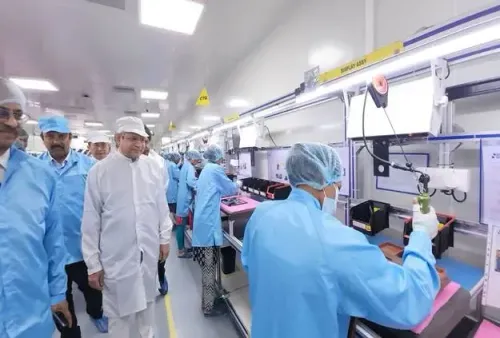
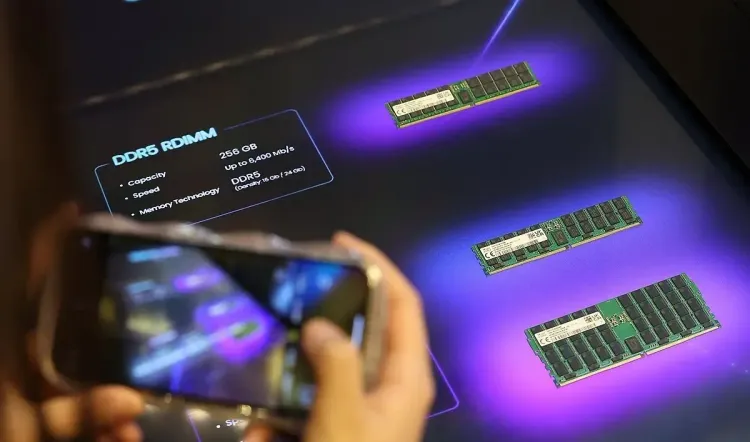
Mainboard and motherboard assembly through Surface Mount Technology (SMT), domestic sourcing of bare printed circuit boards (PCBs), assembly, testing and packaging of memory (RAM) and storage (SSD), display assembly processes, domestic sourcing of chassis and power modules, and final assembly and testing.
Notably, the revised methodology also assigns adequate weightage to in-house Research and Development (R&D) conducted in India, recognising indigenous technology development and innovation as a qualifying contribution to DVA.
Incentives for Indigenous Design and IPR
In a step that goes beyond pure manufacturing, MeitY has built in additional weightage for Indian product design and the creation of Intellectual Property Rights (IPR) for these hardware categories. This signals a deliberate policy intent to push domestic players up the value chain — from assembly and integration toward original design and innovation.
This comes amid a broader national push under Make in India and the Production-Linked Incentive (PLI) scheme for IT hardware to position India as a credible alternative to established Asian electronics manufacturing corridors.
Implementation Timeline and Transparency Safeguards
The revised methodology will come into effect six months from the date of its publication in the Official Gazette and will supersede the corresponding provisions of MeitY's earlier notification for these six products. The ministry noted that a standardised format for DVA calculation and self-certification has been introduced to ensure objectivity and transparency in assessments made by manufacturers.
The framework also enables objective third-party verification of self-declared DVA by manufacturers wherever required — a key accountability mechanism to prevent inflated domestic content claims.
What This Means for the IT Hardware Ecosystem
For manufacturers seeking preference in government procurement, meeting the revised DVA thresholds will be a prerequisite. Industry observers note that the BoM-based approach gives companies greater clarity on exactly which processes and components contribute to their DVA score — reducing compliance ambiguity that has historically hampered adoption.
With India aggressively expanding its electronics manufacturing base and global supply chains reconfiguring post-pandemic, the revised norms add regulatory precision to a policy environment that has already attracted significant investment commitments from domestic and international hardware makers. How swiftly the ecosystem adapts in the six-month transition window will be closely watched.
Point of View
PCB sourcing, and in-house R&D as measurable contributors, MeitY is nudging the industry toward genuine deepening rather than screwdriver manufacturing. The IPR weightage is the most ambitious element: it asks Indian hardware firms to not just build, but own. Whether the six-month transition window is sufficient for mid-sized manufacturers to restructure their supply chains and documentation processes remains an open question — and the credibility of self-certification without robust third-party audit infrastructure will be tested early.
NationPress
20 Nov 2026
Frequently Asked Questions
What has MeitY changed about domestic value addition norms for IT hardware?
MeitY has replaced the earlier DVA calculation approach with a process-oriented, Bill of Materials (BoM)-based mechanism for six IT hardware categories including laptops, servers, and monitors. The new framework explicitly recognises specific manufacturing activities — such as SMT-based motherboard assembly, PCB sourcing, RAM/SSD packaging, and final testing — as eligible contributions to domestic value addition.
Which IT hardware products are covered under the revised DVA framework?
The revised norms apply to desktop PCs, all-in-one PCs, laptop PCs, thin clients, servers, computer monitors, and interactive flat panel displays (IFPDs). These are among the most commonly procured IT hardware items by government agencies in India.
When will the revised MeitY DVA methodology come into effect?
The revised framework will take effect six months from the date of its publication in the Official Gazette. It will supersede the corresponding provisions of MeitY's earlier notification for these six product categories.
Why does the new framework include R&D and IPR weightage?
MeitY has assigned additional DVA weightage to in-house R&D conducted in India and to the creation of Intellectual Property Rights (IPR) for these hardware products. This is intended to push domestic manufacturers beyond assembly toward original design and innovation, strengthening India's position in the global electronics value chain.
How will the government verify that manufacturers are accurately reporting their DVA?
The revised framework introduces a standardised format for DVA calculation and self-certification to ensure objectivity and transparency. It also enables objective third-party verification of self-declared DVA figures by manufacturers wherever required, adding an accountability layer to the self-certification process.